Grape field guide · dark-skinned

Cabernet Franc

The vineyard’s unapologetic perfumer

Cabernet Franc has a party trick: it can turn raspberry, violet, graphite into something that tastes of a place rather than a fruit bowl. Start with varietal red, notice the acidity and weight, and only then decide what sort of character has actually joined you at the table.

Western FranceEarly- to mid-ripening9 benchmark areas mapped
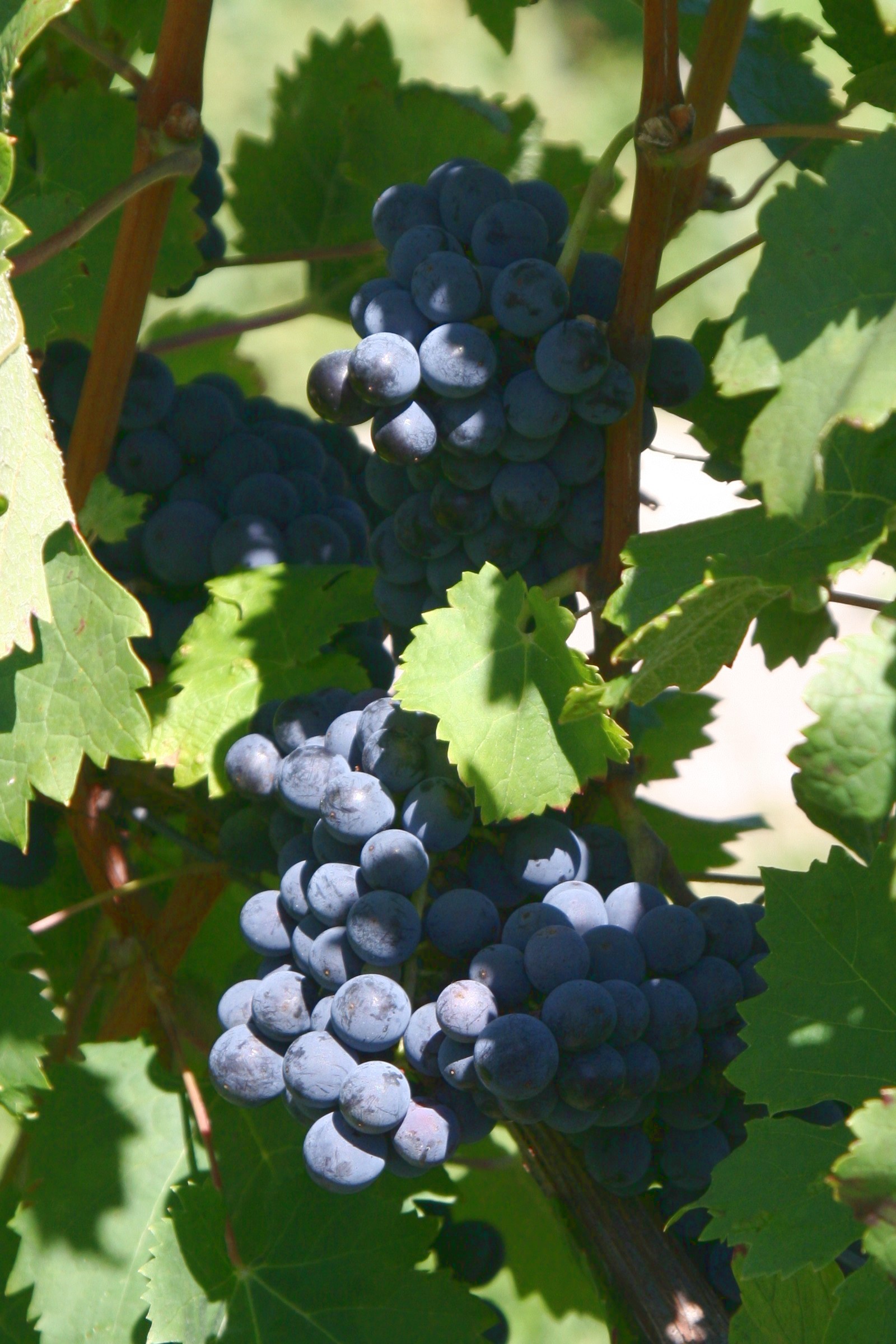
A bunch of Cabernet Franc wine grapes on the vine
Photograph: RosenzweigCabernet Franc Weinsberg 20060909.jpg · CC BY-SA 3.0

The grape story

How Cabernet Franc got here

An old western French grape and genetic parent of Cabernet Sauvignon, Merlot, and Carmenère; it moved from Bordeaux and the Loire to vineyards worldwide.

Its home territory: Western France.

Names you may meetBretonBouchet

In the glass

Characteristics, not guarantees

These are useful recurring possibilities. Climate, yield, harvest date, fermentation, extraction, maturation, bottle age, and serving conditions can all move the result.

Smells to investigate

  • raspberry
  • violet
  • graphite
  • leaf
  • pepper

Flavours to investigate

  • red fruit
  • herbs
  • cedar
  • earth

Typical structural range

Acidity
4/5
Body
3/5
Tannin
3/5

In the vineyard

How the vine behaves

Buds and ripens earlier than Cabernet Sauvignon; water stress and underripeness can emphasize herbal character.

Berry colour
dark-skinned
Ripening window
Early- to mid-ripening
Important caution
Site and clone can matter as much as the variety name.

Common expressions

Styles it can make

  • varietal red
  • Bordeaux blend
  • rosé
  • icewine

Variety does not dictate method. Skin contact, whole bunches, pressing, fermentation vessel, yeast, oxygen, oak, lees, sweetness, fortification, and bubbles can transform the same fruit.

Blending partners

Cabernet Franc does not always work alone.

A blend is not a hiding place for leftovers. Each grape can be asked to supply fruit, perfume, acidity, tannin, colour, body, or simply a better answer to an awkward vintage.

Cabernet Sauvignon · Merlot · Cabernet Franc and company

Bordeaux-style red blend

Bordeaux blending is agricultural risk management turned into an aesthetic. Grapes bud and ripen at different times, perform differently by soil and bank, and contribute different pieces to the final architecture. The point is not to hide the grapes; it is to make them cooperate.

The recipe moves

Left Bank models often lean Cabernet Sauvignon; Right Bank models commonly lean Merlot and Cabernet Franc. Global versions borrow the idea without being obliged to copy either bank.

Try the lesson

Compare a Cabernet-led blend with a Merlot-led one. Track where the tannin sits, whether the fruit reads blackcurrant or plum, and how quickly the wine seems ready to talk.

Sangiovese meets Bordeaux varieties—or leaves it entirely

The so-called Super Tuscan blend

“Super Tuscan” is a market nickname, not a legal appellation or single blend. It grew from producers working outside old formulae—sometimes blending Sangiovese with French grapes, sometimes making varietal Cabernet or Merlot.

The recipe moves

There is no required recipe because the term has no formal recipe. Read the actual grapes and origin rather than treating the nickname as a style guarantee.

Try the lesson

Compare a Sangiovese-led example with a Bordeaux-variety-led one. They may share prestige and geography while speaking almost unrelated structural languages.

Pinotage with a flexible South African cast

Cape blend

Cape blend is a stylistic category rather than one universal legal formula. Pinotage is normally the identity card, surrounded by Bordeaux or Rhône varieties according to producer intent.

The recipe moves

Definitions used by competitions or producers can differ. If Pinotage is invisible, the name starts doing more work than the grape.

Try the lesson

Compare a Pinotage-dominant Cape blend with a Cabernet-dominant one. Decide when the blend feels specifically South African rather than generically polished.

Tannat · Merlot · Cabernet Franc

Uruguayan Tannat blend

Blending Tannat is less surrender than negotiation. Softer or more aromatic partners can make the wine approachable without erasing the grape’s Atlantic-Uruguayan character.

The recipe moves

Varietal Tannat remains important. A small partner may significantly change texture even when the label remains Tannat-led.

Try the lesson

Taste pure Tannat beside a blend. Count how long the drying sensation lasts and where fruit reappears after the tannin.

Muscat Bailey A · Merlot · Cabernet Franc

Japanese red blend

Muscat Bailey A can be charmingly aromatic and light; international partners may add structure without deleting its Japanese identity. The challenge is support rather than disguise.

The recipe moves

Many examples are varietal, and blending choices vary by producer and vintage.

Try the lesson

Compare varietal Muscat Bailey A with a blended red. Decide whether the partner framed the strawberry perfume or sat on it.

Cabernet Sauvignon · Merlot · Cabernet Franc · Marselan

Ningxia Cabernet blend

Ningxia often begins with Bordeaux logic, then adapts it to high sunshine, irrigation, winter vine burial, and a young industry willing to test Marselan. The blend is imported grammar developing a local accent.

The recipe moves

Cabernet Sauvignon commonly leads; Marselan’s role is growing but far from standardized.

Try the lesson

Compare Cabernet-led and Marselan-inclusive versions. Look for whether Marselan softens the tannin or simply deepens the colour.

Where it matters

Major growing areas

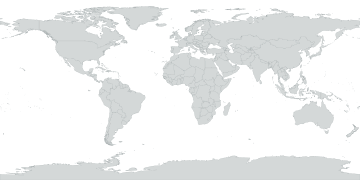
Markers combine dedicated World Explorer profiles with audited benchmark areas important to Cabernet Franc. This is a teaching map of major associations—not a census of every planting.

  1. 1BordeauxFrance · Explorer profile
  2. 2Loire ValleyFrance · Explorer profile
  3. 3Walla Walla ValleyUnited States · Explorer profile
  4. 4Finger LakesUnited States · Explorer profile
  5. 5Long IslandUnited States · Explorer profile
  6. 6Monticello & Central VirginiaUnited States · Explorer profile
  7. 7Snake River ValleyUnited States · Explorer profile
  8. 8Leelanau PeninsulaUnited States · Explorer profile
  9. 9CanelonesUruguay · Explorer profile

Try this at home

Give the lesson two glasses.

Put Cabernet Franc beside Chardonnay. Do not play “guess the grape.” Compare acidity, tannin or phenolic grip, body, aroma intensity, and the length of the finish. The useful answer is not which one you prefer, but what created the difference.

Wine 1 · FranceBordeaux

Maritime, with Atlantic rain and vintage variation; gravel, clay, and limestone change drainage and ripening.

Wine 2 · FranceLoire Valley

Ranges from Atlantic maritime influence in the west to increasingly continental conditions inland.

Wine 3 · United StatesWalla Walla Valley

Dry continental with warm days, cool nights, and meaningful frost and freeze exposure.

Keep digging

Follow the evidence, not the folklore.

Historical names, vineyard collections, official records, and modern research do not always agree neatly. These are starting points for checking the parts of the story that matter for this grape.

  1. OIV Vine Varieties Database ↗International names, synonyms, and country associations.
  2. UC Davis Foundation Plant Services ↗Reference plant material, origins, and selections.
  3. Bordeaux Wine CouncilRegional context for Cabernet Franc in Bordeaux.
  4. Loire Valley WinesRegional context for Cabernet Franc in Loire Valley.
  5. Walla Walla Valley WineRegional context for Cabernet Franc in Walla Walla Valley.
  6. Finger Lakes Wine AllianceRegional context for Cabernet Franc in Finger Lakes.