Muscat Bailey A · Merlot · Cabernet Franc
Japanese red blend
Muscat Bailey A can be charmingly aromatic and light; international partners may add structure without deleting its Japanese identity. The challenge is support rather than disguise.
Grape field guide · dark-skinned
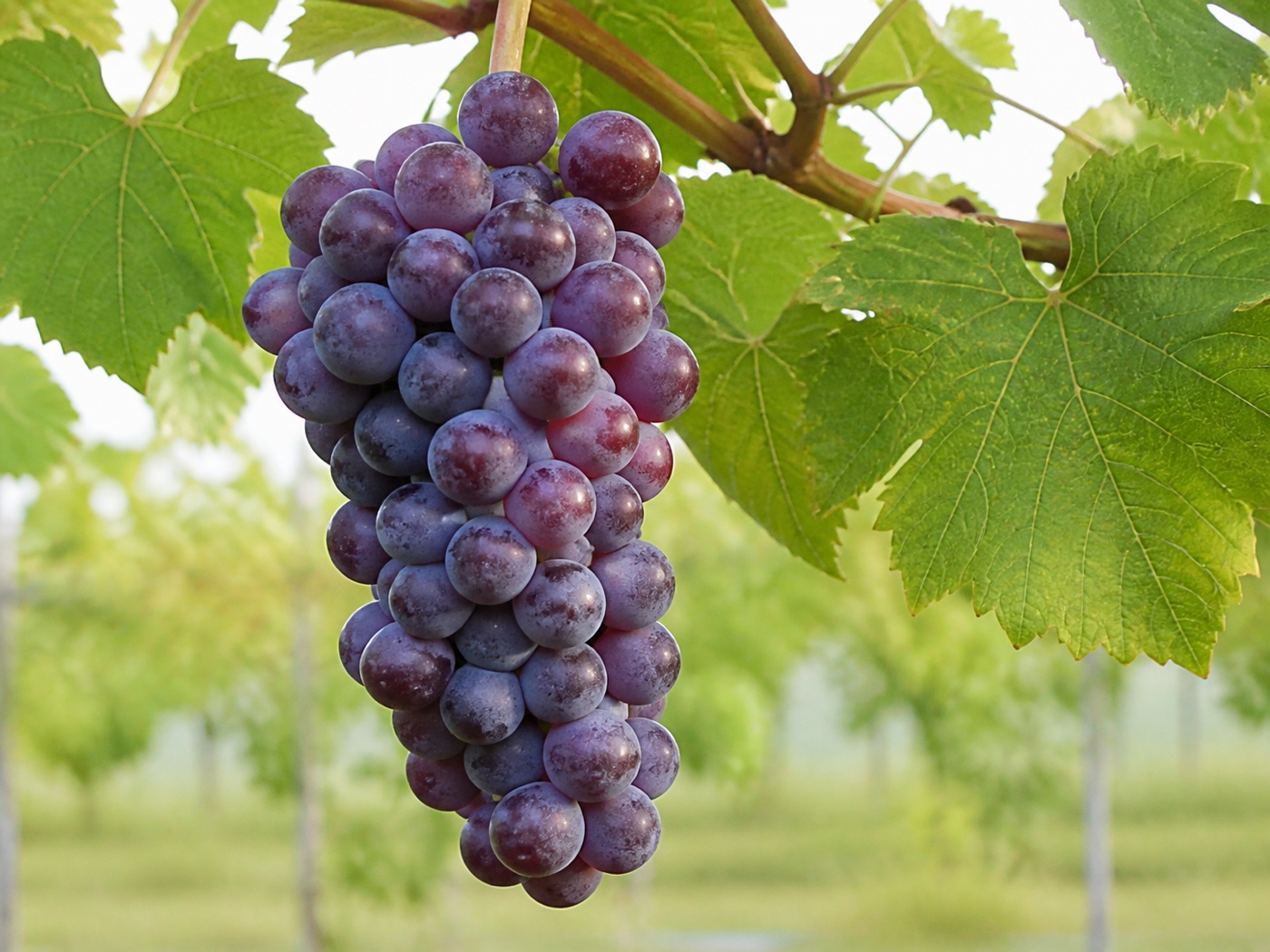
Muscat Bailey A does not need a long résumé to make an entrance. Look for strawberry, rose, candy, then pay attention to the shape: acidity takes a quieter role, body keeps the footsteps light, and tannin stays relatively civil. Its classic starting point is light red.
The grape story
Bred by Kawakami Zenbei in 1927 from Bailey × Muscat Hamburg to combine aromatic fruit with adaptation to Japan’s climate.
Its home territory: Japan.
In the glass
These are useful recurring possibilities. Climate, yield, harvest date, fermentation, extraction, maturation, bottle age, and serving conditions can all move the result.
In the vineyard
Performs in humid conditions and can give pale colour and pronounced fruit aromas.
Common expressions
Variety does not dictate method. Skin contact, whole bunches, pressing, fermentation vessel, yeast, oxygen, oak, lees, sweetness, fortification, and bubbles can transform the same fruit.
Blending partners
A blend is not a hiding place for leftovers. Each grape can be asked to supply fruit, perfume, acidity, tannin, colour, body, or simply a better answer to an awkward vintage.
Muscat Bailey A can be charmingly aromatic and light; international partners may add structure without deleting its Japanese identity. The challenge is support rather than disguise.
Where it matters
Markers combine dedicated World Explorer profiles with audited benchmark areas important to Muscat Bailey A. This is a teaching map of major associations—not a census of every planting.
Try this at home
Put Muscat Bailey A beside Chardonnay. Do not play “guess the grape.” Compare acidity, tannin or phenolic grip, body, aroma intensity, and the length of the finish. The useful answer is not which one you prefer, but what created the difference.
Keep digging
Historical names, vineyard collections, official records, and modern research do not always agree neatly. These are starting points for checking the parts of the story that matter for this grape.