Tannat · Merlot · Cabernet Franc
Uruguayan Tannat blend
Blending Tannat is less surrender than negotiation. Softer or more aromatic partners can make the wine approachable without erasing the grape’s Atlantic-Uruguayan character.
Grape field guide · dark-skinned
Tannat has a party trick: it can turn blackberry, plum, violet into something that tastes of a place rather than a fruit bowl. Start with Madiran, notice the acidity and weight, and only then decide what sort of character has actually joined you at the table.
The grape story
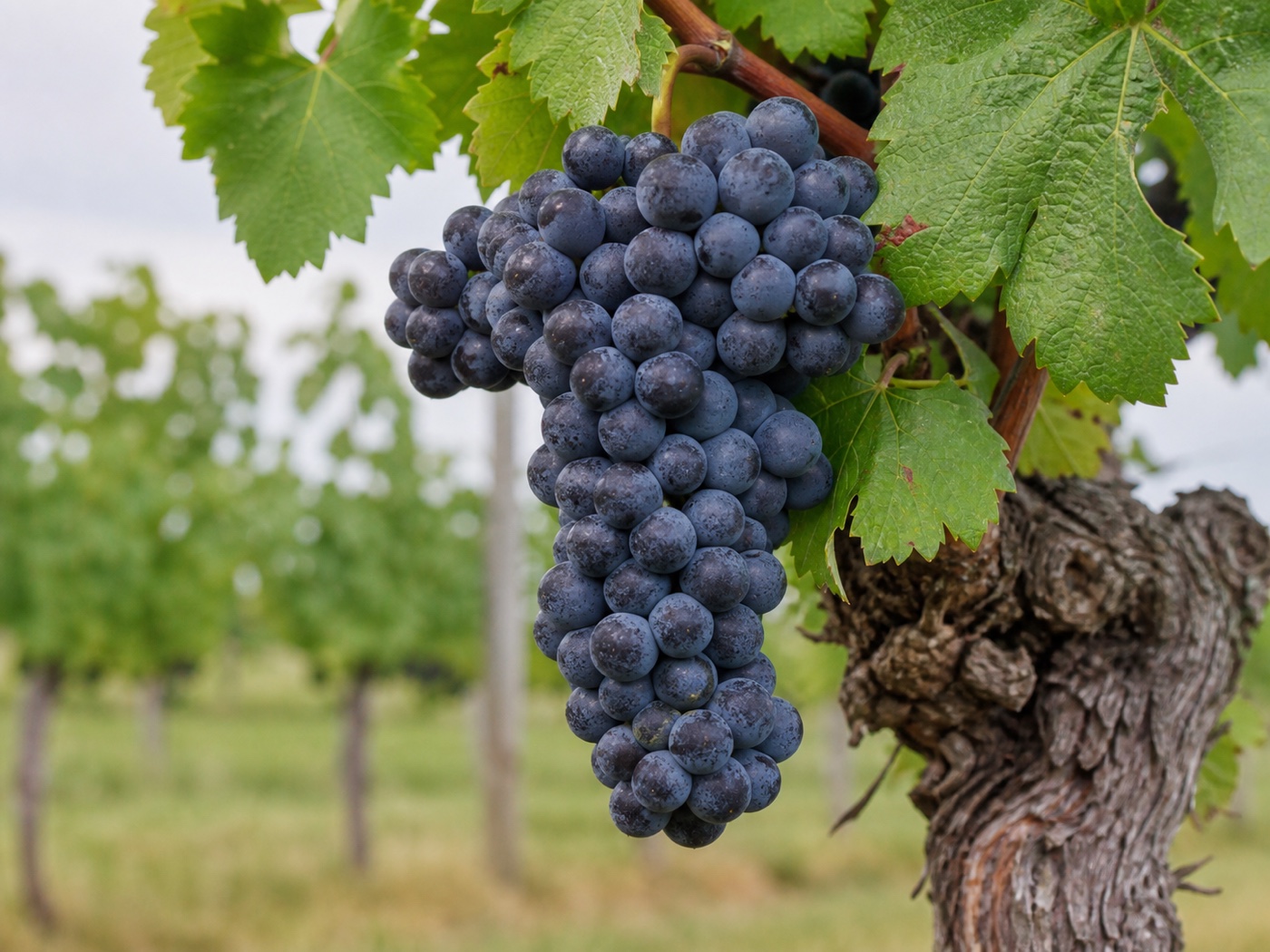
A traditional south-west French grape carried to Uruguay by Basque settlers in the nineteenth century, where it became a national signature.
Its home territory: Madiran and the Pyrenean foothills, France.
In the glass
These are useful recurring possibilities. Climate, yield, harvest date, fermentation, extraction, maturation, bottle age, and serving conditions can all move the result.
In the vineyard
Thick skins give abundant tannin and colour; canopy, seed maturity, oxygen, and extraction shape texture.
Common expressions
Variety does not dictate method. Skin contact, whole bunches, pressing, fermentation vessel, yeast, oxygen, oak, lees, sweetness, fortification, and bubbles can transform the same fruit.
Blending partners
A blend is not a hiding place for leftovers. Each grape can be asked to supply fruit, perfume, acidity, tannin, colour, body, or simply a better answer to an awkward vintage.
Blending Tannat is less surrender than negotiation. Softer or more aromatic partners can make the wine approachable without erasing the grape’s Atlantic-Uruguayan character.
Where it matters
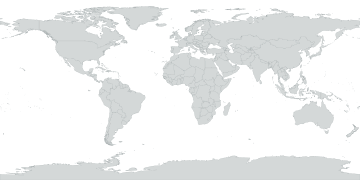
Markers combine dedicated World Explorer profiles with audited benchmark areas important to Tannat. This is a teaching map of major associations—not a census of every planting.
Try this at home
Put Tannat beside Albariño. Do not play “guess the grape.” Compare acidity, tannin or phenolic grip, body, aroma intensity, and the length of the finish. The useful answer is not which one you prefer, but what created the difference.
Keep digging
Historical names, vineyard collections, official records, and modern research do not always agree neatly. These are starting points for checking the parts of the story that matter for this grape.