
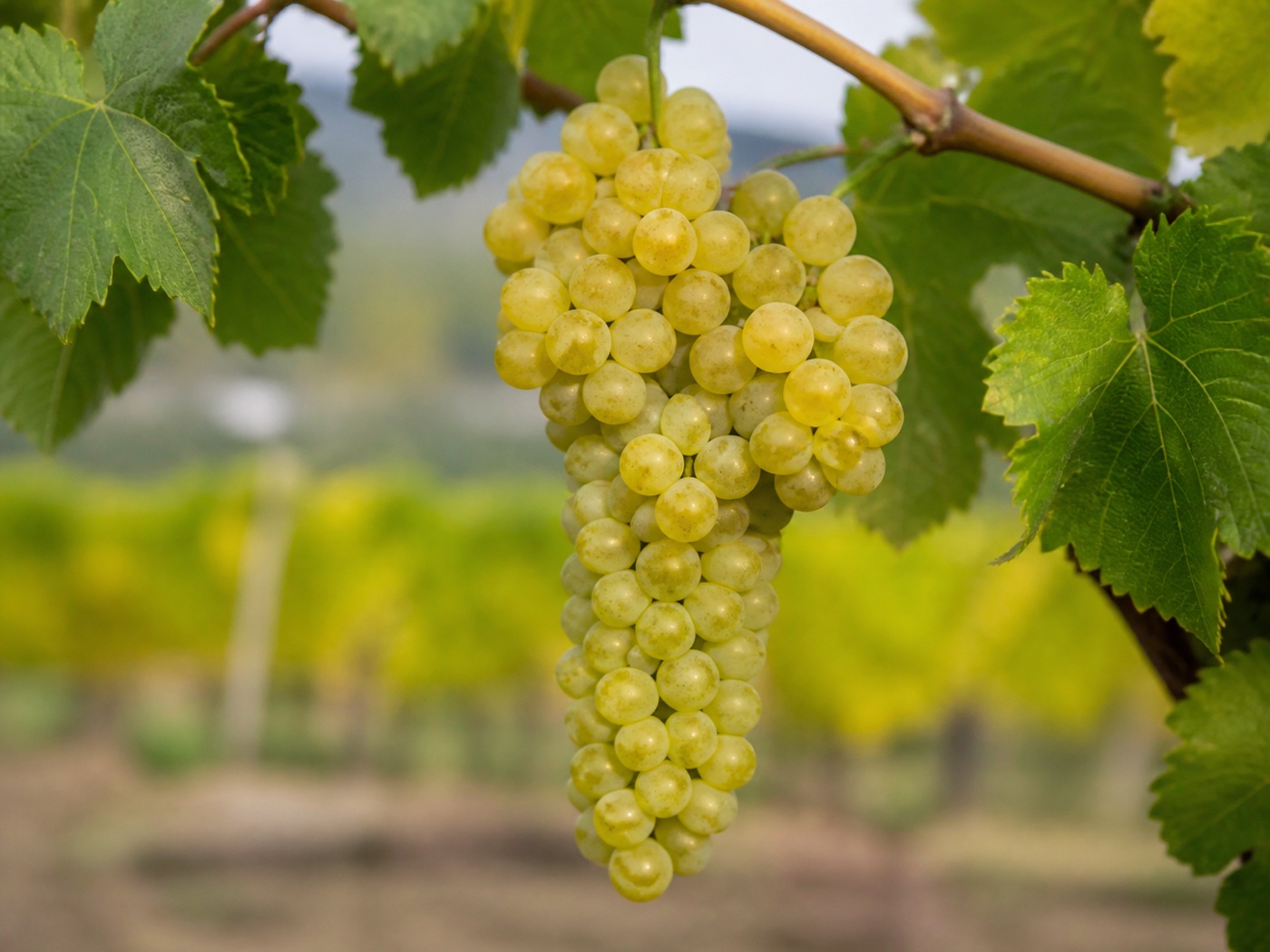
Alsace Gentil or Edelzwicker
Traditional mixed Alsatian whites can blend varieties that would dominate the room alone. The art lies in keeping perfume from becoming potpourri and body from outrunning freshness.
Grape field guide · pale-skinned
Riesling can carry sweetness, searing freshness, perfume, and remarkable age all at once without dropping any of them. Its best trick is balance: acidity supplies the wire, fruit and possible sweetness do the dancing, and the finish tells you whether anyone fell off.

The grape story
First securely recorded in the Rhine area in the fifteenth century, Riesling spread through German-speaking Europe and later became a global benchmark for site-transparent, high-acid wine.
Its home territory: Rhine region, Germany.
In the glass
These are useful recurring possibilities. Climate, yield, harvest date, fermentation, extraction, maturation, bottle age, and serving conditions can all move the result.
In the vineyard
Hard wood and late ripening suit cool climates; botrytis can be noble or destructive depending on conditions.
Common expressions
Variety does not dictate method. Skin contact, whole bunches, pressing, fermentation vessel, yeast, oxygen, oak, lees, sweetness, fortification, and bubbles can transform the same fruit.
Blending partners
A blend is not a hiding place for leftovers. Each grape can be asked to supply fruit, perfume, acidity, tannin, colour, body, or simply a better answer to an awkward vintage.
Traditional mixed Alsatian whites can blend varieties that would dominate the room alone. The art lies in keeping perfume from becoming potpourri and body from outrunning freshness.
Where it matters
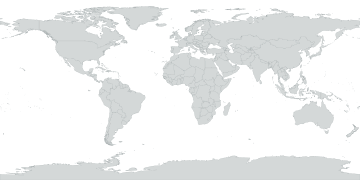
Markers combine dedicated World Explorer profiles with audited benchmark areas important to Riesling. This is a teaching map of major associations—not a census of every planting.
Try this at home
Put Riesling beside Chardonnay. Do not play “guess the grape.” Compare acidity, tannin or phenolic grip, body, aroma intensity, and the length of the finish. The useful answer is not which one you prefer, but what created the difference.
Cool continental conditions with steep slopes, river reflection, and high vintage sensitivity.
Wine 2 · GermanyRheingauCool continental conditions are moderated where the Rhine turns west, giving many south-facing slopes extended sun exposure.
Wine 3 · GermanyPfalzRelatively warm and dry for Germany, protected by the Haardt Mountains but still exposed to vintage heat, drought, and spring frost.
Keep digging
Historical names, vineyard collections, official records, and modern research do not always agree neatly. These are starting points for checking the parts of the story that matter for this grape.