
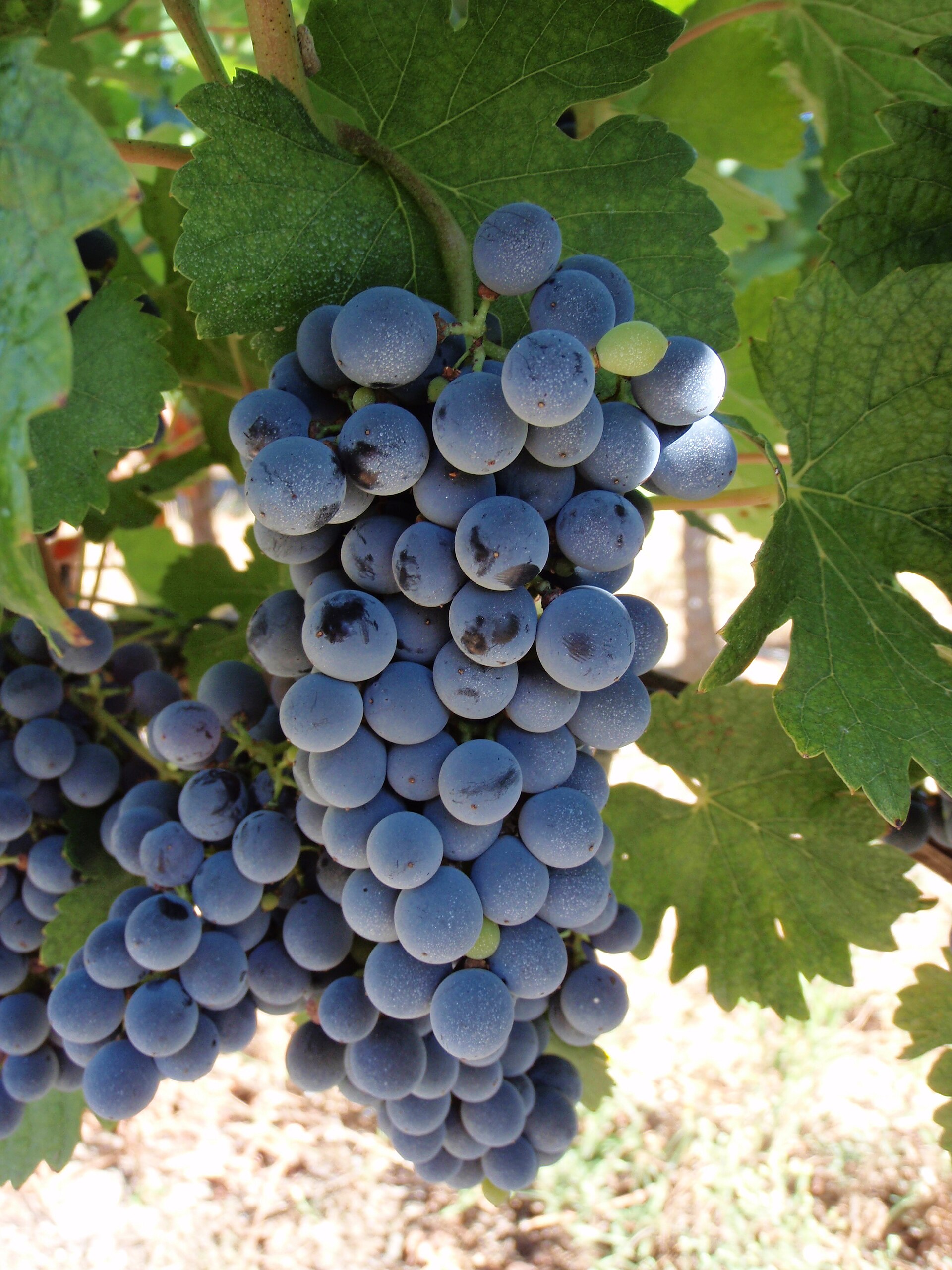
Ningxia Cabernet blend
Ningxia often begins with Bordeaux logic, then adapts it to high sunshine, irrigation, winter vine burial, and a young industry willing to test Marselan. The blend is imported grammar developing a local accent.
Grape field guide · dark-skinned
Do not reduce Marselan to a list of smells. Yes, blackcurrant, plum, violet may appear, but its real personality lives in the tension between ripeness, acidity, texture, and the grower’s choices. This is a grape to follow through the whole sip, not identify after one sniff.

The grape story
Created in 1961 by Paul Truel from Cabernet Sauvignon × Grenache, Marselan was first overlooked for low yield and later valued for heat tolerance, colour, and disease performance.
Its home territory: Southern France.
In the glass
These are useful recurring possibilities. Climate, yield, harvest date, fermentation, extraction, maturation, bottle age, and serving conditions can all move the result.
In the vineyard
Small berries and loose bunches aid colour and disease resistance; it performs in warm, dry sites.
Common expressions
Variety does not dictate method. Skin contact, whole bunches, pressing, fermentation vessel, yeast, oxygen, oak, lees, sweetness, fortification, and bubbles can transform the same fruit.
Blending partners
A blend is not a hiding place for leftovers. Each grape can be asked to supply fruit, perfume, acidity, tannin, colour, body, or simply a better answer to an awkward vintage.
Ningxia often begins with Bordeaux logic, then adapts it to high sunshine, irrigation, winter vine burial, and a young industry willing to test Marselan. The blend is imported grammar developing a local accent.
Where it matters
Markers combine dedicated World Explorer profiles with audited benchmark areas important to Marselan. This is a teaching map of major associations—not a census of every planting.
Try this at home
Put Marselan beside Cabernet Sauvignon. Do not play “guess the grape.” Compare acidity, tannin or phenolic grip, body, aroma intensity, and the length of the finish. The useful answer is not which one you prefer, but what created the difference.
Keep digging
Historical names, vineyard collections, official records, and modern research do not always agree neatly. These are starting points for checking the parts of the story that matter for this grape.