Grape field guide · dark-skinned

Sangiovese

The bright spark that keeps the glass awake

Sangiovese does not need a long résumé to make an entrance. Look for sour cherry, violet, dried herbs, then pay attention to the shape: acidity keeps it alert, body keeps the footsteps light, and tannin supplies the grip. Its classic starting point is Chianti.

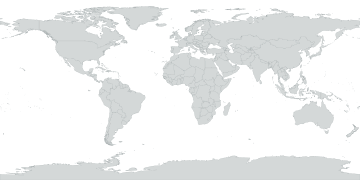
Central ItalyLate-ripening2 benchmark areas mapped
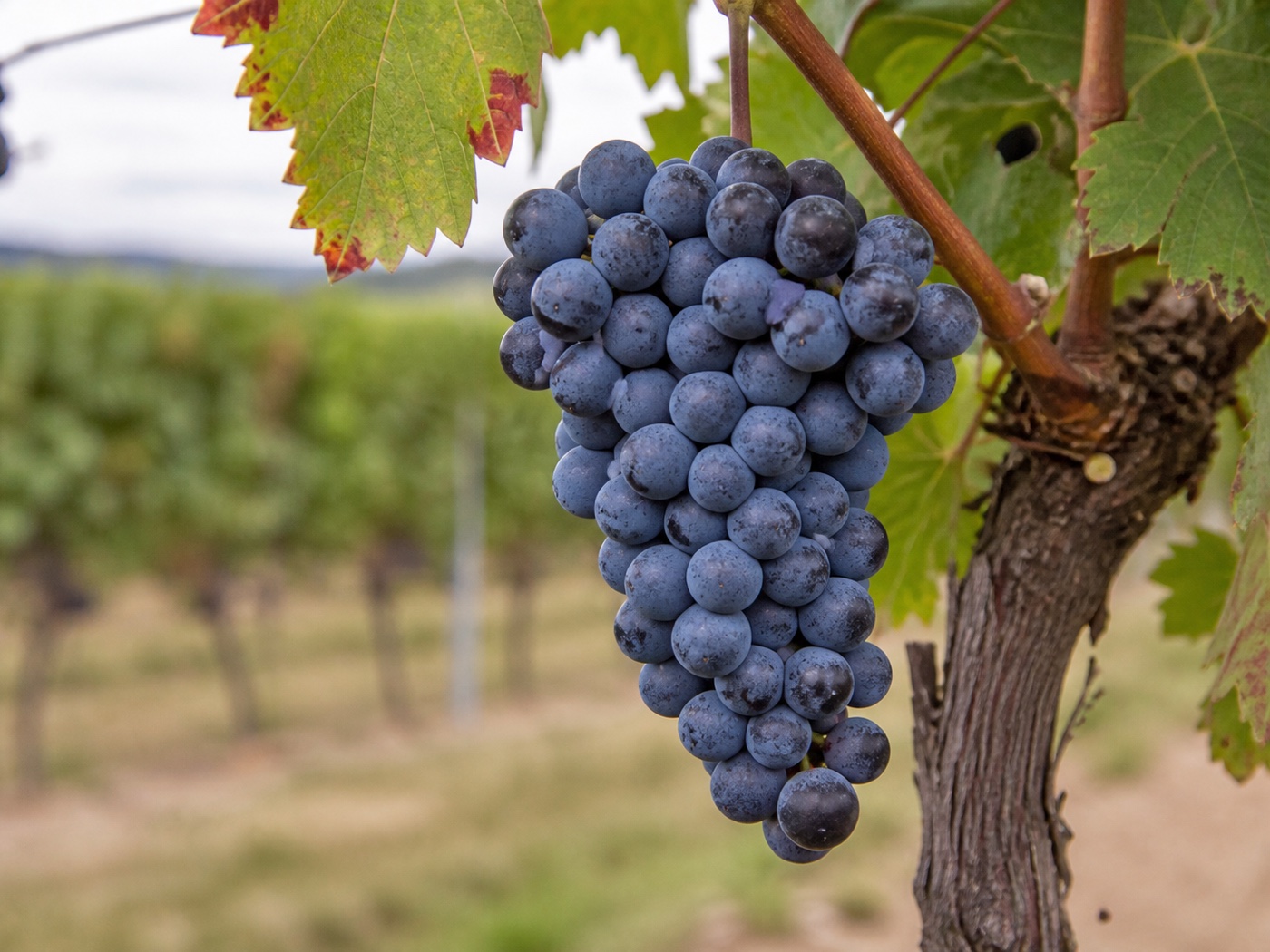
A bunch of Sangiovese wine grapes on the vine
Botanical reference illustration for SangioveseAppearance alone cannot identify a cultivar.

The grape story

How Sangiovese got here

Documented from the sixteenth century and now central to Tuscany, Romagna, and much of central Italy; DNA places it within a complex southern and central Italian family.

Its home territory: Central Italy.

Names you may meetBrunelloPrugnolo GentileMorellino

In the glass

Characteristics, not guarantees

These are useful recurring possibilities. Climate, yield, harvest date, fermentation, extraction, maturation, bottle age, and serving conditions can all move the result.

Smells to investigate

  • sour cherry
  • violet
  • dried herbs
  • tea

Flavours to investigate

  • red cherry
  • tomato leaf
  • earth
  • spice

Typical structural range

Acidity
5/5
Body
3/5
Tannin
4/5

In the vineyard

How the vine behaves

Vigorous, site-sensitive, and variable across clones; a long season helps tannin and flavour mature.

Berry colour
dark-skinned
Ripening window
Late-ripening
Important caution
Site and clone can matter as much as the variety name.

Common expressions

Styles it can make

  • Chianti
  • Brunello
  • varietal red
  • rosé

Variety does not dictate method. Skin contact, whole bunches, pressing, fermentation vessel, yeast, oxygen, oak, lees, sweetness, fortification, and bubbles can transform the same fruit.

Blending partners

Sangiovese does not always work alone.

A blend is not a hiding place for leftovers. Each grape can be asked to supply fruit, perfume, acidity, tannin, colour, body, or simply a better answer to an awkward vintage.

Sangiovese · Canaiolo and permitted partners

Chianti blend

Chianti has never been one timeless recipe. Historic formulas, changing law, white-grape use, local traditions, and modern international varieties have all moved around a Sangiovese centre.

The recipe moves

Current appellation rules set Sangiovese minimums and permitted partners that vary by category. Producer intent still matters inside the law.

Try the lesson

Compare pure Sangiovese with a declared blend. Ask whether the partner softened, darkened, perfumed, or simply obscured the regional voice.

Sangiovese meets Bordeaux varieties—or leaves it entirely

The so-called Super Tuscan blend

“Super Tuscan” is a market nickname, not a legal appellation or single blend. It grew from producers working outside old formulae—sometimes blending Sangiovese with French grapes, sometimes making varietal Cabernet or Merlot.

The recipe moves

There is no required recipe because the term has no formal recipe. Read the actual grapes and origin rather than treating the nickname as a style guarantee.

Try the lesson

Compare a Sangiovese-led example with a Bordeaux-variety-led one. They may share prestige and geography while speaking almost unrelated structural languages.

Where it matters

Major growing areas

Markers combine dedicated World Explorer profiles with audited benchmark areas important to Sangiovese. This is a teaching map of major associations—not a census of every planting.

  1. 1TuscanyItaly · Explorer profile
  2. 2MarcheItaly · Explorer profile

Try this at home

Give the lesson two glasses.

Put Sangiovese beside Cabernet Sauvignon. Do not play “guess the grape.” Compare acidity, tannin or phenolic grip, body, aroma intensity, and the length of the finish. The useful answer is not which one you prefer, but what created the difference.

Wine 1 · ItalyTuscany

Mediterranean with inland elevation and large site differences in heat, rainfall, and exposure.

Wine 2 · ItalyMarche

Adriatic influence meets the Apennines across rolling hills, with warm summers, cooling elevation, rain, and meaningful vintage differences.

Keep digging

Follow the evidence, not the folklore.

Historical names, vineyard collections, official records, and modern research do not always agree neatly. These are starting points for checking the parts of the story that matter for this grape.

  1. OIV Vine Varieties Database ↗International names, synonyms, and country associations.
  2. UC Davis Foundation Plant Services ↗Reference plant material, origins, and selections.
  3. Chianti Classico ConsortiumRegional context for Sangiovese in Tuscany.
  4. IMT Marche Wine InstituteRegional context for Sangiovese in Marche.