Grape field guide · dark-skinned

Tempranillo

A local voice with a travelling passport

Do not reduce Tempranillo to a list of smells. Yes, strawberry, cherry, plum may appear, but its real personality lives in the tension between ripeness, acidity, texture, and the grower’s choices. This is a grape to follow through the whole sip, not identify after one sniff.

North-central SpainEarly-ripening5 benchmark areas mapped
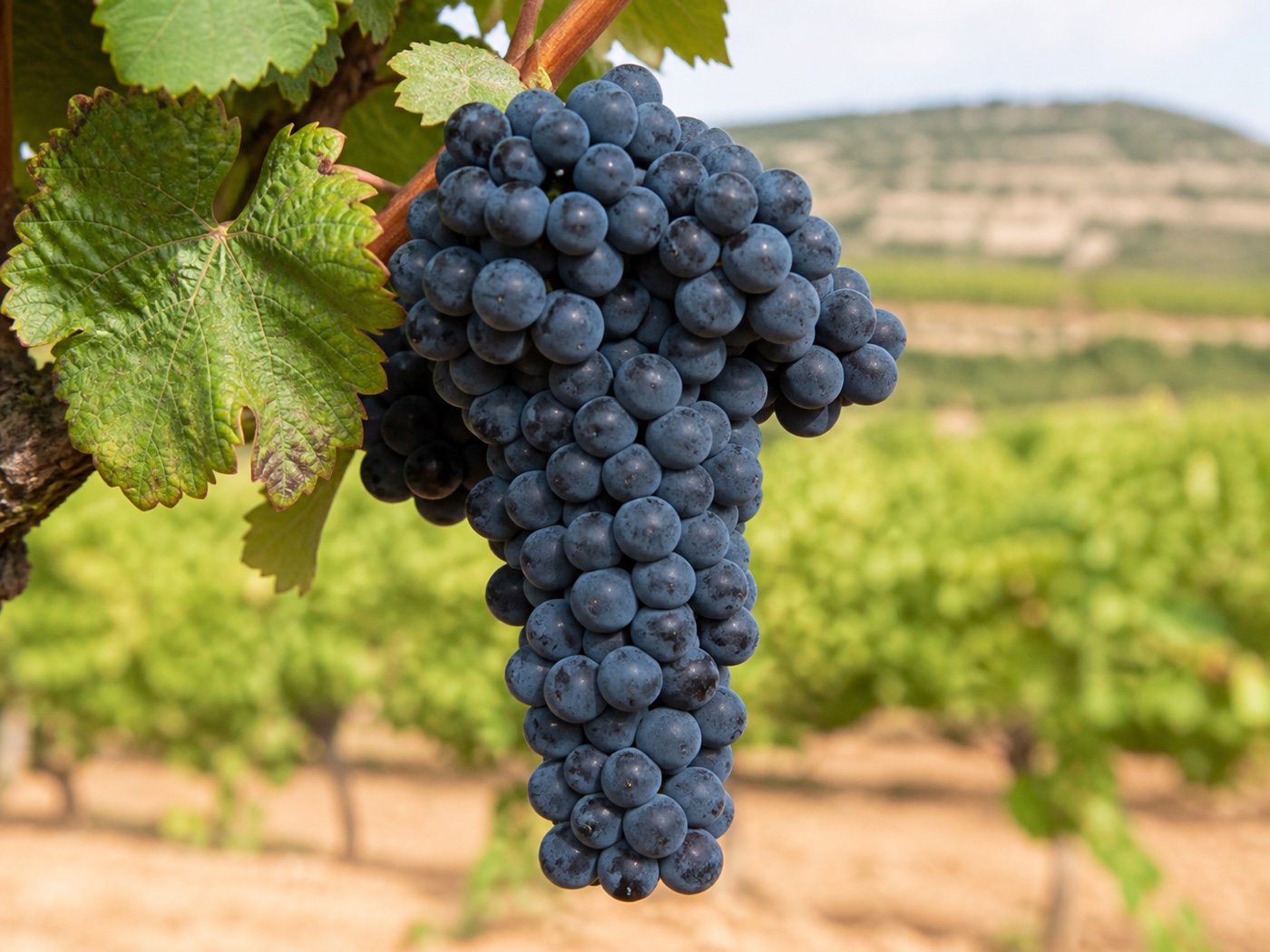
A bunch of Tempranillo wine grapes on the vine
Botanical reference illustration for TempranilloAppearance alone cannot identify a cultivar.

The grape story

How Tempranillo got here

DNA identifies Albillo Mayor and Benedicto as its parents. Its early ripening—reflected in temprano—helped it spread across Rioja, Ribera del Duero, and Portugal.

Its home territory: North-central Spain.

Names you may meetTinto FinoTinta del PaísTinta RorizAragonez

In the glass

Characteristics, not guarantees

These are useful recurring possibilities. Climate, yield, harvest date, fermentation, extraction, maturation, bottle age, and serving conditions can all move the result.

Smells to investigate

  • strawberry
  • cherry
  • plum
  • leather

Flavours to investigate

  • red and black fruit
  • tobacco
  • spice

Typical structural range

Acidity
3/5
Body
4/5
Tannin
4/5

In the vineyard

How the vine behaves

Adaptable but drought and heat can shorten ripening; clone, elevation, and oak regime create wide variation.

Berry colour
dark-skinned
Ripening window
Early-ripening
Important caution
Site and clone can matter as much as the variety name.

Common expressions

Styles it can make

  • Rioja
  • Ribera del Duero
  • varietal red
  • Port and Douro blends

Variety does not dictate method. Skin contact, whole bunches, pressing, fermentation vessel, yeast, oxygen, oak, lees, sweetness, fortification, and bubbles can transform the same fruit.

Blending partners

Tempranillo does not always work alone.

A blend is not a hiding place for leftovers. Each grape can be asked to supply fruit, perfume, acidity, tannin, colour, body, or simply a better answer to an awkward vintage.

Tempranillo · Garnacha · Graciano · Mazuelo

Traditional Rioja red blend

Classic Rioja blending uses grapes and subzones as a set of corrections. Tempranillo can supply the centre, Garnacha the warmth, Graciano the perfume, and Mazuelo the edge. Ageing then adds another compositional layer.

The recipe moves

Tempranillo normally leads, but old and modern bottlings vary. Varietal Rioja also exists; tradition is not one compulsory recipe.

Try the lesson

Compare a Tempranillo-dominant Rioja with one listing Graciano or Garnacha prominently. Find the perfume, warmth, and acid line before looking at the label again.

Touriga Nacional · Touriga Franca · Tinta Roriz · Tinta Cão

Port and Douro red blend

Douro blending developed in mixed vineyards where many varieties could be harvested together, then became more deliberately composed. Fortification stops fermentation for Port; dry Douro reds use much of the same cast without keeping the sweetness.

The recipe moves

Dozens of grapes are authorized, and old field blends may contain more varieties than anyone can identify by eye. The famous four are not the whole census.

Try the lesson

Taste a dry Douro red beside a young Port. Search for shared dark fruit and floral character, then isolate what fortification and sweetness changed.

Where it matters

Major growing areas

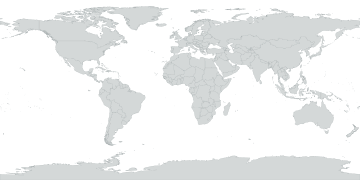
Markers combine dedicated World Explorer profiles with audited benchmark areas important to Tempranillo or its synonym Tinta Roriz. This is a teaching map of major associations—not a census of every planting.

  1. 1RiojaSpain · Explorer profile
  2. 2Ribera del DueroSpain · Explorer profile
  3. 3DouroPortugal · Explorer profile
  4. 4Texas Hill CountryUnited States · Explorer profile
  5. 5Snake River ValleyUnited States · Explorer profile

Try this at home

Give the lesson two glasses.

Put Tempranillo beside Albillo Mayor. Do not play “guess the grape.” Compare acidity, tannin or phenolic grip, body, aroma intensity, and the length of the finish. The useful answer is not which one you prefer, but what created the difference.

Wine 1 · SpainRioja

Atlantic, continental, and Mediterranean influences meet across a varied region.

Wine 2 · SpainRibera del Duero

High-elevation continental conditions bring hot, dry summers, cold winters, frost risk, and large day–night temperature shifts.

Wine 3 · PortugalDouro

Hot, dry continental conditions moderated by elevation; schist dominates many vineyard sites.

Keep digging

Follow the evidence, not the folklore.

Historical names, vineyard collections, official records, and modern research do not always agree neatly. These are starting points for checking the parts of the story that matter for this grape.

  1. OIV Vine Varieties Database ↗International names, synonyms, and country associations.
  2. UC Davis Foundation Plant Services ↗Reference plant material, origins, and selections.
  3. Rioja DOCaRegional context for Tempranillo in Rioja.
  4. Ribera del Duero Consejo ReguladorRegional context for Tempranillo in Ribera del Duero.
  5. Port and Douro Wines InstituteRegional context for Tempranillo in Douro.
  6. Texas Wine & Grape Growers AssociationRegional context for Tempranillo in Texas Hill Country.