Grape field guide · dark-skinned

Mourvèdre

A velvet rope with fruit behind it

Mourvèdre does not need a long résumé to make an entrance. Look for blackberry, plum, game, then pay attention to the shape: acidity takes a quieter role, body brings some weight, and tannin supplies the grip. Its classic starting point is Bandol red and rosé.

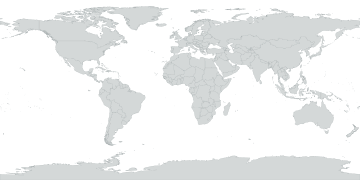
Eastern SpainVery late-ripening4 benchmark areas mapped
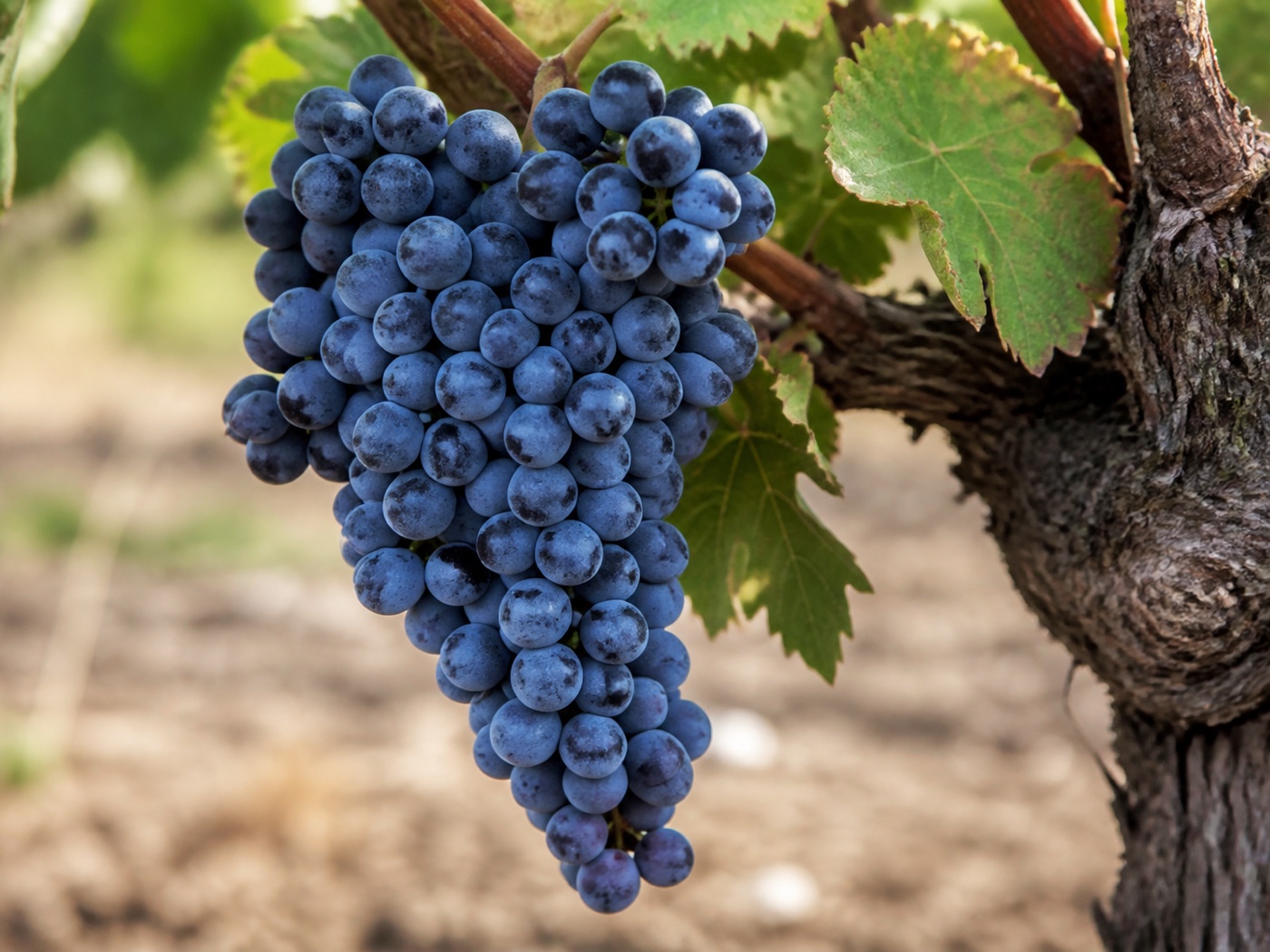
A bunch of Mourvèdre wine grapes on the vine
Botanical reference illustration for MourvèdreAppearance alone cannot identify a cultivar.

The grape story

How Mourvèdre got here

Known as Monastrell in Spain and Mataro in Australia, Mourvèdre became a major warm-climate variety in Provence, the southern Rhône, and beyond.

Its home territory: Eastern Spain.

Names you may meetMonastrellMataro

In the glass

Characteristics, not guarantees

These are useful recurring possibilities. Climate, yield, harvest date, fermentation, extraction, maturation, bottle age, and serving conditions can all move the result.

Smells to investigate

  • blackberry
  • plum
  • game
  • dried herbs

Flavours to investigate

  • dark fruit
  • earth
  • pepper
  • leather

Typical structural range

Acidity
3/5
Body
5/5
Tannin
5/5

In the vineyard

How the vine behaves

Needs heat and a long season; small berries yield colour and tannin, while fermentations can be reduction-prone.

Berry colour
dark-skinned
Ripening window
Very late-ripening
Important caution
Site and clone can matter as much as the variety name.

Common expressions

Styles it can make

  • Bandol red and rosé
  • GSM blend
  • varietal red

Variety does not dictate method. Skin contact, whole bunches, pressing, fermentation vessel, yeast, oxygen, oak, lees, sweetness, fortification, and bubbles can transform the same fruit.

Blending partners

Mourvèdre does not always work alone.

A blend is not a hiding place for leftovers. Each grape can be asked to supply fruit, perfume, acidity, tannin, colour, body, or simply a better answer to an awkward vintage.

Grenache · Syrah · Mourvèdre

GSM

GSM is not a fixed recipe but a three-part conversation born from southern Rhône logic and enthusiastically continued in Australia and the Americas. Grenache fills the middle, Syrah draws darker lines, and Mourvèdre lowers the voice and adds grip. Change the proportions and the entire centre of gravity moves.

The recipe moves

Grenache often leads, but there is no universal percentage. A Syrah-heavy GSM becomes darker and firmer; more Mourvèdre makes it more savoury and structured.

Try the lesson

Taste a Grenache-led version beside a Mourvèdre-heavy one. Look for the shift from strawberry and warmth toward darker fruit, earth, and tannin.

Grenache · Mourvèdre · Syrah and friends

Southern French rosé blend

Rosé blending is not watered-down red-wine blending. Picking date, direct pressing, skin time, and oxygen management change the role of each grape, with colour treated as a controlled extraction decision.

The recipe moves

Grenache commonly leads, while darker partners may be used carefully because a little pigment travels quickly.

Try the lesson

Taste two rosés of similar colour but different blends. If they feel different, congratulations: you have proved that pink is not a flavour.

Zinfandel · Carignan · Mataro and old-vine companions

California heritage field blend

Old California vineyards were often planted as mixed blocks and harvested together. The blend happened in the ground before anyone opened a spreadsheet, spreading ripening risk and creating wines that resist single-variety storytelling.

The recipe moves

Some old blocks have been mapped vine by vine; others remain approximate. A field blend is agricultural history, not simply several finished wines mixed in a tank.

Try the lesson

Compare an old-vine field blend with varietal Zinfandel. Look for acidity and savoury complexity that prevent ripeness from becoming a monologue.

Where it matters

Major growing areas

Markers combine dedicated World Explorer profiles with audited benchmark areas important to Mourvèdre or its synonym Mataro. This is a teaching map of major associations—not a census of every planting.

  1. 1Rhône ValleyFrance · Explorer profile
  2. 2Paso RoblesUnited States · Explorer profile
  3. 3Texas Hill CountryUnited States · Explorer profile
  4. 4Barossa ValleyAustralia · Explorer profile

Try this at home

Give the lesson two glasses.

Put Mourvèdre beside Grenache. Do not play “guess the grape.” Compare acidity, tannin or phenolic grip, body, aroma intensity, and the length of the finish. The useful answer is not which one you prefer, but what created the difference.

Wine 1 · FranceRhône Valley

Northern Rhône is narrower and more continental; the south is warmer and Mediterranean with wind and drought pressure.

Wine 2 · United StatesPaso Robles

Warm and dry overall, with large day–night shifts and cooling through the Templeton Gap in western sectors.

Wine 3 · United StatesTexas Hill Country

Hot, sunny, and drought-prone, with spring frost, hail, and large vintage risks; much fruit for Hill Country wineries is grown on the High Plains.

Keep digging

Follow the evidence, not the folklore.

Historical names, vineyard collections, official records, and modern research do not always agree neatly. These are starting points for checking the parts of the story that matter for this grape.

  1. OIV Vine Varieties Database ↗International names, synonyms, and country associations.
  2. UC Davis Foundation Plant Services ↗Reference plant material, origins, and selections.
  3. Rhône Valley VineyardsRegional context for Mourvèdre in Rhône Valley.
  4. Paso Robles Wine Country AllianceRegional context for Mourvèdre in Paso Robles.
  5. Texas Wine & Grape Growers AssociationRegional context for Mourvèdre in Texas Hill Country.
  6. Wine Australia: BarossaRegional context for Mourvèdre in Barossa Valley.