Grape field guide · dark-skinned

Syrah

The vineyard’s unapologetic perfumer

Do not reduce Syrah to a list of smells. Yes, blackberry, blueberry, violet may appear, but its real personality lives in the tension between ripeness, acidity, texture, and the grower’s choices. This is a grape to follow through the whole sip, not identify after one sniff.

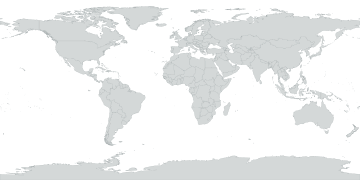
Northern Rhône and the Alpine zone, FranceMid- to late-ripening11 benchmark areas mapped
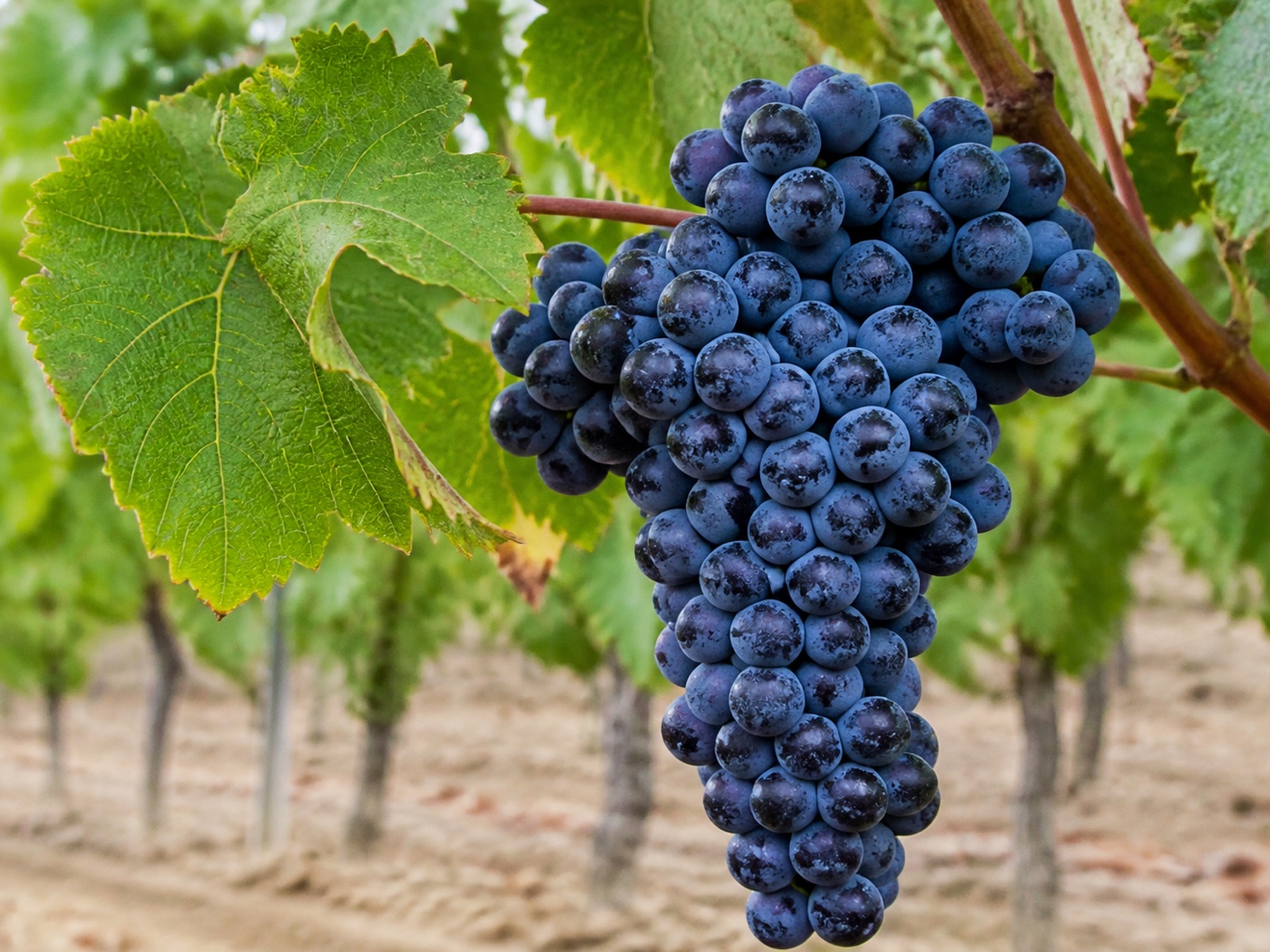
A bunch of Syrah wine grapes on the vine
Botanical reference illustration for SyrahAppearance alone cannot identify a cultivar.

The grape story

How Syrah got here

DNA identifies Syrah as an offspring of Mondeuse Blanche and Dureza, disproving stories of origin in Persia or ancient Syracuse.

Its home territory: Northern Rhône and the Alpine zone, France.

Names you may meetShiraz

In the glass

Characteristics, not guarantees

These are useful recurring possibilities. Climate, yield, harvest date, fermentation, extraction, maturation, bottle age, and serving conditions can all move the result.

Smells to investigate

  • blackberry
  • blueberry
  • violet
  • black pepper

Flavours to investigate

  • dark fruit
  • olive
  • pepper
  • smoke

Typical structural range

Acidity
4/5
Body
4/5
Tannin
4/5

In the vineyard

How the vine behaves

Sensitive to drought stress and poor fruit set; rotundone, sun exposure, and harvest timing influence pepper and fruit.

Berry colour
dark-skinned
Ripening window
Mid- to late-ripening
Important caution
Site and clone can matter as much as the variety name.

Common expressions

Styles it can make

  • northern Rhône red
  • varietal red
  • GSM blend
  • rosé

Variety does not dictate method. Skin contact, whole bunches, pressing, fermentation vessel, yeast, oxygen, oak, lees, sweetness, fortification, and bubbles can transform the same fruit.

Blending partners

Syrah does not always work alone.

A blend is not a hiding place for leftovers. Each grape can be asked to supply fruit, perfume, acidity, tannin, colour, body, or simply a better answer to an awkward vintage.

Grenache · Syrah · Mourvèdre

GSM

GSM is not a fixed recipe but a three-part conversation born from southern Rhône logic and enthusiastically continued in Australia and the Americas. Grenache fills the middle, Syrah draws darker lines, and Mourvèdre lowers the voice and adds grip. Change the proportions and the entire centre of gravity moves.

The recipe moves

Grenache often leads, but there is no universal percentage. A Syrah-heavy GSM becomes darker and firmer; more Mourvèdre makes it more savoury and structured.

Try the lesson

Taste a Grenache-led version beside a Mourvèdre-heavy one. Look for the shift from strawberry and warmth toward darker fruit, earth, and tannin.

A red grape and a white grape share the vat

Syrah–Viognier co-ferment

In Côte-Rôtie, small amounts of Viognier may be fermented with Syrah rather than blended after the fact. Co-fermentation changes extraction and aroma integration, making this much more interesting than dropping white wine into red wine.

The recipe moves

Viognier is generally a minor partner and is not required in every wine. More is not automatically more elegant.

Try the lesson

Compare pure Syrah with a declared co-ferment. Look for floral lift and texture, but do not assume every violet aroma came from Viognier.

Garnacha · Cariñena with optional international partners

Priorat red blend

Priorat’s most compelling blends often begin with old Garnacha and Cariñena rooted in fractured slate. International grapes can join, but the argument is strongest when place remains louder than the guest list.

The recipe moves

The balance changes by village, vine age, and producer. Cariñena-heavy wines can be darker and firmer than their Garnacha-led neighbours.

Try the lesson

Compare Garnacha-led and Cariñena-led Priorat. Look past alcohol and oak toward acidity, tannin grain, and whether the fruit reads red or black.

Pinotage with a flexible South African cast

Cape blend

Cape blend is a stylistic category rather than one universal legal formula. Pinotage is normally the identity card, surrounded by Bordeaux or Rhône varieties according to producer intent.

The recipe moves

Definitions used by competitions or producers can differ. If Pinotage is invisible, the name starts doing more work than the grape.

Try the lesson

Compare a Pinotage-dominant Cape blend with a Cabernet-dominant one. Decide when the blend feels specifically South African rather than generically polished.

Grenache · Mourvèdre · Syrah and friends

Southern French rosé blend

Rosé blending is not watered-down red-wine blending. Picking date, direct pressing, skin time, and oxygen management change the role of each grape, with colour treated as a controlled extraction decision.

The recipe moves

Grenache commonly leads, while darker partners may be used carefully because a little pigment travels quickly.

Try the lesson

Taste two rosés of similar colour but different blends. If they feel different, congratulations: you have proved that pink is not a flavour.

Cabernet Sauvignon · Shiraz

Australian Cabernet–Shiraz

Cabernet–Shiraz is a distinctly Australian classic: Cabernet supplies the scaffolding, Shiraz moves in the furniture. The combination predates the fashion for treating Bordeaux and Rhône grapes as rival sports teams.

The recipe moves

Either grape may lead. Cabernet-heavy examples feel straighter; Shiraz-heavy versions tend to be broader and more immediately fruity.

Try the lesson

Taste the blend beside each varietal component. The moment the blend feels more complete than either part, you have found the blender’s argument.

Malbec · Cabernet Sauvignon · Bonarda and partners

Mendoza red blend

Mendoza blends test whether Malbec is the whole national story or the charismatic lead in an ensemble. Cabernet can tighten it, Bonarda can brighten it, and altitude changes every contribution.

The recipe moves

Malbec commonly leads, but high-end cuvées may use Cabernet as more than seasoning.

Try the lesson

Compare varietal Malbec with a Malbec–Cabernet blend from similar altitude. Find where the tannin becomes straighter and the fruit less plush.

Where it matters

Major growing areas

Markers combine dedicated World Explorer profiles with audited benchmark areas important to Syrah or its synonym Shiraz. This is a teaching map of major associations—not a census of every planting.

  1. 1Rhône ValleyFrance · Explorer profile
  2. 2PrioratSpain · Explorer profile
  3. 3StellenboschSouth Africa · Explorer profile
  4. 4Paso RoblesUnited States · Explorer profile
  5. 5Santa Barbara CountyUnited States · Explorer profile
  6. 6Columbia ValleyUnited States · Explorer profile
  7. 7Walla Walla ValleyUnited States · Explorer profile
  8. 8Snake River ValleyUnited States · Explorer profile
  9. 9Okanagan ValleyCanada · Explorer profile
  10. 10Maipo ValleyChile · Explorer profile
  11. 11Barossa ValleyAustralia · Explorer profile

Try this at home

Give the lesson two glasses.

Put Syrah beside Cabernet Sauvignon. Do not play “guess the grape.” Compare acidity, tannin or phenolic grip, body, aroma intensity, and the length of the finish. The useful answer is not which one you prefer, but what created the difference.

Wine 1 · FranceRhône Valley

Northern Rhône is narrower and more continental; the south is warmer and Mediterranean with wind and drought pressure.

Wine 2 · SpainPriorat

Dry Mediterranean conditions are complicated by elevation, exposure, drought, and sharp temperature differences between sites.

Wine 3 · South AfricaStellenbosch

Mediterranean with maritime cooling from False Bay and large differences by slope and exposure.

Keep digging

Follow the evidence, not the folklore.

Historical names, vineyard collections, official records, and modern research do not always agree neatly. These are starting points for checking the parts of the story that matter for this grape.

  1. OIV Vine Varieties Database ↗International names, synonyms, and country associations.
  2. UC Davis Foundation Plant Services ↗Reference plant material, origins, and selections.
  3. Rhône Valley VineyardsRegional context for Syrah in Rhône Valley.
  4. DOQ PrioratRegional context for Syrah in Priorat.
  5. Wines of South AfricaRegional context for Syrah in Stellenbosch.
  6. Paso Robles Wine Country AllianceRegional context for Syrah in Paso Robles.