Grape field guide · dark-skinned

Spätburgunder

The vineyard’s unapologetic perfumer

Meet Spätburgunder: part fruit, part structure, and part argument with the place that grows it. The aromatic trail may include red cherry, raspberry, violet, but the useful lesson is how those clues meet early-ripening fruit and a restrained frame.

Burgundy, FranceEarly-ripening24 benchmark areas mapped
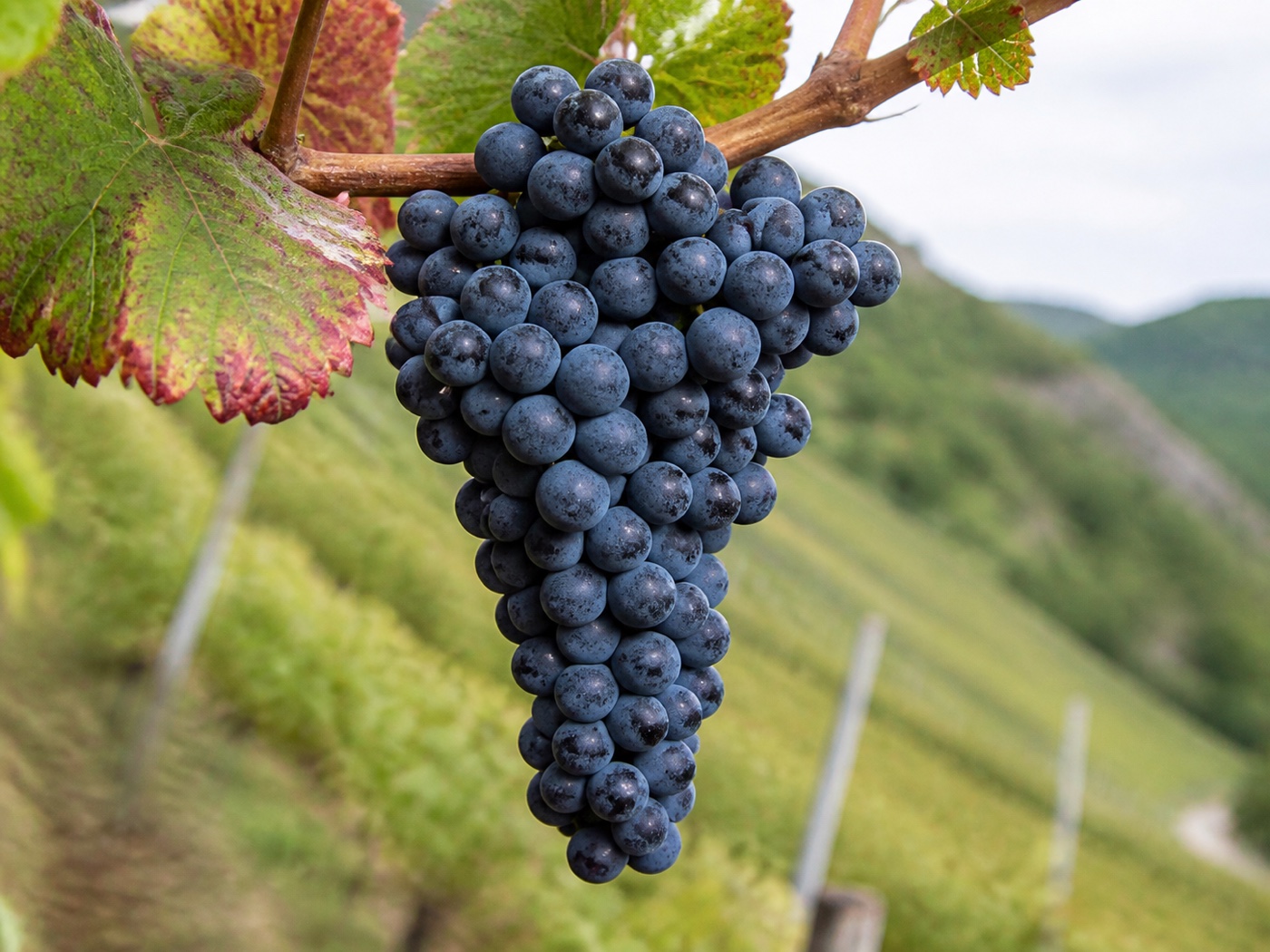
A bunch of Spätburgunder wine grapes on the vine
Botanical reference illustration for SpätburgunderAppearance alone cannot identify a cultivar.

The grape story

How Spätburgunder got here

Spätburgunder is the German name for Pinot Noir, an ancient mutation-prone variety cultivated in German regions since the Middle Ages.

Its home territory: Burgundy, France.

Names you may meetPinot NoirBlauburgunder

In the glass

Characteristics, not guarantees

These are useful recurring possibilities. Climate, yield, harvest date, fermentation, extraction, maturation, bottle age, and serving conditions can all move the result.

Smells to investigate

  • red cherry
  • raspberry
  • violet
  • forest floor

Flavours to investigate

  • red fruit
  • tea
  • earth
  • spice

Typical structural range

Acidity
4/5
Body
2/5
Tannin
2/5

In the vineyard

How the vine behaves

Early budbreak and thin skins bring frost and disease risk; Germany’s warming seasons have expanded ripening options.

Berry colour
dark-skinned
Ripening window
Early-ripening
Important caution
Site and clone can matter as much as the variety name.

Common expressions

Styles it can make

  • German dry red
  • rosé
  • traditional-method sparkling

Variety does not dictate method. Skin contact, whole bunches, pressing, fermentation vessel, yeast, oxygen, oak, lees, sweetness, fortification, and bubbles can transform the same fruit.

Blending partners

Spätburgunder does not always work alone.

A blend is not a hiding place for leftovers. Each grape can be asked to supply fruit, perfume, acidity, tannin, colour, body, or simply a better answer to an awkward vintage.

Chardonnay · Pinot Noir · Meunier

Classic Champagne blend

The classic sparkling trio is a toolkit, not a hierarchy. Chardonnay supplies line, Pinot Noir supplies shoulders, and Meunier often makes the wine welcoming earlier. Producers then layer villages, vintages, reserve wines, lees age, and dosage on top of the varietal blend.
The recipe moves

Blanc de Blancs may be all Chardonnay; Blanc de Noirs may use Pinot Noir and/or Meunier. A house blend can change by harvest while protecting a recognizable style.

Try the lesson

Compare Blanc de Blancs, Blanc de Noirs, and a three-grape blend. Ignore the bubbles for a moment and feel the difference in body and fruit.

Macabeu · Xarel·lo · Parellada

Traditional Cava blend

The classic Catalan trio works like sparkling mise en place: Macabeu supplies easy fruit, Xarel·lo provides the structural argument, and Parellada lightens the delivery. Lees ageing and dosage then decide whether the result whispers or gives a speech.

The recipe moves

There is no mandatory classic-trio ratio, and not every Cava uses all three. Modern regional sparkling categories may apply different grape and origin rules.

Try the lesson

Compare a young Cava with a long-lees-aged bottling. The grapes matter, but the biscuit, cream, and integration mostly tell a story about time.

Pinot Noir · Chardonnay · Aligoté · Gamay

Crémant de Bourgogne blend

Burgundy’s sparkling blend lets grapes normally separated by prestige work as colleagues. Aligoté and Gamay are not understudies here; they can make the blend brighter and more immediately expressive.

The recipe moves

Permitted grapes and label categories govern the options. Blanc and rosé versions rearrange the cast.

Try the lesson

Compare Crémant de Bourgogne with Champagne at similar lees age. Geography matters, but so do grape proportions and dosage.

Pinot Noir · Gamay

Bourgogne Passetoutgrains

Passetoutgrains is Burgundy refusing the idea that Pinot Noir and Gamay must live in separate prestige boxes. Co-fermented or blended under appellation rules, they produce an honest, energetic red.

The recipe moves

The appellation specifies minimum shares and production rules; the lived result depends on who leads and how extraction is handled.

Try the lesson

Taste it beside regional Pinot Noir. Ask what Gamay changed in fruit, tannin, and seriousness—not whether seriousness is automatically better.

Chardonnay · Pinot Noir · Meunier

English traditional-method blend

The grapes resemble Champagne’s, but English weather, soils, ripeness, base-wine choices, and producer history create a different equation. Borrowed tools do not force a copied result.

The recipe moves

Vintage and non-vintage blends vary widely. Some producers emphasize Chardonnay; others rely more heavily on the black grapes.

Try the lesson

Compare English sparkling and Champagne at similar dosage. Avoid hunting for national superiority; compare acid shape, fruit ripeness, and lees character.

Where it matters

Major growing areas

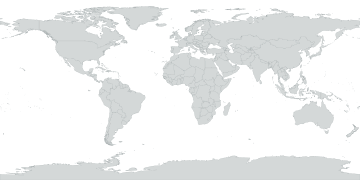
Markers combine dedicated World Explorer profiles with audited benchmark areas important to Spätburgunder or its synonym Pinot Noir. This is a teaching map of major associations—not a census of every planting.

  1. 1BurgundyFrance · Explorer profile
  2. 2ChampagneFrance · Explorer profile
  3. 3Loire ValleyFrance · Explorer profile
  4. 4MoselGermany · Explorer profile
  5. 5RheingauGermany · Explorer profile
  6. 6PfalzGermany · Explorer profile
  7. 7BadenGermany · Explorer profile
  8. 8FrankenGermany · Explorer profile
  9. 9ValaisSwitzerland · Explorer profile
  10. 10VaudSwitzerland · Explorer profile
  11. 11GenevaSwitzerland · Explorer profile
  12. 12Three LakesSwitzerland · Explorer profile
  13. 13German-speaking SwitzerlandSwitzerland · Explorer profile
  14. 14TicinoSwitzerland · Explorer profile
  15. 15Sonoma CountyUnited States · Explorer profile
  16. 16Santa Barbara CountyUnited States · Explorer profile
  17. 17Willamette ValleyUnited States · Explorer profile
  18. 18Leelanau PeninsulaUnited States · Explorer profile
  19. 19Okanagan ValleyCanada · Explorer profile
  20. 20TasmaniaAustralia · Explorer profile
  21. 21MarlboroughNew Zealand · Explorer profile
  22. 22Central OtagoNew Zealand · Explorer profile
  23. 23Sussex & Southern EnglandUnited Kingdom · Explorer profile
  24. 24Alto Adige / SüdtirolItaly · Explorer profile

Try this at home

Give the lesson two glasses.

Put Spätburgunder beside Chardonnay. Do not play “guess the grape.” Compare acidity, tannin or phenolic grip, body, aroma intensity, and the length of the finish. The useful answer is not which one you prefer, but what created the difference.

Wine 1 · FranceBurgundy

Continental, with frost, hail, rain, and heat creating pronounced vintage and site risk.

Wine 2 · FranceChampagne

Cool continental-maritime conditions; chalk and other soils aid drainage and water storage.

Wine 3 · FranceLoire Valley

Ranges from Atlantic maritime influence in the west to increasingly continental conditions inland.

Keep digging

Follow the evidence, not the folklore.

Historical names, vineyard collections, official records, and modern research do not always agree neatly. These are starting points for checking the parts of the story that matter for this grape.

  1. OIV Vine Varieties Database ↗International names, synonyms, and country associations.
  2. UC Davis Foundation Plant Services ↗Reference plant material, origins, and selections.
  3. Bourgogne Wine BoardRegional context for Spätburgunder in Burgundy.
  4. Comité ChampagneRegional context for Spätburgunder in Champagne.
  5. Loire Valley WinesRegional context for Spätburgunder in Loire Valley.
  6. Wines of GermanyRegional context for Spätburgunder in Mosel.