
Viura · Garnacha Blanca
White Rioja blend
White Rioja can be brisk and young or deliberately matured for years in barrel and bottle. Viura provides the patient frame; Garnacha Blanca broadens it. The cellar may matter as much as the blend.
Grape field guide · pale-skinned
Do not reduce Viura to a list of smells. Yes, apple, lemon, white flowers may appear, but its real personality lives in the tension between ripeness, acidity, texture, and the grower’s choices. This is a grape to follow through the whole sip, not identify after one sniff.
The grape story
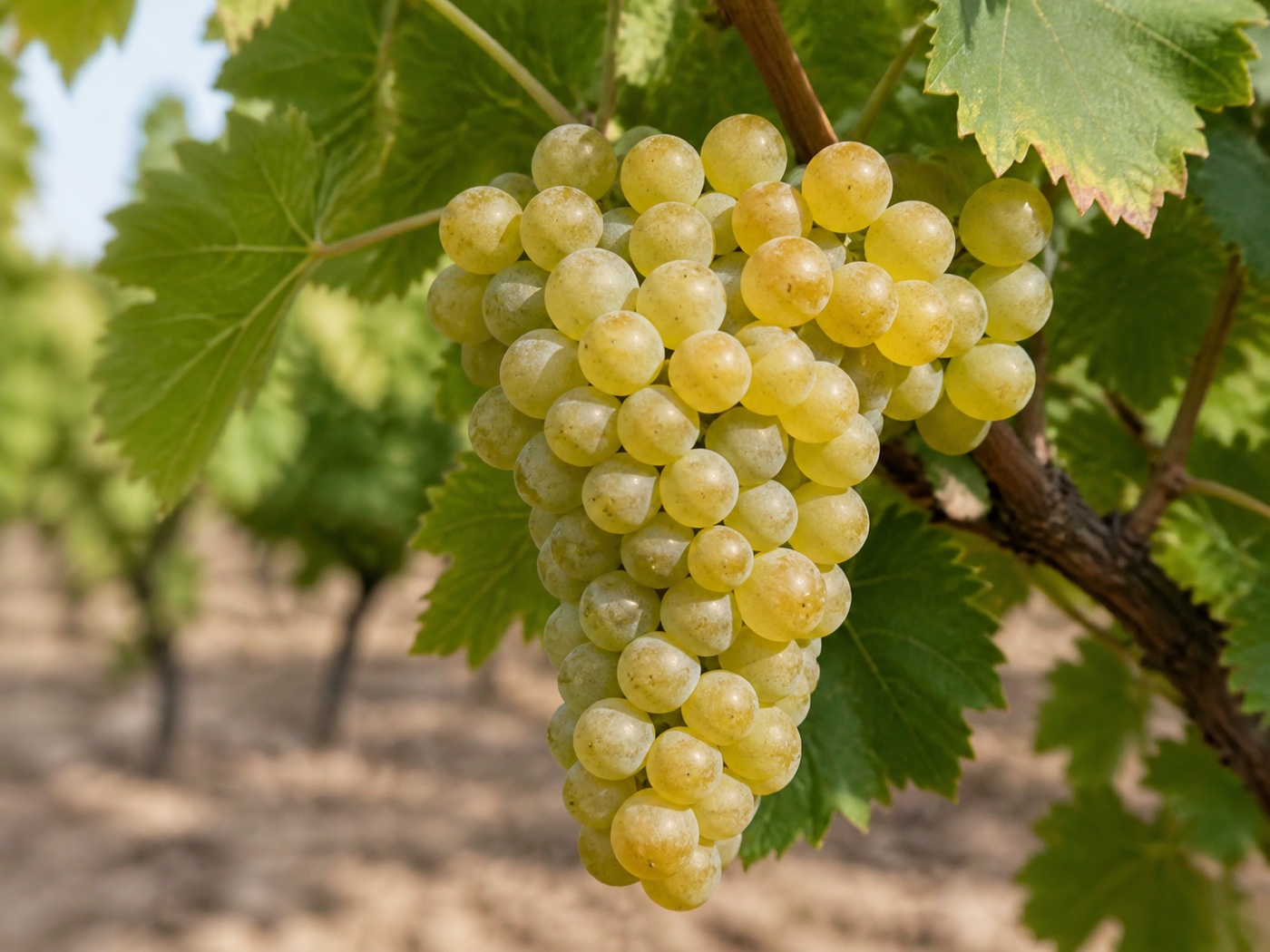
Viura is Rioja’s name for Macabeo, the region’s principal white grape and a component of both youthful and long-aged white wines.
Its home territory: North-eastern Spain.
In the glass
These are useful recurring possibilities. Climate, yield, harvest date, fermentation, extraction, maturation, bottle age, and serving conditions can all move the result.
In the vineyard
Productive and drought-tolerant; crop control and oxygen management affect concentration and longevity.
Common expressions
Variety does not dictate method. Skin contact, whole bunches, pressing, fermentation vessel, yeast, oxygen, oak, lees, sweetness, fortification, and bubbles can transform the same fruit.
Blending partners
A blend is not a hiding place for leftovers. Each grape can be asked to supply fruit, perfume, acidity, tannin, colour, body, or simply a better answer to an awkward vintage.
White Rioja can be brisk and young or deliberately matured for years in barrel and bottle. Viura provides the patient frame; Garnacha Blanca broadens it. The cellar may matter as much as the blend.
The classic Catalan trio works like sparkling mise en place: Macabeu supplies easy fruit, Xarel·lo provides the structural argument, and Parellada lightens the delivery. Lees ageing and dosage then decide whether the result whispers or gives a speech.
Where it matters
Markers combine dedicated World Explorer profiles with audited benchmark areas important to Viura or its synonym Macabeu. This is a teaching map of major associations—not a census of every planting.
Try this at home
Put Viura beside Garnacha. Do not play “guess the grape.” Compare acidity, tannin or phenolic grip, body, aroma intensity, and the length of the finish. The useful answer is not which one you prefer, but what created the difference.
Keep digging
Historical names, vineyard collections, official records, and modern research do not always agree neatly. These are starting points for checking the parts of the story that matter for this grape.