
The systems thinker
Zelma Long
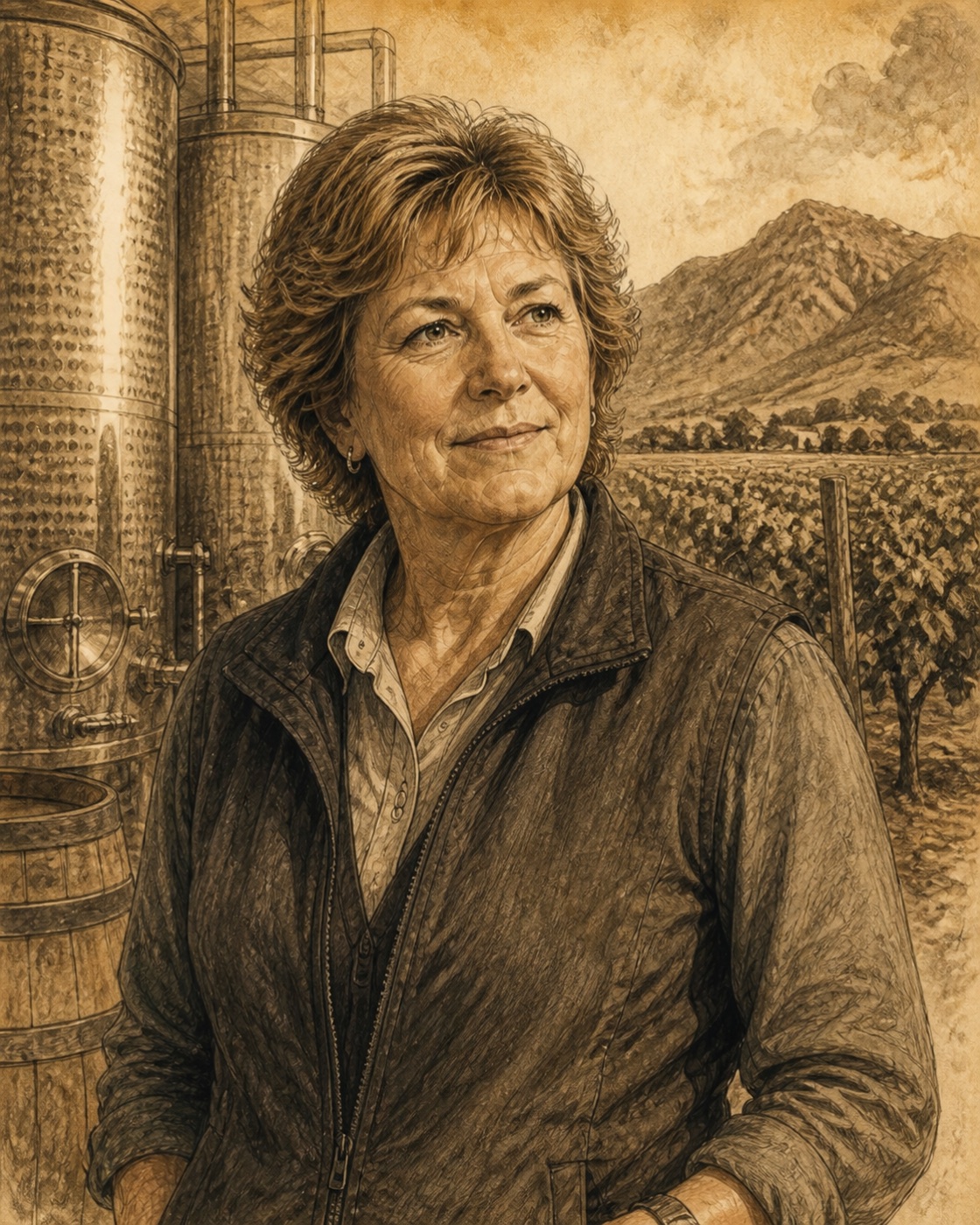
Before the reputation
How they found wine
Long trained in science and nutrition and initially worked in dietetics. The turning point came when her in-laws planted a Napa vineyard: wine offered a new set of questions about plants, chemistry and sensory experience. She enrolled at UC Davis in 1968 and interrupted her studies to work the 1970 harvest at Robert Mondavi Winery.
She rose to chief enologist and then moved to Simi in 1979. Her career broadened again when she took on executive responsibility. That route matters: she was not simply a gifted taster brought in at the end, but someone learning how vineyards, cellar staff, research budgets and business decisions fit together.
Zelma Long began at Robert Mondavi Winery during the 1970 harvest and rose to chief enologist before joining Simi in 1979. She later became Simi’s president—the first woman to hold senior management at a California winery—and built a career joining science, farming, cellar practice, and business leadership.
Her work moved beyond California through consulting and Vilafonté in South Africa. That international span matters: Long’s legacy is not one trick, but a repeatable way of treating vineyard and cellar as one connected system.
Beyond one bottle
Why the work mattered
Long helped turn vineyard research into a shared industry resource and demonstrated that a woman could lead both wine production and winery management. Her mentorship carried technical habits into other cellars. Vilafonté later applied the same coordinated vineyard-and-cellar thinking in South Africa with partners rather than as a solo export of Californian style.
What they changed
Vineyard and cellar together
Wine quality was managed from plant material and canopy through fermentation, blending, maturation, and release.
Research as daily practice
Trials, measurement, and professional exchange made improvement continuous rather than a one-time modernisation.
A wider leadership path
Her technical authority and executive roles changed what a senior American winemaker could look like.
Follow the work
Wineries and working relationships
The oral history covers a wider international consultancy. Unnamed or incompletely dated clients are not filled in from country lists; the named record here is not exhaustive.
Robert Mondavi Winery
1970–1979
Harvest worker; chief enologistDeveloped laboratory and production leadership.
Simi
Joined 1979; leadership through the 1990s
Winemaker; later president and CEOConnected estate farming, winemaking and management.
Long Vineyards
1976–2005 in the university profile
Family winery winemaking oversightSeparate family project that overlapped her employed career.
Chandon Estates
Late 1990s
Executive responsibilityA group management role rather than sole winemaker of every estate.
Vilafonté
South African project developed from the 1990s
Co-founder and winemaking partnerWorked with Philip Freese and Mike Ratcliffe on an integrated vineyard and wine project.
Bookwalter
John Bookwalter’s early winemaking leadership; exact years not asserted
ConsultantProvided winemaking advice as the next generation took responsibility.
Golan Heights Winery
Historical engagement; exact years not asserted
Winemaking consultantSeparate from Philip Freese’s vineyard consultancy.
History reviewed . Roles and ownership may have changed.
Representative bottles
Where to meet the idea
- Simi Reserve Cabernet Sauvignon from her era
A mature, properly stored bottle can connect her systems approach to Sonoma Cabernet’s structure and development.
- Vilafonté Series C
A Cabernet-led South African blend shaped for precision, structure, and long ageing.
- Vilafonté Series M
A Merlot-led counterpart that puts texture and blend architecture at the centre.
Study the signature
Turn the biography into a tasting.
Begin with Simi Reserve Cabernet Sauvignon from her era, then place it beside Vilafonté Series C when the opportunity allows. The point is not to crown a winner; it is to notice which choices remain legible across price, age, vineyard, and vintage.
Follow three linked ideas as you taste: vineyard and cellar together, research as daily practice, a wider leadership path. Write down the evidence you can actually perceive, then return to the producer’s history and ask which part of the story the glass supports—and which part belongs to reputation.
Calling Long simply a ‘woman pioneer’ can shrink the technical substance of her career. The barrier-breaking matters; so do the wines, research, management, and international influence.