
The biodynamic custodian
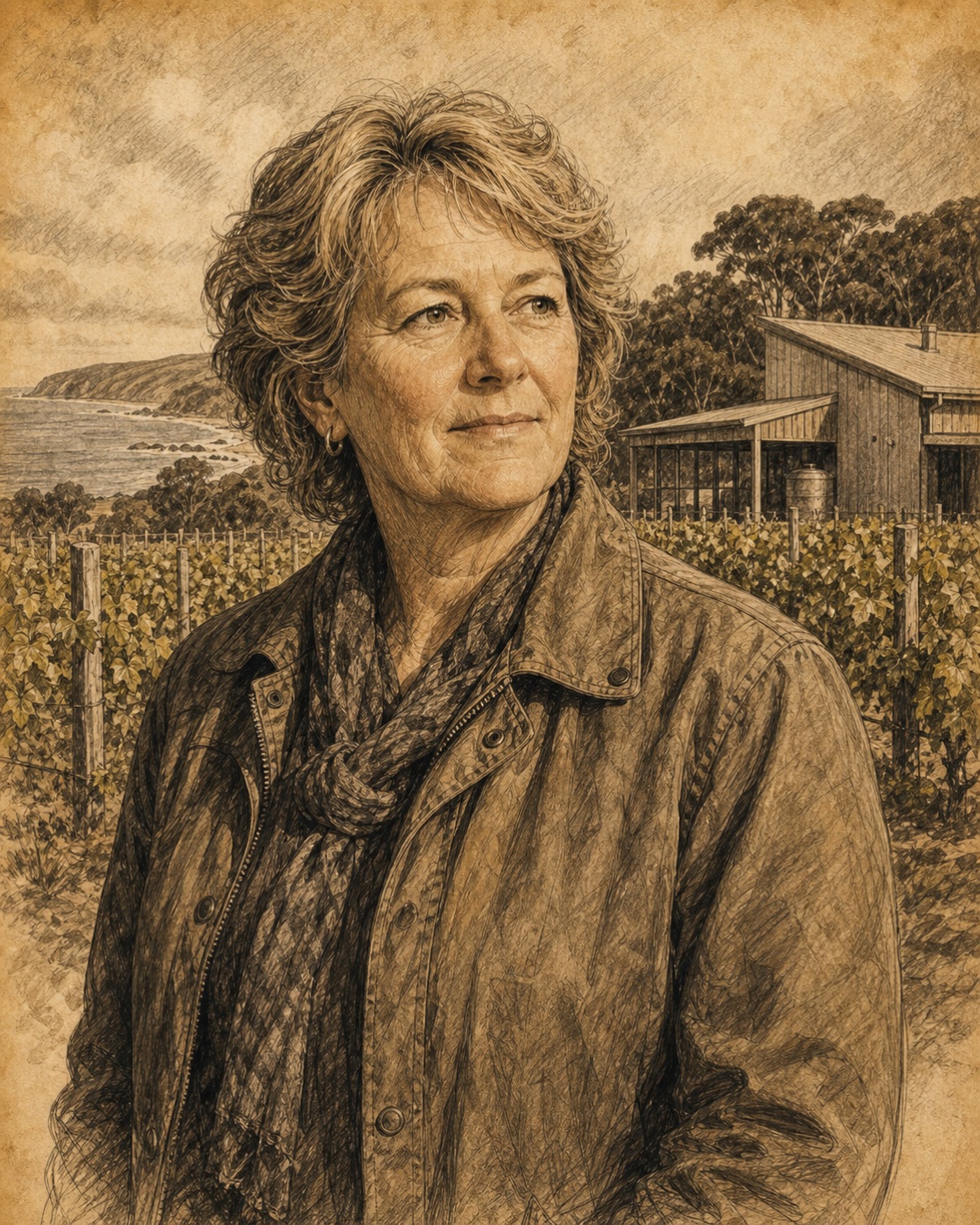
Vanya Cullen
Before the reputation
How they found wine
Vanya Cullen grew up on the Margaret River farm where her parents Kevin and Diana planted vines in 1971. Music was an early alternative path, but she returned to wine and worked alongside her mother. This was a family business in a young region, with practical learning and overseas harvest experience supplementing the work at home.
She became chief winemaker in 1989, taking over from Diana. The decisive shift in her own tenure was toward treating the entire farm as the basis of wine quality. Biodynamics, biodiversity and environmental accounting became connected choices, rather than a new label applied only to what happened inside the winery.
Vanya Cullen became chief winemaker at her family’s Wilyabrup estate in 1989 and managing director a decade later. She moved Cullen toward certified organic and biodynamic farming, carbon awareness, and a detailed reading of vintage and lunar rhythms.
Her work extended the pioneering site choice of parents Diana and Kevin Cullen. The flagship Cabernet blend and Chardonnay now bear their names, making succession explicit rather than pretending the estate began with one generation.
Beyond one bottle
Why the work mattered
Cullen made environmental stewardship part of the public identity of a highly regarded fine-wine estate. That encouraged a wider conversation about farming and responsibility in Margaret River. The legacy is shared with her pioneering parents and the estate team; neither awards nor biodynamic certification alone demonstrate the cause of a wine’s flavour.
What they changed
Biodynamics at benchmark scale
Soil life, biodiversity, and closed-system thinking became central to a leading Australian estate.
Carbon as a wine issue
Environmental accounting widened quality beyond what is detectable in a single glass.
Family memory in the range
Diana Madeline and Kevin John connect technical style with the people who planted the estate.
Follow the work
Wineries and working relationships
The main professional home is Cullen. Overseas placements are identified as training; this is not evidence of a consulting portfolio.
Cullen Wines
From the 1980s; chief from 1989
Family winemaker; chief winemakerWorked alongside Diana before directing the next phase of the family estate.
Te Kauwhata Wine Research Station
1983
Harvest experienceNew Zealand research-station placement, not a separate estate she owned.
Joseph Drouhin
1987
Vintage experienceHer interview includes a photograph with the Drouhin family during harvest.
History reviewed . Roles and ownership may have changed.
Representative bottles
Where to meet the idea
- Cullen Diana Madeline
The Cabernet-led flagship for studying fine tannin, moderate scale, and Wilyabrup identity.
- Cullen Kevin John Chardonnay
An ageworthy Chardonnay that joins concentration to freshness and site detail.
Study the signature
Turn the biography into a tasting.
Begin with Cullen Diana Madeline, then place it beside Cullen Kevin John Chardonnay when the opportunity allows. The point is not to crown a winner; it is to notice which choices remain legible across price, age, vineyard, and vintage.
Follow three linked ideas as you taste: biodynamics at benchmark scale, carbon as a wine issue, family memory in the range. Write down the evidence you can actually perceive, then return to the producer’s history and ask which part of the story the glass supports—and which part belongs to reputation.
Biodynamics contains agricultural practice, philosophy, and ritual. Avoid claiming that a blind taster can identify it reliably from flavour alone.