
The Chardonnay craftsman
Miljenko “Mike” Grgich
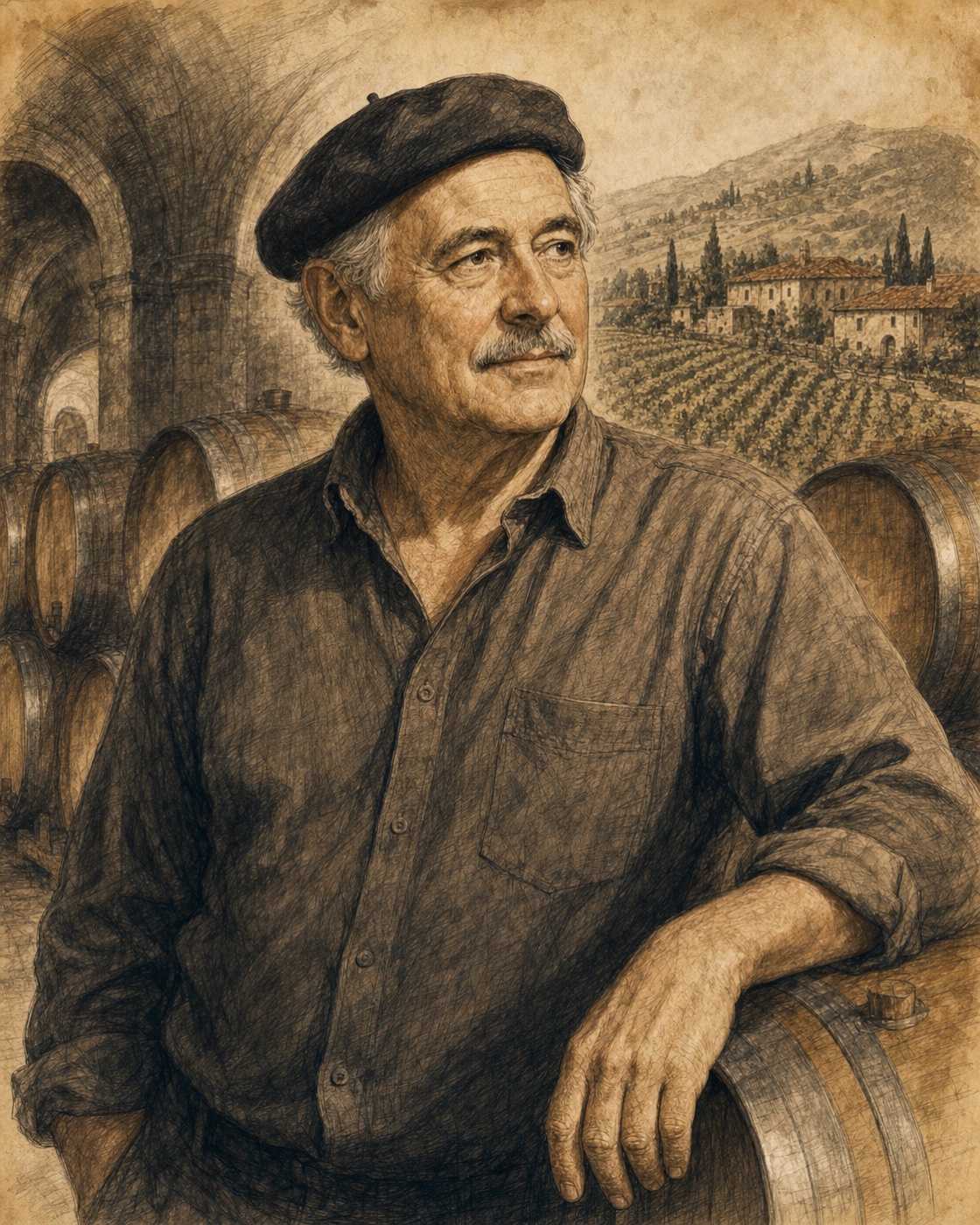
Before the reputation
How they found wine
Grgich grew up in a Croatian winemaking family and studied viticulture and enology in Zagreb. His ambition to reach California required a long migration through Germany and Canada. The early image of a suitcase filled with wine textbooks is not a marketing invention: his books and travel belongings became part of the Smithsonian’s record of his life.
California then supplied a second education through successive winery jobs. At BV he learned alongside André Tchelistcheff; at Mondavi and Montelena he helped develop wines that reached new audiences. Founding Grgich Hills in 1977 finally joined his technical experience to a business partnership of his own, and he later returned to Croatia through Grgić Vina.
Croatian-born Mike Grgich worked at Souverain, Christian Brothers, Robert Mondavi, and Chateau Montelena. He made Montelena’s 1973 Chardonnay, the top-ranked white at the 1976 Paris tasting, then founded Grgich Hills with Austin Hills in 1977.
His Chardonnay emphasised clean fruit, cool fermentation, and avoidance of malolactic fermentation for acid retention. The result helped expand expectations for California white wine and enabled an immigrant winemaker to build an estate of his own.
Beyond one bottle
Why the work mattered
His Montelena Chardonnay helped overturn assumptions about where great white wine could come from. The longer contribution includes training, estate farming and a bridge back to Croatian wine. The Paris victory belongs to a winery and vineyard team; it is not evidence that one person made California Chardonnay successful alone.
What they changed
California Chardonnay with nerve
Temperature control and retained malic acidity balanced ripe fruit with freshness.
A cellar hand becomes an owner
The Paris result made technical labour visible and opened the next chapter at Grgich Hills.
Estate and organic farming
The later winery connected cellar precision with certified estate vineyard practice.
Follow the work
Wineries and working relationships
These are the documented principal winery appointments and ventures; the migration story is separate from winery employment.
Souverain · Christian Brothers
Before BV and Mondavi
Early California cellar employmentSuccessive jobs, not businesses he owned.
Beaulieu Vineyard
Before 1968
Winemaking teamWorked with Tchelistcheff.
Robert Mondavi Winery
Late 1960s–early 1970s
WinemakerHelped develop the young winery before moving to Montelena.
Chateau Montelena
1972–1977
Winemaker and limited partnerMade the 1973 Chardonnay entered in the 1976 Paris tasting.
Grgich Hills
1977
Co-founder with Austin HillsIndependent partnership, later continued by the family team.
Grgić Vina, Croatia
1996
Founder / family ventureReturned to Croatian production as well as maintaining his California connection.
History reviewed . Roles and ownership may have changed.
Representative bottles
Where to meet the idea
- 1973 Chateau Montelena Chardonnay
A museum-level historical bottle; its significance can be studied without purchasing it.
- Grgich Hills Estate Chardonnay
The continuing expression of his acid-retaining, ageworthy Chardonnay idea.
Study the signature
Turn the biography into a tasting.
Begin with 1973 Chateau Montelena Chardonnay, then place it beside Grgich Hills Estate Chardonnay when the opportunity allows. The point is not to crown a winner; it is to notice which choices remain legible across price, age, vineyard, and vintage.
Follow three linked ideas as you taste: california chardonnay with nerve, a cellar hand becomes an owner, estate and organic farming. Write down the evidence you can actually perceive, then return to the producer’s history and ask which part of the story the glass supports—and which part belongs to reputation.
The winning wine belonged to a team and vineyard supply chain. Films and headlines often under-credit Grgich while also oversimplifying the tasting.