
The ingredient-label traditionalist
Paul Draper
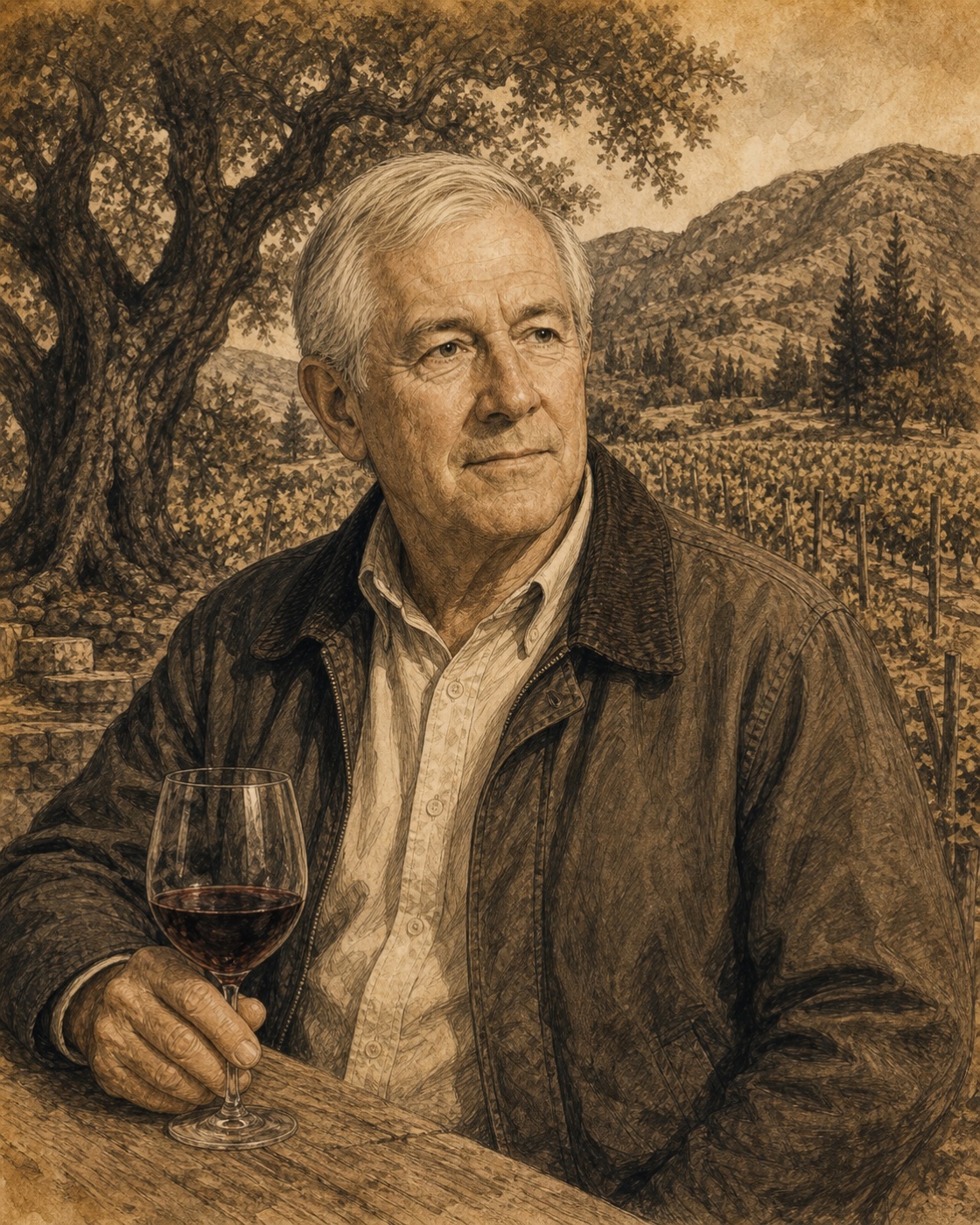
Before the reputation
How they found wine
Draper grew up on an Illinois farm, studied philosophy at Stanford and learned about wine through travel and practice. Time in Italy and France exposed him to wine as part of food and ordinary life. Back in California he worked in the cellar at Souverain, then made Cabernet in Chile with his friend Fritz Maytag.
When he joined Ridge in 1969, he brought practical experience rather than a formal enology degree. Tasting the owners’ earlier Monte Bello wines helped persuade him that the place could produce something exceptional. Old winemaking books and direct observation supplied a foundation, but running a dependable winery still required organization, equipment and colleagues.
Self-taught as a winemaker, Paul Draper joined Ridge in 1969 after working in Chile. At Monte Bello he combined native fermentations, restrained intervention, tasting-based selection, and transparent back labels with an unusually long view of California vineyards.
His work made both Monte Bello Cabernet and old-vine Zinfandel blends serious reference points. Ridge’s ‘pre-industrial’ language was not anti-knowledge; it used analysis to support minimal effective intervention.
Beyond one bottle
Why the work mattered
Draper’s influence joined vineyard identity to readable information: distinctive sites, old-vine Zinfandel and transparent production choices could matter as much as a luxury image. His ‘pre-industrial’ philosophy described a preference for restrained intervention, not a refusal to measure or learn. Ridge’s reputation was built across generations of staff and vineyard partners.
What they changed
Transparent labels
Ingredients and cellar actions were disclosed so drinkers could connect method and result.
Old-vine field blends
Geyserville and Lytton Springs helped restore prestige to Zinfandel-led mixed plantings.
Monte Bello continuity
Tasting lots into one site-led blend balanced vintage variation with a recognisable identity.
Follow the work
Wineries and working relationships
Monte Bello, Lytton Springs and Geyserville are vineyard or estate connections within Ridge. Bordeaux study visits are not listed as employment at the visited châteaux.
Chateau Souverain
Before Chile; 1960s
Cellar assistantHands-on California harvest experience.
Chilean winery venture with Fritz Maytag
Mid-to-late 1960s
Partner and practical winemakerMade Cabernet in Chile’s coastal range; the cited short biography does not name the facility.
Ridge Vineyards
Joined 1969; winemaker retirement 2016
Winemaker and partner; later chairman / emeritusMonte Bello and the broader Ridge vineyard programme became his principal career.
History reviewed . Roles and ownership may have changed.
Representative bottles
Where to meet the idea
- Ridge Monte Bello
The limestone mountain Cabernet blend and Draper’s longest-running fine-wine argument.
- Ridge Geyserville
An old-vine field blend that makes mixed planting, co-fermentation, and place tangible.
Study the signature
Turn the biography into a tasting.
Begin with Ridge Monte Bello, then place it beside Ridge Geyserville when the opportunity allows. The point is not to crown a winner; it is to notice which choices remain legible across price, age, vineyard, and vintage.
Follow three linked ideas as you taste: transparent labels, old-vine field blends, monte bello continuity. Write down the evidence you can actually perceive, then return to the producer’s history and ask which part of the story the glass supports—and which part belongs to reputation.
Ridge existed before Draper and is sustained by vineyard and winemaking teams after him. ‘Natural’ should not erase disciplined analysis or sulfur use.