
The biodynamic interpreter
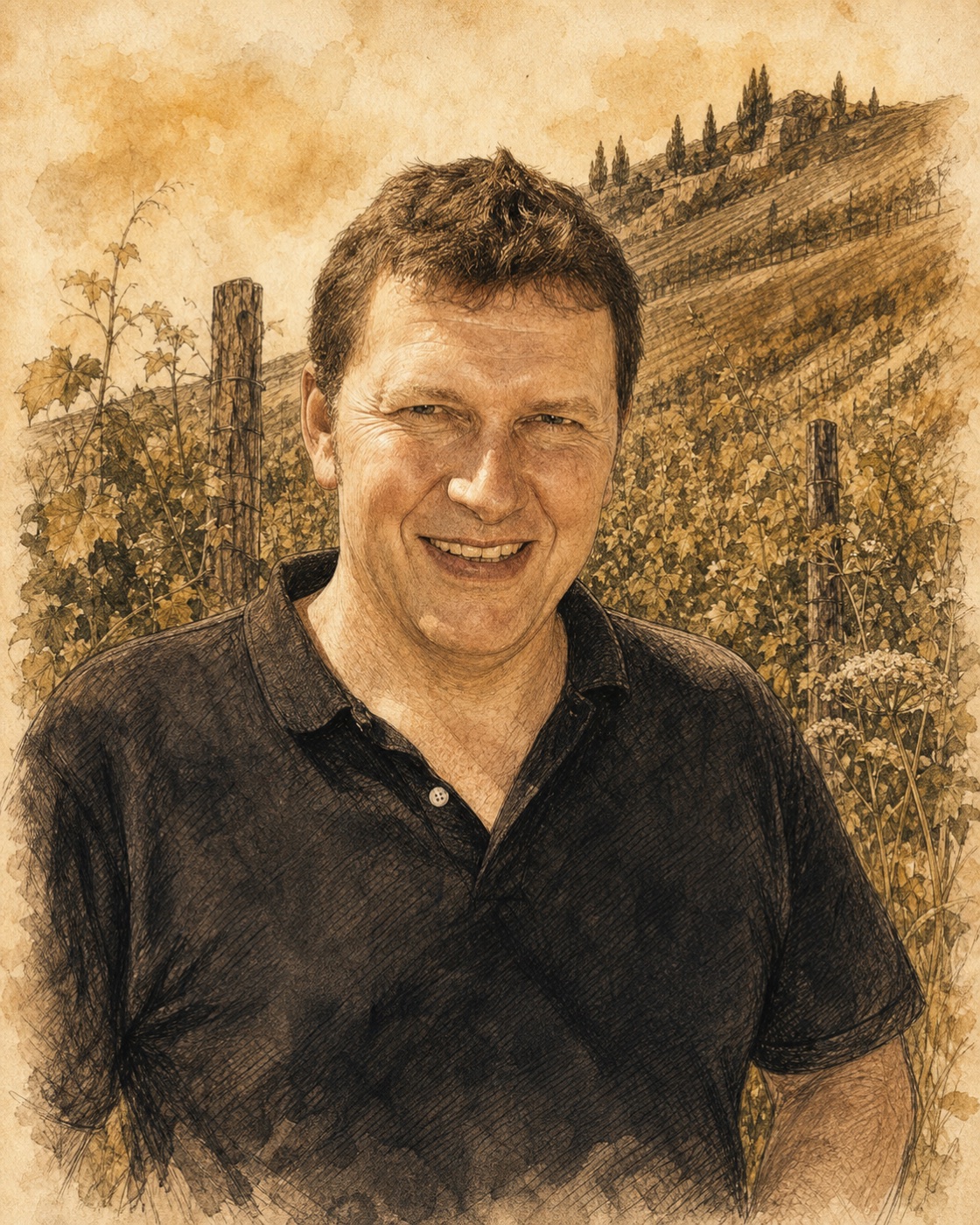
Olivier Humbrecht
Before the reputation
How they found wine
Humbrecht grew up around his parents’ Alsace estate, working summers before formal study and winery experience in California and Oregon. He returned in April 1989 with practical ideas for change. The cramped cellar had limited how long the wines could stay before the next harvest.
A larger, gravity-fed winery made longer lees ageing possible. His development involved both inherited vineyard knowledge and the ordinary problem of finding room to work. Later, a problem with bought-in manure led him to investigate different ways of making compost.
Olivier Humbrecht joined his family’s domaine in 1989 and became the first French Master of Wine. At Zind-Humbrecht he combined rigorous tasting and technical fluency with an increasing commitment to biodynamic farming, certified at the estate from the early 2000s.
His work makes Alsace’s complications productive: many grapes, dramatically different soils, variable sweetness, and powerful dry extract. Detailed vineyard and sweetness information asks drinkers to move beyond grape-name shorthand and consider site, vintage, fermentation, and balance together.
Beyond one bottle
Why the work mattered
Humbrecht helped make Alsace’s differences in site and wine style easier to discuss, while connecting farming convictions with technical fluency. The cellar expansion shows that expressing a place can depend on ordinary infrastructure decisions. His personal explanation of biodynamics is useful evidence of motivation, not controlled proof of its sensory effects.
What they changed
Biodynamics with technical scrutiny
Observation, soil life, and low-input farming are discussed alongside analysis rather than as mysticism alone.
Alsace through geology
Named sites and contrasting soils take priority over a simple catalogue of aromatic grapes.
Sweetness communicated
Style indicators helped buyers anticipate balance in wines whose fermentations may stop at different points.
Follow the work
Wineries and working relationships
The interview establishes overseas winery work but does not name those employers. Grand cru names such as Rangen and Hengst are sites within the estate portfolio, not additional wineries.
Domaine Zind-Humbrecht
Joined April 1989
Family winemaker / proprietorMain professional home; the new cellar enabled changes in handling and maturation.
California and Oregon wineries
Before April 1989; employers unnamed in source
Early practical experienceRecorded as regional experience only, without inventing estate names.
History reviewed . Roles and ownership may have changed.
Representative bottles
Where to meet the idea
- Zind-Humbrecht Rangen de Thann Clos Saint Urbain Riesling
A volcanic grand cru combining power, smoke, acidity, and long development.
- Zind-Humbrecht Clos Windsbuhl Pinot Gris
A limestone site that tests expectations about Pinot Gris, sweetness, and seriousness.
- Zind-Humbrecht Hengst Gewurztraminer
An aromatic variety and grand cru where perfume must be judged against structure and finish.
Study the signature
Turn the biography into a tasting.
Begin with Zind-Humbrecht Rangen de Thann Clos Saint Urbain Riesling, then place it beside Zind-Humbrecht Clos Windsbuhl Pinot Gris when the opportunity allows. The point is not to crown a winner; it is to notice which choices remain legible across price, age, vineyard, and vintage.
Follow three linked ideas as you taste: biodynamics with technical scrutiny, alsace through geology, sweetness communicated. Write down the evidence you can actually perceive, then return to the producer’s history and ask which part of the story the glass supports—and which part belongs to reputation.
Biodynamic certification does not prove sensory quality or a causal terroir effect. Use it as farming context, then evaluate the wine.