
The travelling blending adviser
Michel Rolland
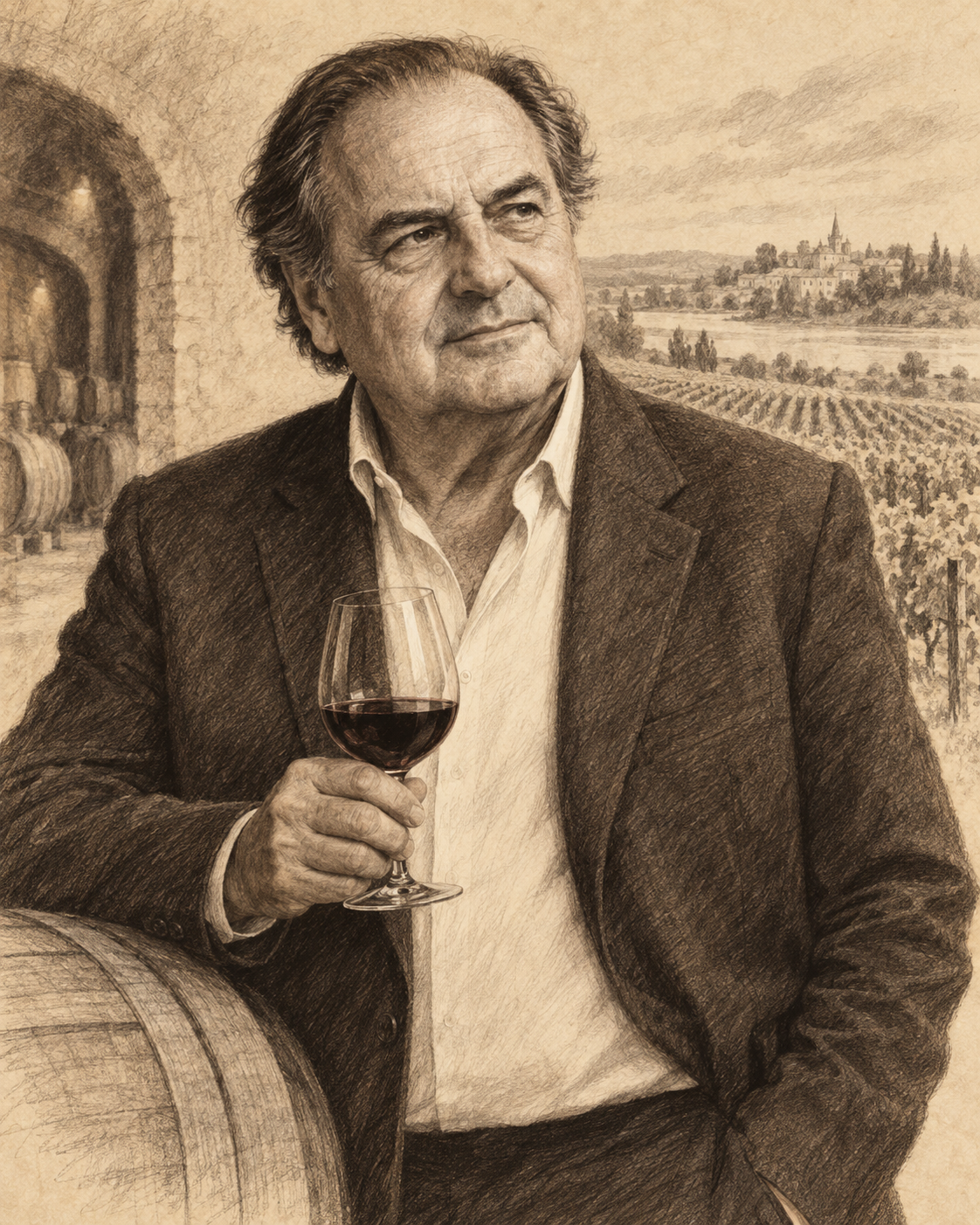
Before the reputation
How they found wine
Rolland grew up at his family’s Château Le Bon Pasteur in Pomerol: vineyards and cellar work were part of home before they became an international profession. Bordeaux oenology training gave that upbringing a scientific framework. With his wife and fellow oenologist Dany, he established a Libourne laboratory in 1973.
The important transition was from analysing samples to visiting vineyards and helping decide when to pick and how to assemble a wine. International invitations then expanded the practice. Argentina became a particularly substantial commitment: a visit connected to Etchart developed into partnerships, vineyards and wines bearing his own name.
Michel Rolland turned the consulting oenologist into an internationally recognisable figure. His Bordeaux laboratory and winery visits connected fruit selection, ripeness, extraction and blending to a remarkably wide network of producers.
He died in March 2026. His legacy includes his own family ventures and many client wines, but a consultant’s name never establishes that every estate used the same recipe or surrendered its decisions to him.
Beyond one bottle
Why the work mattered
Rolland helped make specialist winemaking advice portable across national borders. Growers gained access to an experienced palate and a network of technical knowledge. His prominence also made him a focal point in arguments about ripeness and international style. The useful question is which decisions changed a particular wine, rather than whether a consultant automatically erased its origin.
What they changed
Ripeness as a decision
Tasting fruit alongside analysis connected picking dates with tannin texture and the intended finished wine.
Blending across experience
Work at many estates created a large reference library for assembling varieties and lots.
A global consulting model
Advice could travel without the adviser owning the property or replacing its permanent cellar team.
Follow the work
Wineries and working relationships
This is a documented public career map, not a complete register of private consulting contracts. Grouped entries preserve named clients while distinguishing ownership, laboratory work and advice.
Château Le Bon Pasteur · Rolland-Maillet · Bertineau Saint-Vincent
Earlier family portfolio
Family estate involvementHis Bordeaux family background encompassed these properties; it should not be presented as their current ownership.
Libourne / Pomerol oenology laboratory
From 1973
Co-founder with Dany RollandLaboratory services formed the base of the consulting practice; a lab client was not necessarily a personal winemaking client.
Château Fontenil
From 1986
Owner and winemaker with DanyFronsac became a principal family estate.
Etchart · Yacochuya
Argentina work from 1988
Adviser; partnership with the Etchart familyCafayate introduced him to Argentina and led to the Yacochuya venture.
Clos de los Siete · Bodega Rolland / Mariflor · Val de Flores
Later Argentine career
Partner and proprietor across separate projectsThese are distinct Mendoza ventures, not interchangeable names for a single wine.
Fonplégade · Angélus · Ausone · Valandraud · Pape Clément · Pontet-Canet
Historical appointments; dates vary
Consulting associationsFonplégade’s published biography documents this Bordeaux network, without supplying a complete contract chronology.
Harlan · Bryant · Araujo · Ovid · Dalla Valle · Staglin · Ornellaia
Historical appointments; dates vary
Consulting associationsThe same producer biography names these California and Italian connections. They are advisory relationships, not a list of estates he owned.
Lapostolle / Clos Apalta
Historical Chilean work
ConsultantHis international advisory career also reached this Chilean producer.
Bonne Nouvelle
Later international career
South African wine partnershipHis own interview describes a Stellenbosch wine venture alongside the consulting business.
Campo Eliseo
Later international career
Spanish wine partnershipThe interview identifies the Toro collaboration with the Lurton family.
History reviewed . Roles and ownership may have changed.
Representative bottles
Where to meet the idea
- Château Fontenil
A family Fronsac estate: a more direct connection to his own business than an unspecified consulting client.
- Mariflor Malbec
An Argentine project linking his Bordeaux background with high-altitude Mendoza fruit.
- Clos de los Siete
A partnership blend useful for discussing how several estates contribute to a shared wine.
Study the signature
Turn the biography into a tasting.
Begin with Château Fontenil, then place it beside Mariflor Malbec when the opportunity allows. The point is not to crown a winner; it is to notice which choices remain legible across price, age, vineyard, and vintage.
Follow three linked ideas as you taste: ripeness as a decision, blending across experience, a global consulting model. Write down the evidence you can actually perceive, then return to the producer’s history and ask which part of the story the glass supports—and which part belongs to reputation.
Laboratory customers, occasional advice and full consulting contracts are different relationships. Historical client lists do not establish who makes a current vintage.