
The old-vine fieldworker
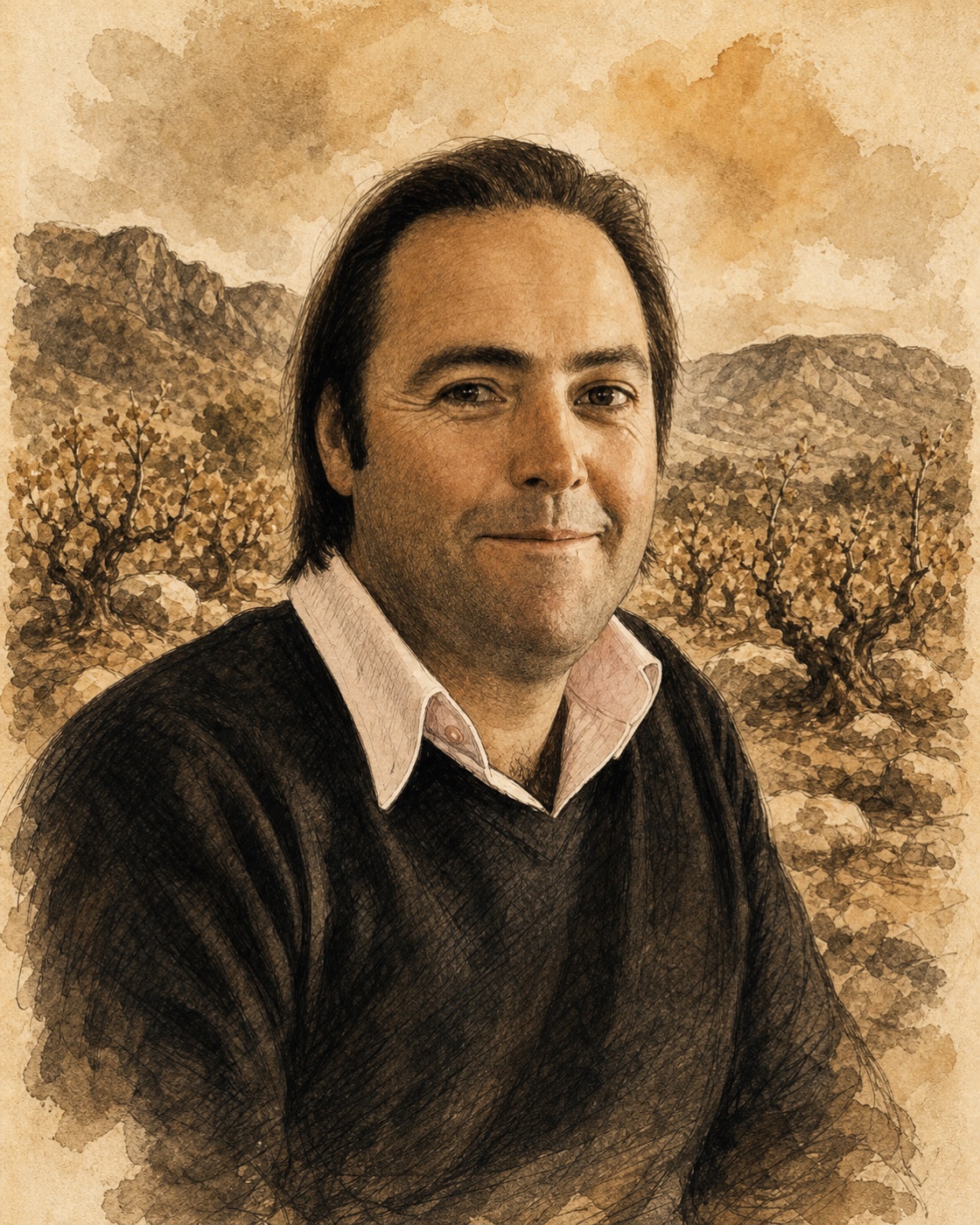
Eben Sadie
Before the reputation
How they found wine
Sadie’s early life included surfing and a restless search for a direction. Agricultural study opened the route into viticulture, followed by work and tasting across several countries. Returning to South Africa, he joined Charles Back’s Spice Route in 1998, where the Swartland gave him a place to apply what he had learned.
His own project began on a small scale alongside that work. European experience strengthened his interest in tradition and site, but the Cape’s old vineyards supplied the actual material. The later move toward a wider range of old-vine wines was therefore a deepening of attention at home, not simply a transfer of foreign prestige to South Africa.
Eben Sadie founded The Sadie Family Wines in 1999 after working in several countries and made the first Columella in 2000. The Swartland’s dry-farmed old vines, varied soils, and Mediterranean grapes offered material for wines whose seriousness did not depend on copying Bordeaux or the Rhône.
Columella and Palladius became anchors, while the Old Vine Series isolated remarkable Cape parcels and varieties such as Chenin Blanc, Palomino, Tinta Barocca, and Cinsault. Sadie’s influence joins farming, vineyard preservation, restrained cellar work, and a broader reevaluation of South Africa’s old-vine inheritance.
Beyond one bottle
Why the work mattered
Sadie helped turn old Cape vineyards into individually valued cultural and agricultural resources. Blends and parcel wines made a case for preserving varieties and places that could otherwise disappear. The impact is shared with vineyard owners, workers, fellow Swartland producers and partners; his reputation should not erase the people who kept those vines alive.
What they changed
Swartland as a fine-wine landscape
Dry farming, old vines, and geological diversity displaced an image of anonymous warm-region fruit.
Old vineyards as heritage
Parcel wines made vine age, mixed plantings, and threatened sites visible and economically valuable.
Mediterranean logic in the Cape
Varieties and farming suited to heat and drought offered a forward-looking regional vocabulary.
Follow the work
Wineries and working relationships
Overseas harvest experience is documented by country but not comprehensively by employer. Early departure and project-founding dates vary between accounts; no complete client roster is claimed.
Spice Route
Joined 1998; left around 2000–2001
WinemakerCharles Back’s Swartland project and the bridge to his independent work.
The Sadie Family Wines
Founded 1999; first Columella 2000
FounderIndependent Cape production, initially using shared facilities.
Terroir al Límit
2000s; later withdrew
Co-founder / former collaborating winemakerPriorat work with Dominik Huber and Jaume Sabaté; different accounts give different founding milestones.
Sequillo Cellars
2003–2014
Partner with Cornel SpiesSeparate project rather than simply a permanent second label of Sadie Family.
Raúl Pérez collaboration
Historical South African project; dates not specified
Collaborating winemakerSmall Monastrell project documented in the Pérez profile.
History reviewed . Roles and ownership may have changed.
Representative bottles
Where to meet the idea
- Sadie Family Columella
The evolving red blend that became a reference point for modern Swartland.
- Sadie Family Palladius
A complex white blend demonstrating the breadth and ageworthiness of Cape varieties.
- Sadie Family ’T Voetpad
An old mixed vineyard in the Old Vine Series and a direct lesson in field-blend heritage.
Study the signature
Turn the biography into a tasting.
Begin with Sadie Family Columella, then place it beside Sadie Family Palladius when the opportunity allows. The point is not to crown a winner; it is to notice which choices remain legible across price, age, vineyard, and vintage.
Follow three linked ideas as you taste: swartland as a fine-wine landscape, old vineyards as heritage, mediterranean logic in the cape. Write down the evidence you can actually perceive, then return to the producer’s history and ask which part of the story the glass supports—and which part belongs to reputation.
The heroic-founder story can hide vineyard workers and long local histories. Sadie amplified an inheritance; he did not create it from empty land.