
The patient traditionalist
María José López de Heredia
Before the reputation
How they found wine
For López de Heredia, wine was a family activity long before a professional decision. In interviews she remembers Sundays at Tondonia with her father, the smell of harvest and small childhood jobs around the bottles. She says she wanted a life in wine before studying law and theology, so the education was not a detour from an unwanted inheritance.
The formative influences she names are her father and grandfather, both experienced directly rather than only through family legend. Taking responsibility in the fourth generation meant deciding which working methods to retain. Long ageing and old cellar practices became choices to defend and explain in a market eager for novelty.
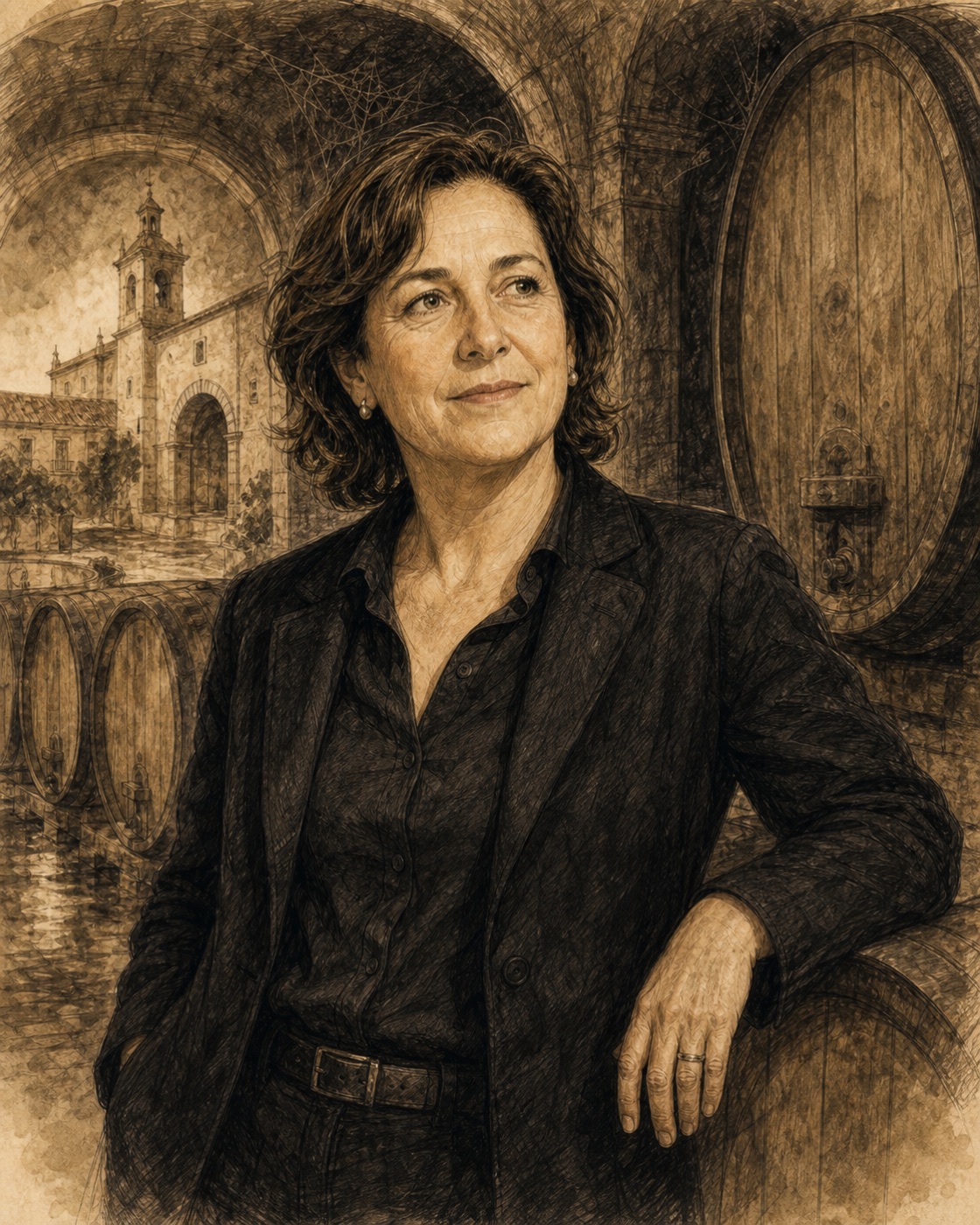
María José López de Heredia represents the fourth generation of a Haro bodega founded in 1877. With her sister Mercedes and the wider team, she protects a production system built on estate vineyards, long ageing in old American oak, in-house cooperage, and release only when the wine is ready.
Her influence is a defence of continuity that remains active rather than nostalgic. Tondonia’s reds, whites, and rosados show that oxidative development, pale colour, and long cellar time can be deliberate, stable, and vividly alive.
Beyond one bottle
Why the work mattered
Her contribution is a public defence of continuity as active judgement. The estate’s aged whites and reds keep alternative expectations of Rioja visible: wine need not be young, dark or overtly oaky to be serious. This is stewardship with siblings and cellar workers, not a claim that she invented traditional Rioja.
What they changed
Time owned by the producer
Long barrel and bottle maturation shifts patience and storage cost from buyer to winery.
Tradition as a working system
Old vats, barrels, blending, and cooperage are maintained because they serve the style, not as museum props.
White Rioja built to age
Viura-led wines make long oxidative élevage a central fine-wine language.
Follow the work
Wineries and working relationships
Tondonia, Bosconia, Cubillo and Gravonia are vineyard/wine identities within one producer, not four wineries she independently ran.
R. López de Heredia Viña Tondonia
Managing director from 1993 in the cited interview
Fourth-generation family leader / managing directorWorks within the family estate; her legal and business experience supports continuity of a demanding production model.
History reviewed . Roles and ownership may have changed.
Representative bottles
Where to meet the idea
- Viña Tondonia Reserva Tinto
The core red expression of estate fruit, long ageing, and savoury development.
- Viña Tondonia Reserva Blanco
A benchmark for Viura, oxidative maturation, and the difference between age and fatigue.
- Viña Bosconia Reserva
A contrasting vineyard and shape within the same long-lived house system.
Study the signature
Turn the biography into a tasting.
Begin with Viña Tondonia Reserva Tinto, then place it beside Viña Tondonia Reserva Blanco when the opportunity allows. The point is not to crown a winner; it is to notice which choices remain legible across price, age, vineyard, and vintage.
Follow three linked ideas as you taste: time owned by the producer, tradition as a working system, white rioja built to age. Write down the evidence you can actually perceive, then return to the producer’s history and ask which part of the story the glass supports—and which part belongs to reputation.
‘They never change’ is marketing shorthand. Every living tradition makes choices about maintenance, selection, release, and adaptation.