
The barrier-breaker
Ntsiki Biyela
Before the reputation
How they found wine
Biyela grew up in rural KwaZulu-Natal and did not begin as a wine enthusiast. A scholarship took her to Stellenbosch in the late 1990s to study viticulture and enology, opening a professional route she had not expected. Learning the subject also meant navigating a language and social environment far removed from home.
She graduated in 2003 and joined Stellekaya the following year. Later, founding Aslina allowed her to move from making wine for an employer to building a business of her own, named for her grandmother. That family connection matters: the origin story is about opportunity, persistence and the person who raised her, not merely a label celebrating a barrier broken.
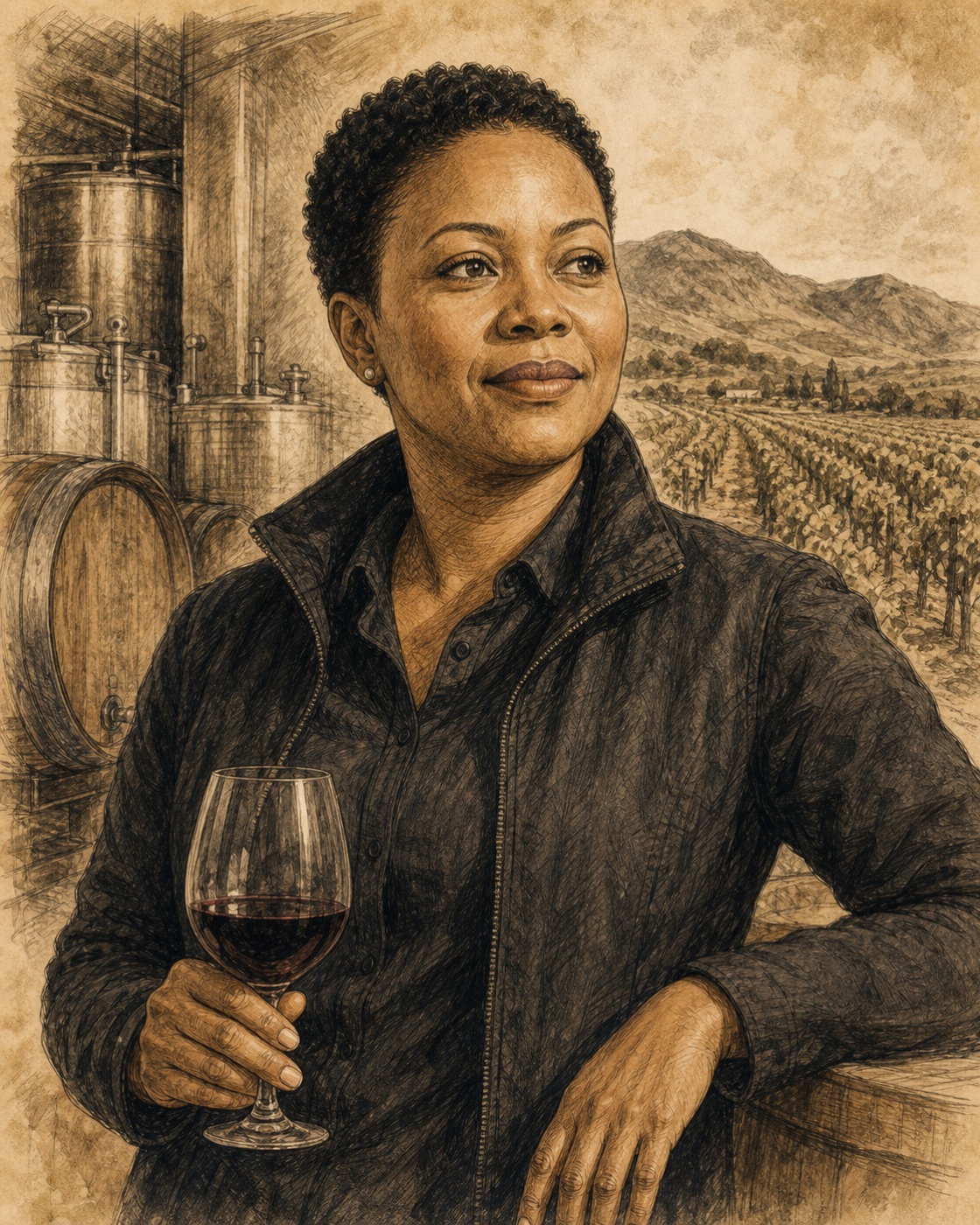
Raised in rural KwaZulu-Natal, Ntsiki Biyela entered Stellenbosch University on a scholarship and graduated in viticulture and oenology in 2003. At Stellekaya she became South Africa’s first Black woman winemaker, then founded Aslina, named for her grandmother.
Her work joins technical authorship with cultural authorship. The calabash on Aslina’s label, the Zulu name Umsasane, and a range of Cape varieties position identity as part of the wine story without making it a substitute for quality.
Beyond one bottle
Why the work mattered
Biyela made a visible place for a Black woman in an industry long shaped by exclusion, then extended that example into ownership and mentoring. Her wines should still be discussed as wines, with decisions and styles of their own. A ‘first’ is historical context, not a substitute for the substance of her work.
What they changed
Representation with ownership
Moving from employee winemaker to founder made authorship, brand, and economic participation visible together.
Zulu heritage on the label
Names and imagery connect premium South African wine to a culture often excluded from its public face.
Mentorship as infrastructure
Board and training work helps turn one breakthrough into paths for others.
Follow the work
Wineries and working relationships
The main employment and ownership history is documented here. Short collaborations are not assumed to be permanent jobs or evidence of ownership.
Delheim
During her studies
Student / training experiencePractical learning before her Stellekaya appointment.
Stellekaya
From 2004; approximately thirteen years
WinemakerProfessional base before her independent business.
Aslina Wines
Founded 2016
Founder and winemakerNamed in honour of her grandmother.
Keplinger / Biyela — Wine for the World
2014 vintage
Collaborating winemakerMika Bulmash paired her with Helen Keplinger. The project helped fund her independent business; it was not employment at a Napa estate.
History reviewed . Roles and ownership may have changed.
Representative bottles
Where to meet the idea
- Aslina Umsasane
A Cabernet-family blend named for her grandmother and built around shelter, strength, and structure.
- Aslina Chardonnay
A textural Cape white that shows the range beyond the flagship blend.
- Aslina Chenin Blanc
A South African signature grape interpreted through her own label.
Study the signature
Turn the biography into a tasting.
Begin with Aslina Umsasane, then place it beside Aslina Chardonnay when the opportunity allows. The point is not to crown a winner; it is to notice which choices remain legible across price, age, vineyard, and vintage.
Follow three linked ideas as you taste: representation with ownership, zulu heritage on the label, mentorship as infrastructure. Write down the evidence you can actually perceive, then return to the producer’s history and ask which part of the story the glass supports—and which part belongs to reputation.
‘First’ narratives risk implying the industry transformed around one success. Structural access to land, capital, education, and distribution remains the larger question.