
The old-vine revivalist
Álvaro Palacios
Before the reputation
How they found wine
Palacios grew up as one of nine children in the Rioja family behind Palacios Remondo. Bordeaux study and work with the Moueix team at Pétrus exposed him to the confidence of established fine-wine estates. The choice that defined him was to seek that potential in a struggling Spanish region rather than simply return to the safety of the family business.
In Priorat he joined a wider revival already being pursued by growers and producers including René Barbier. Finca Dofí and then L’Ermita gave his work a specific home. Later, Bierzo with his nephew Ricardo and renewed responsibility in Rioja showed that the original impulse was broader than making one expensive wine.
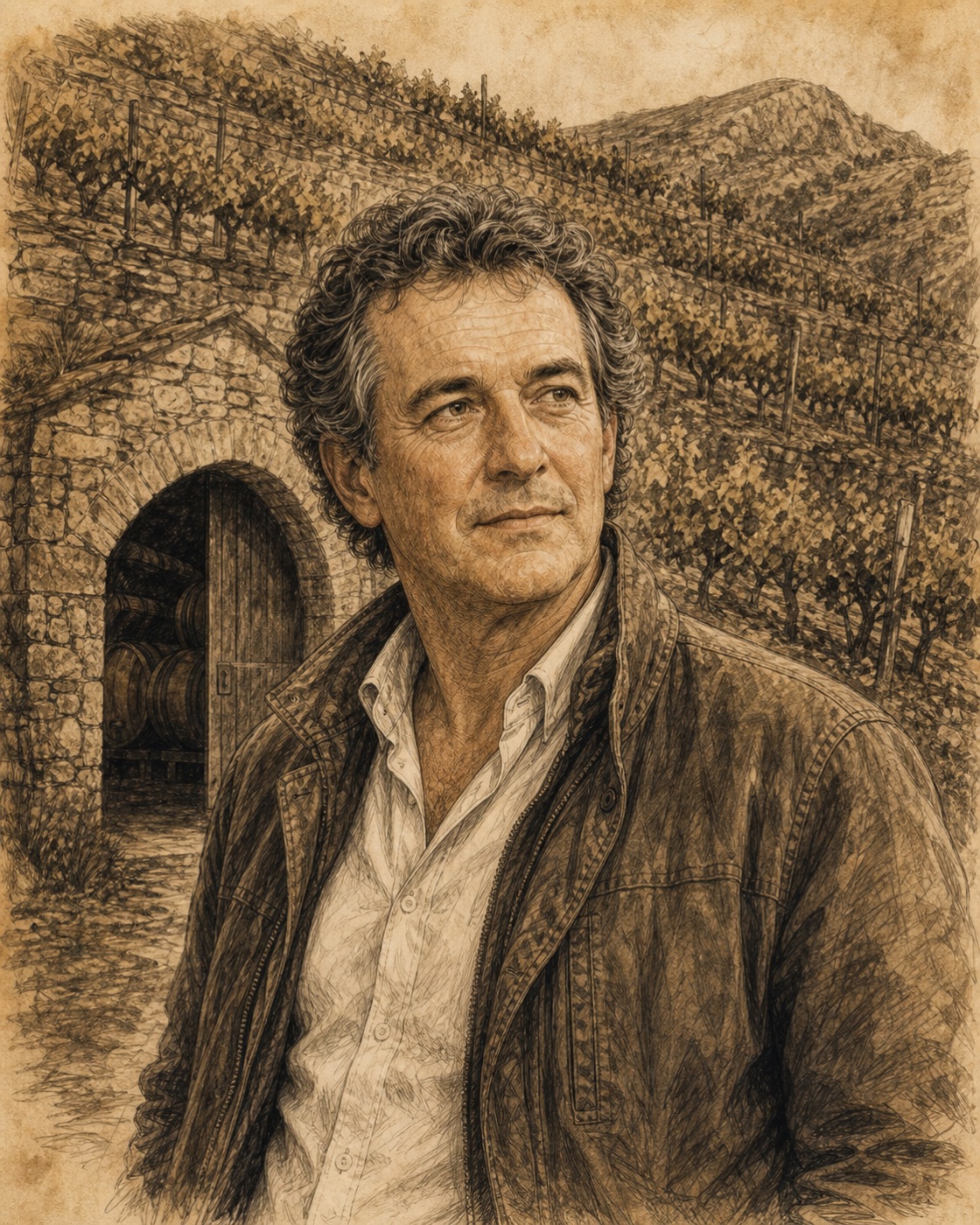
Born into a Rioja family, Álvaro Palacios trained in Bordeaux and joined the small group that revived Priorat in the late 1980s. His L’Ermita, first made in 1993 from a steep old-vine Garnacha parcel, gave the region an international icon.
With nephew Ricardo Pérez Palacios he also helped renew attention to Mencía and village-scale distinctions in Bierzo. His work connects old vines and difficult slopes to modern classification, communication, and price.
Beyond one bottle
Why the work mattered
He helped make neglected Spanish vineyard landscapes internationally visible and commercially viable. The movement from regional blends toward villages and named sites gave drinkers a more precise vocabulary. The achievement belongs within the collective revival of Priorat and Bierzo, with Ricardo Pérez especially central to the latter project’s farming and wines.
What they changed
Priorat’s fine-wine revival
Old Garnacha and Cariñena on llicorella soils gained global attention and a new economic future.
Village and parcel hierarchy
Wines were organised to make regional, village, and classified-vineyard differences legible.
Bierzo’s Mencía renaissance
Descendientes de J. Palacios applied the same place-first lens to Corullón’s slopes.
Follow the work
Wineries and working relationships
The cited record covers his main ventures and Bordeaux formation. His relatives’ independent wineries are not automatically his own affiliations.
Pétrus / Établissements Jean-Pierre Moueix
Before Priorat
Training and early cellar workBordeaux experience, not ownership or sole winemaker responsibility.
Álvaro Palacios, Priorat
Arrived 1989; Finca Dofí acquired 1990
FounderBuilt the Gratallops project, including L’Ermita.
Descendientes de J. Palacios
1999
Co-founder with Ricardo Pérez PalaciosBierzo partnership centred on Corullón.
Palacios Remondo
Returned to lead in the 2000s
Family estate leadershipRioja Oriental work, distinct from his brother Rafael’s independent Valdeorras estate.
History reviewed . Roles and ownership may have changed.
Representative bottles
Where to meet the idea
- L’Ermita
The Priorat icon and purest statement of old-vine Garnacha from one steep parcel.
- Finca Dofí or Gratallops
More available steps in the Priorat hierarchy.
- Pétalos or La Faraona
The accessible and summit ends of the Bierzo project.
Study the signature
Turn the biography into a tasting.
Begin with L’Ermita, then place it beside Finca Dofí or Gratallops when the opportunity allows. The point is not to crown a winner; it is to notice which choices remain legible across price, age, vineyard, and vintage.
Follow three linked ideas as you taste: priorat’s fine-wine revival, village and parcel hierarchy, bierzo’s mencía renaissance. Write down the evidence you can actually perceive, then return to the producer’s history and ask which part of the story the glass supports—and which part belongs to reputation.
Regional revival stories can erase growers who maintained old vines through unprofitable decades. The newcomer’s vision depended on inherited local labour and knowledge.