
The one-off auteur
Manfred Krankl
Before the reputation
How they found wine
Krankl moved from Austria to the United States and entered wine through hospitality rather than an inherited California vineyard. Campanile restaurant and La Brea Bakery placed him close to chefs, customers and producers. Before Sine Qua Non, he developed special bottlings with established winemakers for the restaurant, including work with Bryan Babcock, the Coppo brothers, Michael Havens and John Alban.
Those collaborations let him explore both wine and presentation before building a winery with Elaine. Labels, names and the changing character of individual releases became part of the project’s identity. The eventual cult reputation began with practical restaurant relationships and experiments, not a fully formed luxury estate.
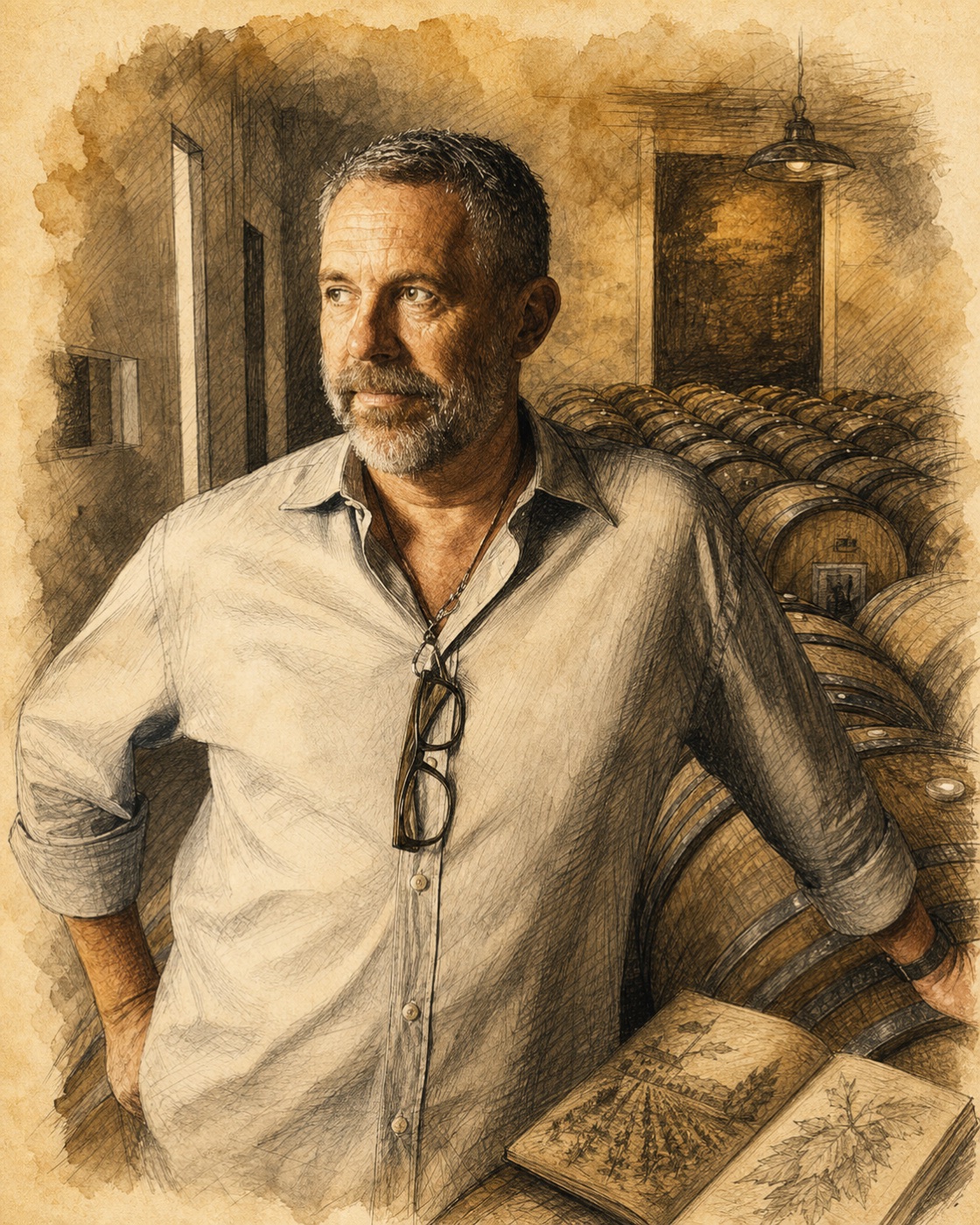
Austrian-born Manfred Krankl founded Sine Qua Non with his wife, Elaine, in the 1990s after work in Los Angeles restaurants and wine service. Rhône varieties became the core, but nearly every release received a new name, label, blend, and visual identity, turning the winery’s sequence into a series of discrete works.
Behind the theatrical presentation is intensive farming and blending from estate and selected Central Coast sites. Syrah and Grenache are often monumental, yet Krankl’s practice depends on detail—co-fermentation, variety, exposure, élevage, and relentless selection—rather than power alone.
Beyond one bottle
Why the work mattered
Krankl widened the ambitions and visibility of California Rhône varieties while making the individual release an artistic object. The influence includes presentation and scarcity as well as wine style. A changing label does not establish a technical innovation, and the work of Elaine, vineyard teams and early collaborators remains essential to the story.
What they changed
Every vintage as a new work
Changing names and original labels resist the standard continuity of a permanent flagship.
California Rhône wines at cult scale
Syrah and Grenache entered the highest tier of American scarcity, attention, and price.
Art joined to production
Drawing, naming, packaging, farming, and blending form one authored object.
Follow the work
Wineries and working relationships
Campanile and La Brea Bakery explain his entry into wine but are not wineries. Individual Sine Qua Non cuvées and estate vineyards are not separate consulting clients.
Babcock · Coppo · Havens · Alban
1990–1993 projects
Restaurant-wine collaboratorsEarly special bottlings, not employment as each winery’s resident winemaker.
Sine Qua Non
1994
Co-founder with Elaine KranklIndependent California winery, increasingly supported by estate vineyards.
Clos Saint-Jean — Chimère
From 2010
Collaborator with the Maurel brothers and Philippe CambieChâteauneuf-du-Pape partnership rather than ownership of Clos Saint-Jean.
History reviewed . Roles and ownership may have changed.
Representative bottles
Where to meet the idea
- Sine Qua Non Syrah
The names change by vintage, but Syrah remains a central study in density, savour, and structure.
- Sine Qua Non Grenache
A companion series that shows Grenache’s aromatic breadth and power in California.
- Sine Qua Non The Hated Hunter
The 2017 Syrah-based red: a specific vintage example of the project’s changing blends and names.
Study the signature
Turn the biography into a tasting.
Begin with Sine Qua Non Syrah, then place it beside Sine Qua Non Grenache when the opportunity allows. The point is not to crown a winner; it is to notice which choices remain legible across price, age, vineyard, and vintage.
Follow three linked ideas as you taste: every vintage as a new work, california rhône wines at cult scale, art joined to production. Write down the evidence you can actually perceive, then return to the producer’s history and ask which part of the story the glass supports—and which part belongs to reputation.
Scarcity, mailing-list access, labels, and critic scores strongly shape reception. Blind tasting can separate the wine’s structure from the aura of the object.