
The uncompromising grower
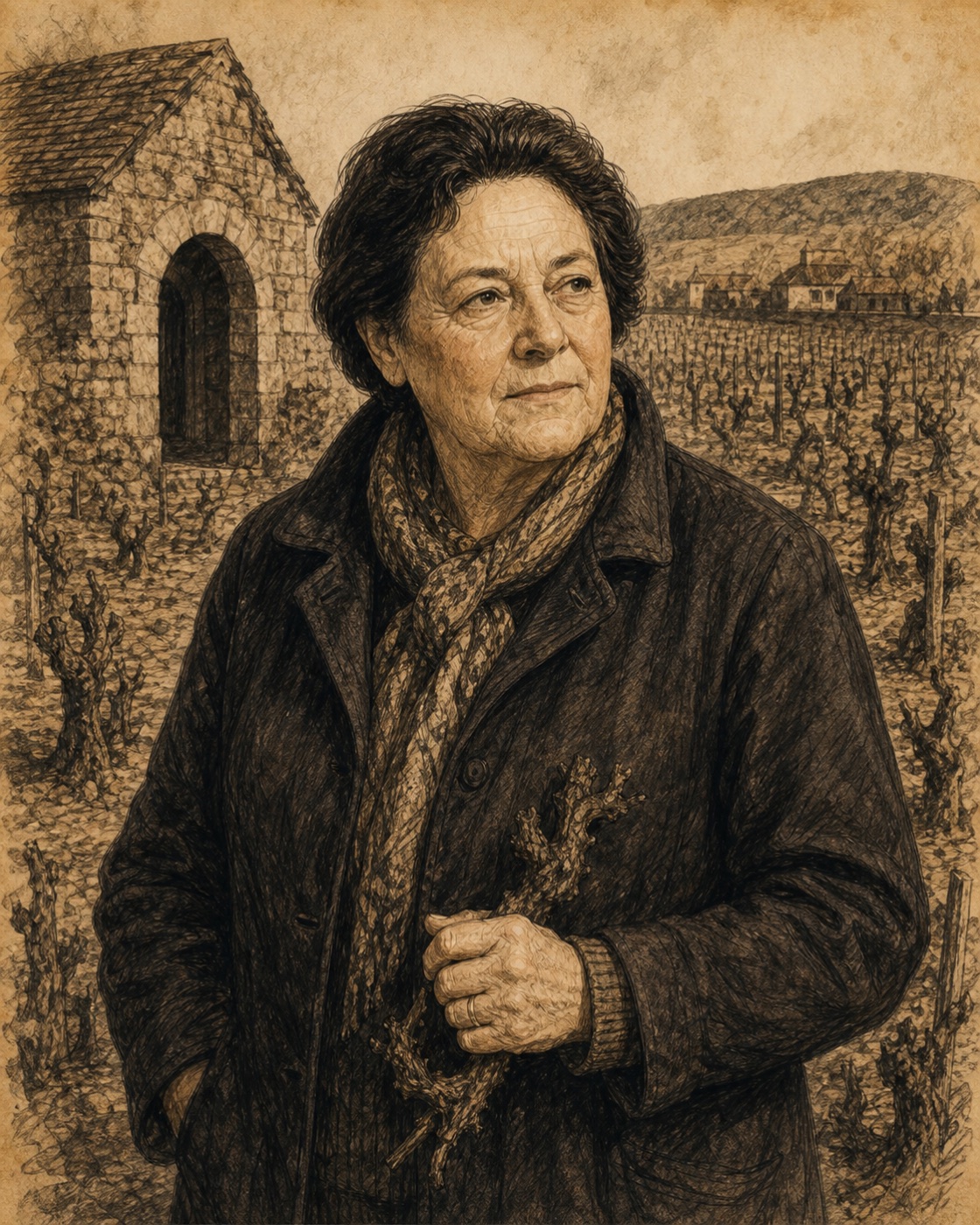
Lalou Bize-Leroy
Before the reputation
How they found wine
Lalou Bize-Leroy entered a family wine business built around tasting, selection and trade. Her father Henri’s involvement in Maison Leroy and Domaine de la Romanée-Conti gave her unusually close access to Burgundy’s wines and producers. She joined the merchant business in 1955, developing her judgement across many sites rather than beginning with just one vineyard.
Co-management of Romanée-Conti followed in 1974. In 1988, acquiring vineyards for Domaine Leroy allowed her to put her own farming convictions into practice. Leaving DRC management in 1992 then concentrated her attention on her own domaines. The story is a shift from selecting and selling wine to controlling how the grapes were grown.
Lalou Bize-Leroy co-directed Domaine de la Romanée-Conti from 1974 to 1992, then concentrated on Maison Leroy, Domaine Leroy, and Domaine d’Auvenay. Her estates became reference points for microscopic yields, biodynamic farming, and an intense focus on vine-by-vine health.
Her influence lies as much in the farming standard as in rarity: old vines, severe selection, and limited production made the vineyard—not cellar ornament—the centre of the claim.
Beyond one bottle
Why the work mattered
Her high-profile commitment to biodynamic farming made labour-intensive vineyard practice visible at Burgundy’s most scrutinized level. The consequence was influence through an uncompromising example, not proof that a certification causes superior flavour. Her merchant, management and estate roles also show how different kinds of authority can shape the same region.
What they changed
Biodynamic conviction
Farming was organised around soil and vine vitality long before biodynamics became fashionable in luxury wine.
Selection without compromise
Very low yields and strict fruit selection turn scarcity into a consequence of method, though also into market mythology.
Women at Burgundy’s summit
Her authority challenged assumptions about who could direct its most revered estates.
Follow the work
Wineries and working relationships
This lists the four principal businesses and separates management from ownership. It does not turn every acquired parcel or former landowner into another employer.
Maison Leroy
From 1955
Family merchant leadershipSelection and distribution of Burgundy; distinct from domaine-grown wines.
Domaine de la Romanée-Conti
1974–1992
Co-managerShared management with Aubert de Villaine; leaving management is distinct from the family’s shareholding.
Domaine Leroy
From 1988
Founder and proprietorEstate vineyards allowed direct control of farming.
Domaine d’Auvenay
Separate personal domaine; dates vary by parcel
Proprietor and growerA distinct estate, not a cuvée of Maison Leroy.
History reviewed . Roles and ownership may have changed.
Representative bottles
Where to meet the idea
- Domaine Leroy Musigny
An emblem of the domaine’s rarity and vineyard intensity, usually encountered only in exceptional tastings.
- Domaine d’Auvenay Meursault or Auxey-Duresses
Whites that reveal the same concentration and long élevage outside the most famous red grand crus.
Study the signature
Turn the biography into a tasting.
Begin with Domaine Leroy Musigny, then place it beside Domaine d’Auvenay Meursault or Auxey-Duresses when the opportunity allows. The point is not to crown a winner; it is to notice which choices remain legible across price, age, vineyard, and vintage.
Follow three linked ideas as you taste: biodynamic conviction, selection without compromise, women at burgundy’s summit. Write down the evidence you can actually perceive, then return to the producer’s history and ask which part of the story the glass supports—and which part belongs to reputation.
Prices and cult status can overwhelm sensory discussion. Her wines are not required purchases for understanding biodynamics or Burgundy.