
The steward
Aubert de Villaine
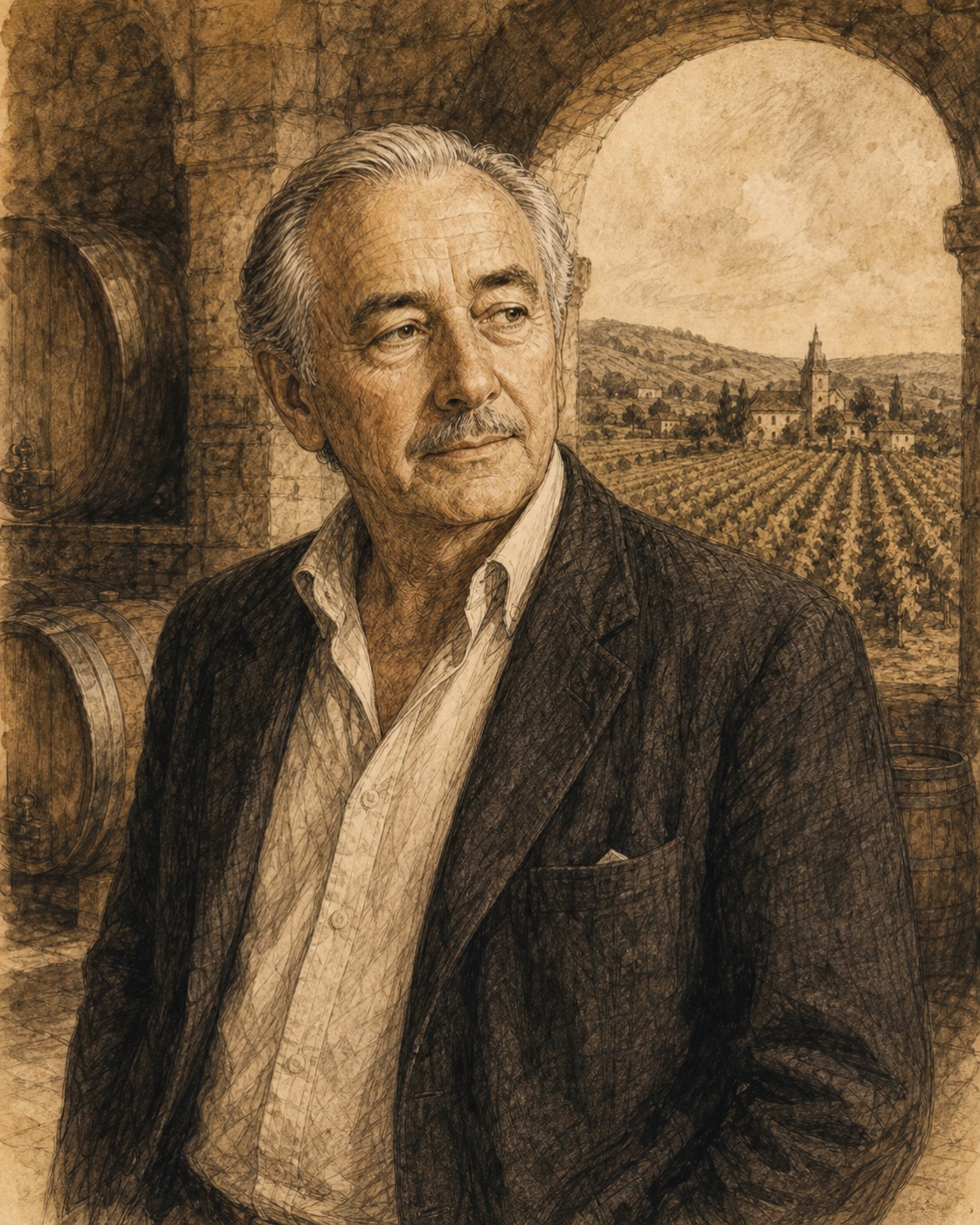
Before the reputation
How they found wine
De Villaine came from a family connected to Domaine de la Romanée-Conti, but inheritance did not make the career feel inevitable. Travel, writing and exposure to California wine gave him a wider reference frame before he settled into the responsibility of Burgundy’s most famous vineyards. His American connections also became personal through his wife Pamela.
Their life in Bouzeron introduced a useful tension: the same person could help steward exalted grands crus while arguing for the dignity of Aligoté from a modest village. The later HdV partnership with Larry Hyde extended that curiosity to Napa. His career makes stewardship an active choice, not simply maintaining an inherited price list.
Aubert de Villaine served as co-director of Domaine de la Romanée-Conti from 1974 to 2021, guiding a family estate whose vineyards are cultural symbols as much as agricultural holdings. He also championed Bouzeron and Aligoté through Domaine de Villaine.
His public legacy combines quiet custodianship, biodynamic conversion, defence of provenance, and leadership of the successful effort to inscribe Burgundy’s climats on UNESCO’s World Heritage list.
Beyond one bottle
Why the work mattered
De Villaine’s influence lies in protecting the meaning of place across very different status levels. DRC, Bouzeron and HdV invite comparisons between an estate’s reputation and the actual farming and blending decisions behind its wines. His international partnerships and participation in the 1976 Paris tasting also helped keep Burgundy in conversation with California.
What they changed
Stewardship over reinvention
Long-term continuity, vineyard health, and collective cellar work took priority over a visible signature.
The climats as heritage
He helped frame Burgundy’s named parcels as a living cultural landscape rather than a luxury inventory.
Aligoté with seriousness
Domaine de Villaine helped demonstrate that Bouzeron Aligoté can carry place and age.
Follow the work
Wineries and working relationships
These are ownership and stewardship connections; they do not imply that de Villaine was the day-to-day cellar winemaker at every property.
Domaine de la Romanée-Conti
Long management career beginning in the 1970s
Family representative and co-managerEstate stewardship with fellow owners and technical teams.
Domaine de Villaine, Bouzeron
From the 1970s
Co-founder with Pamela de VillaineA separate family domaine, especially associated with Aligoté.
Domaine de Triennes
Founded 1989
Co-founder / partnerProvence venture with Jacques Seysses and Michel Macaux.
HdV — Hyde de Villaine
Founded 2000
Co-founder / partnerNapa collaboration with the Hyde family, not a DRC subsidiary.
History reviewed . Roles and ownership may have changed.
Representative bottles
Where to meet the idea
- DRC Romanée-Conti or La Tâche
The symbolic summit, best understood through provenance and comparative context rather than price.
- Domaine de Villaine Bouzeron
A realistic way to encounter his commitment to place outside the prestige economy.
Study the signature
Turn the biography into a tasting.
Begin with DRC Romanée-Conti or La Tâche, then place it beside Domaine de Villaine Bouzeron when the opportunity allows. The point is not to crown a winner; it is to notice which choices remain legible across price, age, vineyard, and vintage.
Follow three linked ideas as you taste: stewardship over reinvention, the climats as heritage, aligoté with seriousness. Write down the evidence you can actually perceive, then return to the producer’s history and ask which part of the story the glass supports—and which part belongs to reputation.
DRC is a team and a family institution. Vineyard workers, chef de cave Bernard Noblet, co-directors, and successors prevent the story from belonging to one man.