
The parcel interpreter
Henri Jayer
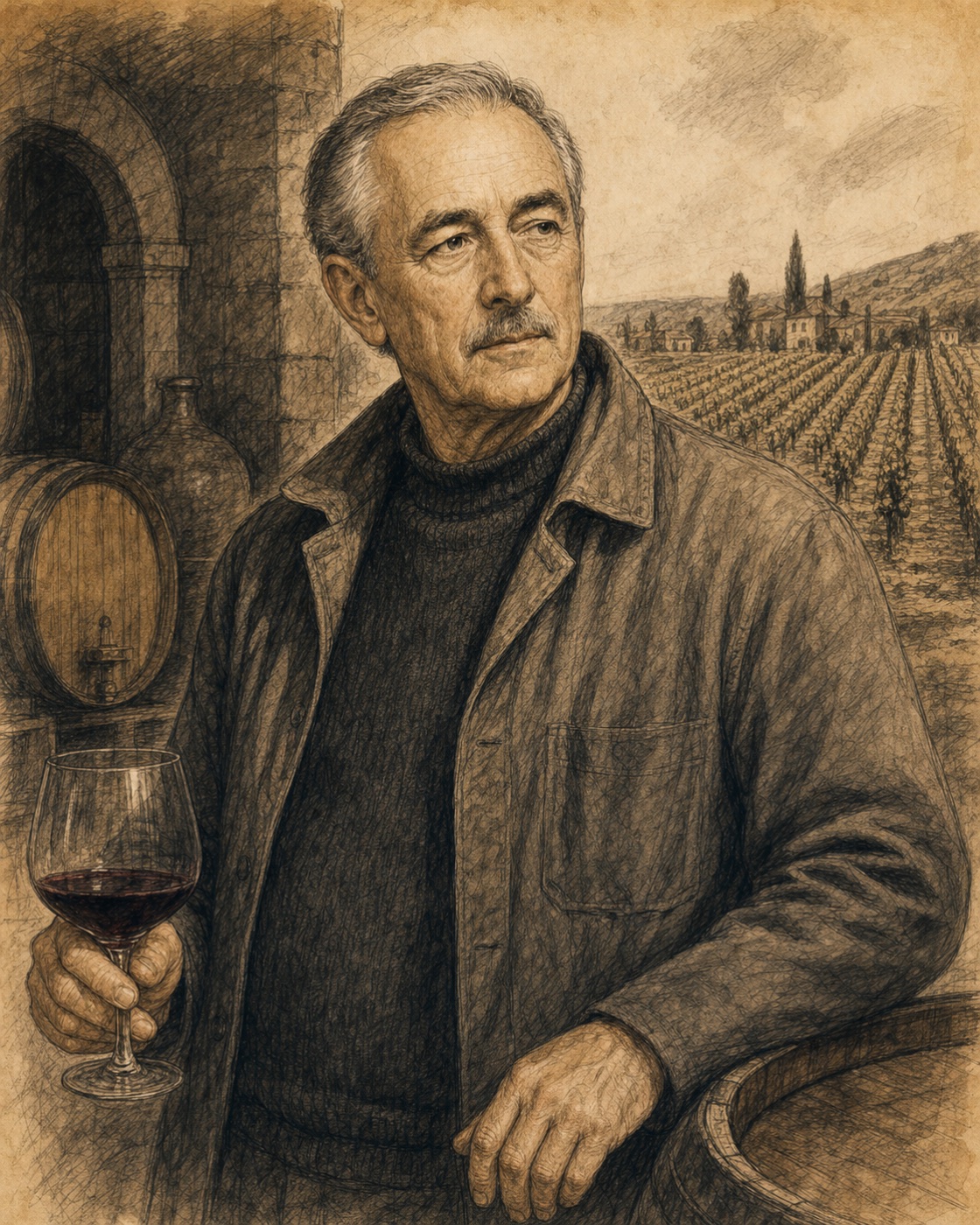
Before the reputation
How they found wine
Jayer grew up in Vosne-Romanée, where family vineyard work and wartime necessity came before celebrity. He learned in a Burgundy economy where growers often sold to merchants and an unfashionable plot might be valued for its difficulty rather than its potential. Working vines for the Camuzet family under sharecropping arrangements gave him experience without requiring ownership of every parcel.
Cros Parantoux became his long experiment: a stony, neglected site above Richebourg, painstakingly restored and eventually bottled separately in 1978. The turning point was not discovering an unknown appellation but deciding that this particular piece of ground deserved its own wine after years of patient work.
Henri Jayer rebuilt the rocky Cros Parantoux parcel in Vosne-Romanée and eventually bottled it separately in 1978, proving that a premier cru left fallow could rival grander neighbours in reputation. He also made wine for the Méo-Camuzet family under métayage arrangements.
His style became associated with meticulous sorting, complete destemming, cold pre-fermentation maceration, low yields, and bottling without fining or filtration. More important than any single recipe was his insistence that only sound, ripe fruit belonged in the vat.
Beyond one bottle
Why the work mattered
Jayer made rigorous farming and cellar selection part of the identity of an individual grower. Cros Parantoux showed that a premier cru could command attention beyond the hierarchy suggested by its classification. His influence spread through example and mentorship, including Méo-Camuzet and Emmanuel Rouget, rather than a large corporate portfolio.
What they changed
Cros Parantoux
A neglected, stony slope became one of Burgundy’s most recognisable vineyard stories.
Purity through selection
Destemming, cold soak, and ruthless fruit quality supported vivid texture and aroma.
Grower prestige
His tiny domaine helped intensify global attention on individual Burgundy growers and parcels.
Follow the work
Wineries and working relationships
Parcels such as Cros Parantoux and Richebourg are vineyards, not separate winery employers. Late-career participation and labels overlapped, so a clean single retirement date would mislead.
Domaine Henri Jayer
Postwar career; final period around 2001
Grower and producerHis own wines developed alongside work on other owners’ vineyards.
Méo-Camuzet / Noirot-Camuzet holdings
Postwar decades
Sharecropper; later mentorFarming and winemaking relationship, not ownership of the entire domaine.
Emmanuel Rouget
Retirement transition in the 1990s
Family succession and mentoringHis nephew continued work with inherited or transferred vineyard responsibilities.
History reviewed . Roles and ownership may have changed.
Representative bottles
Where to meet the idea
- Vosne-Romanée Cros Parantoux
The defining wine, now effectively inaccessible; study the vineyard through successors such as Emmanuel Rouget or Méo-Camuzet.
- Échezeaux or Richebourg
A comparison that shows why producer and handling can matter as much as formal vineyard rank.
Study the signature
Turn the biography into a tasting.
Begin with Vosne-Romanée Cros Parantoux, then place it beside Échezeaux or Richebourg when the opportunity allows. The point is not to crown a winner; it is to notice which choices remain legible across price, age, vineyard, and vintage.
Follow three linked ideas as you taste: cros parantoux, purity through selection, grower prestige. Write down the evidence you can actually perceive, then return to the producer’s history and ask which part of the story the glass supports—and which part belongs to reputation.
Auction prices measure scarcity and demand, not flavour in a vacuum. Counterfeiting and provenance risk make famous bottles especially poor beginner purchases.