
The Marlborough image-maker
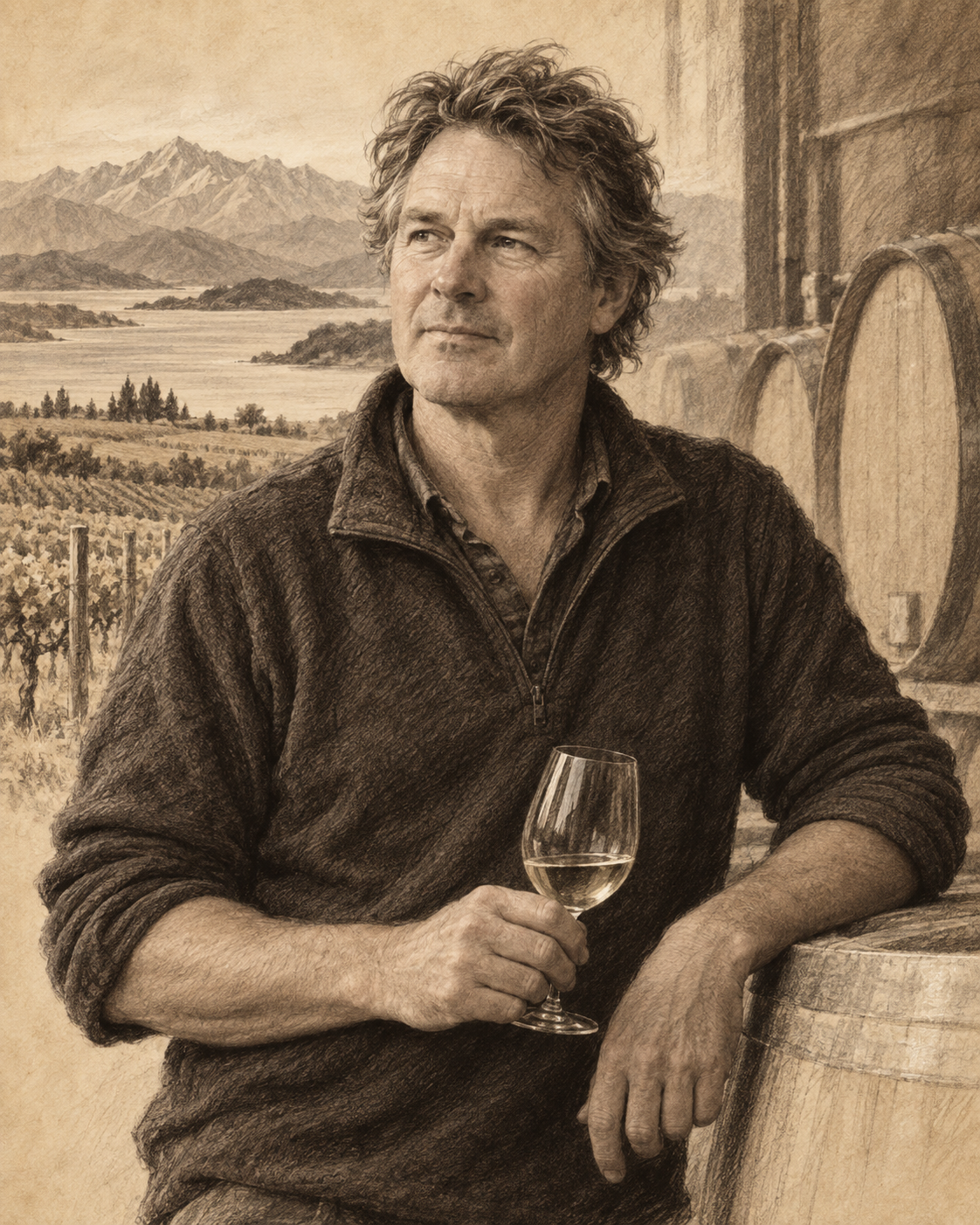
Kevin Judd
Before the reputation
How they found wine
Born in England and raised in Australia, Judd studied at Roseworthy and began his professional career at Reynella. A move to New Zealand in 1983 took him to Selaks before the opportunity to help build Cloudy Bay. He was arriving in a developing wine region rather than inheriting an established Marlborough dynasty.
The move was initially intended to last only a few years. It became a much longer commitment as Cloudy Bay grew and Marlborough found international recognition. Greywacke then offered a smaller, personal project after decades spent developing someone else’s company, while his photography continued alongside cellar work.
Kevin Judd was the founding winemaker at Cloudy Bay and helped define a style of Marlborough Sauvignon Blanc that reached a wide international audience. Twenty-five vintages there preceded the launch of Greywacke with his wife Kimberley in 2009.
His landscape photography is a serious parallel career. Wine and photographs both helped communicate a place, although the beauty of an image cannot establish the quality of the wine grown in it.
Beyond one bottle
Why the work mattered
Judd helped turn Marlborough Sauvignon Blanc into a recognisable international reference, working within a wider team of founders, growers and winemakers. Greywacke extends the story beyond that category’s most familiar bright-fruit stereotype: its contrasting Sauvignon styles let drinkers examine fermentation and texture within one producer’s range rather than assume the region has only one recipe.
What they changed
A clear regional identity
Cloudy Bay helped make Marlborough a name consumers could connect to a distinctive white-wine style.
More than one Sauvignon style
Greywacke’s range encourages comparison of aromatic brightness with fermentation-derived complexity and texture.
A visual account of place
His photography gives the wine landscape a second form of communication.
Follow the work
Wineries and working relationships
These are the named winery employers and the independent venture in the producer’s published biography. Photography is a parallel profession, not an additional winery affiliation.
Reynella
After Roseworthy; before 1983
Early winemaking employmentAn Australian foundation before moving to New Zealand.
Selaks
From 1983, before Cloudy Bay
WinemakerHis first New Zealand winery job.
Cloudy Bay
From 1985; 25 vintages
Founding winemakerHelped establish the producer and its international reputation.
Greywacke
From 2009
Co-founder and winemaker with Kimberley JuddAn independent Marlborough business following the Cloudy Bay career.
History reviewed . Roles and ownership may have changed.
Representative bottles
Where to meet the idea
- Greywacke Sauvignon Blanc
A direct starting point for the independent producer’s Marlborough white wine.
- Greywacke Wild Sauvignon
A useful contrast within the same grape and producer; consult the vintage details before attributing every difference to yeast.
- Cloudy Bay Sauvignon Blanc
A continuing winery legacy, with current releases made by the later team.
Study the signature
Turn the biography into a tasting.
Begin with Greywacke Sauvignon Blanc, then place it beside Greywacke Wild Sauvignon when the opportunity allows. The point is not to crown a winner; it is to notice which choices remain legible across price, age, vineyard, and vintage.
Follow three linked ideas as you taste: a clear regional identity, more than one sauvignon style, a visual account of place. Write down the evidence you can actually perceive, then return to the producer’s history and ask which part of the story the glass supports—and which part belongs to reputation.
A founding winemaker does not personally make every later vintage. Fermentation, vessels, fruit selection and ageing can all change together in a two-bottle comparison.