
The blending cellarer
Dom Pierre Pérignon
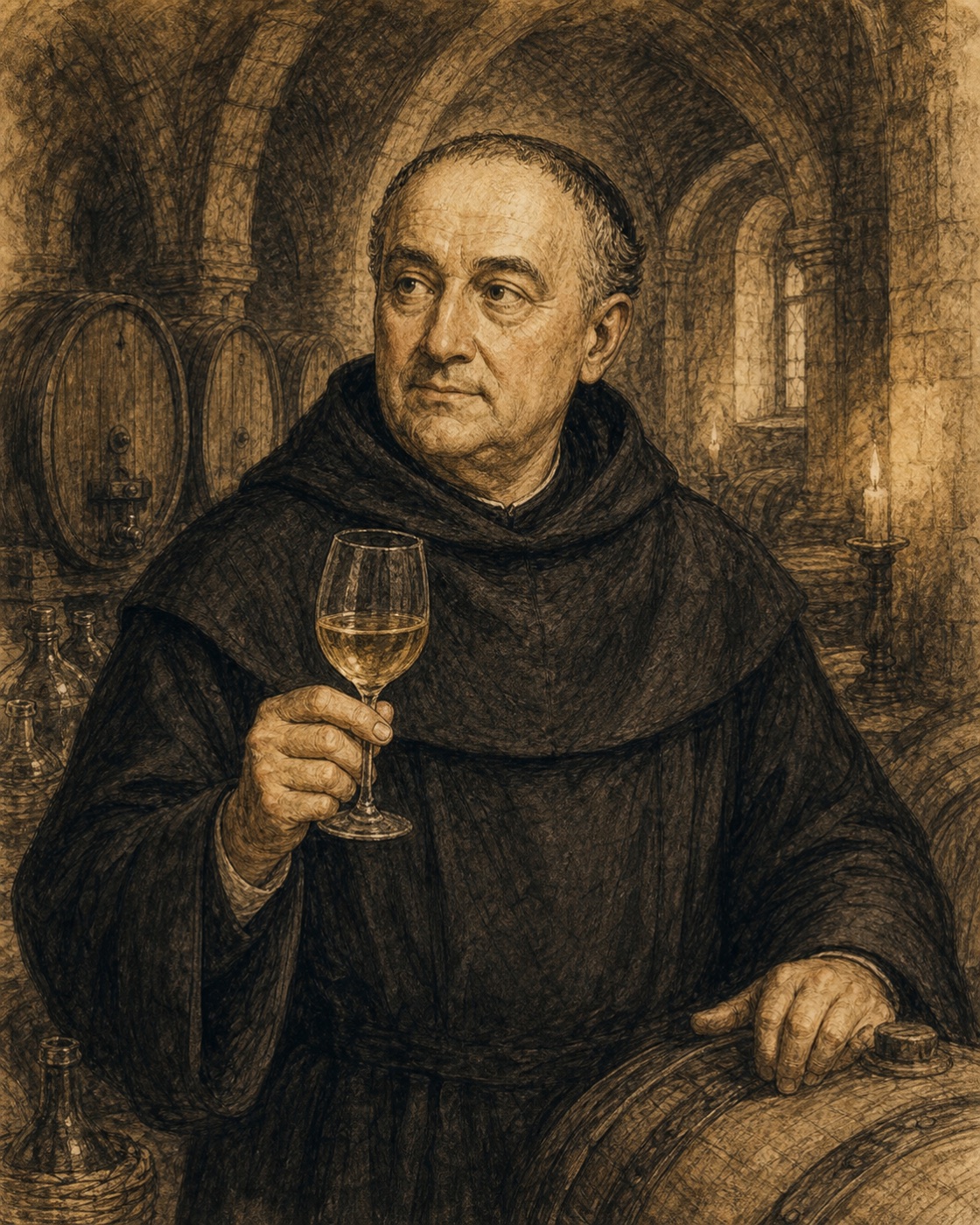
Before the reputation
How they found wine
Pierre Pérignon entered wine through monastic responsibility. He joined the Benedictines near Verdun before moving to Hautvillers in 1668, where he served as cellarer until his death. A cellarer’s work included the practical management of an institution’s produce and income; it was much broader than standing over a fermenting vat.
That setting explains why grape selection, pressing and assembling lots mattered. The abbey needed dependable, valuable wine from variable harvests. The surviving record does not justify a cinematic moment in which he discovers bubbles. His documented career is more interesting as patient agricultural and commercial stewardship in a region still developing its wine identity.
As cellarer at Hautvillers from 1668, the Benedictine monk Pierre Pérignon worked to improve vineyard practice, pressing, and assemblage when Champagne was primarily still wine. His real contribution is more useful than the legend that he invented sparkling wine.
He pursued sound grapes, gentle pressing—especially of dark grapes for pale wine—and harmonious blends across parcels. The prestige cuvée later named Dom Pérignon is a twentieth-century tribute, not a wine he made.
Beyond one bottle
Why the work mattered
Pérignon became an enduring symbol of Champagne craftsmanship, but the useful historical contribution is careful selection and blending. Sparkling Champagne emerged through many changes in glass, closures, trade and cellar practice. Separating those processes from a single inventor myth helps explain why a modern bottle required an industry, not one revelation.
What they changed
Assemblage for harmony
Blending grapes and sites became a quality decision rather than a way to hide weak material.
Gentle, selective handling
Attention to harvest and pressing helped produce cleaner, paler wines from Champagne’s mixed vineyards.
A myth worth correcting
His legacy demonstrates how marketing can simplify gradual, collective technical change into one eureka moment.
Follow the work
Wineries and working relationships
The modern Dom Pérignon brand and Moët & Chandon postdate him. Neither belongs on his employment history; surviving monastic evidence is incomplete.
Abbey of Saint-Vanne, Verdun
Before 1668
Benedictine formationReligious training; the evidence does not establish a separate winery appointment here.
Abbey of Hautvillers
1668–1715
Cellarer / estate administratorManaged the abbey’s wine-related operations and resources.
History reviewed . Roles and ownership may have changed.
Representative bottles
Where to meet the idea
- Dom Pérignon Vintage
A modern, vintage-only prestige Champagne that uses his name to frame a house interpretation of one year.
- Dom Pérignon Plénitude 2
A later release of the same vintage, useful for examining how extended lees ageing changes texture and aroma.
Study the signature
Turn the biography into a tasting.
Begin with Dom Pérignon Vintage, then place it beside Dom Pérignon Plénitude 2 when the opportunity allows. The point is not to crown a winner; it is to notice which choices remain legible across price, age, vineyard, and vintage.
Follow three linked ideas as you taste: assemblage for harmony, gentle, selective handling, a myth worth correcting. Write down the evidence you can actually perceive, then return to the producer’s history and ask which part of the story the glass supports—and which part belongs to reputation.
He did not invent Champagne, did not shout that he was drinking stars, and often worked to control unwanted bubbles. Treat those stories as brand mythology.