
The California cellar modernist
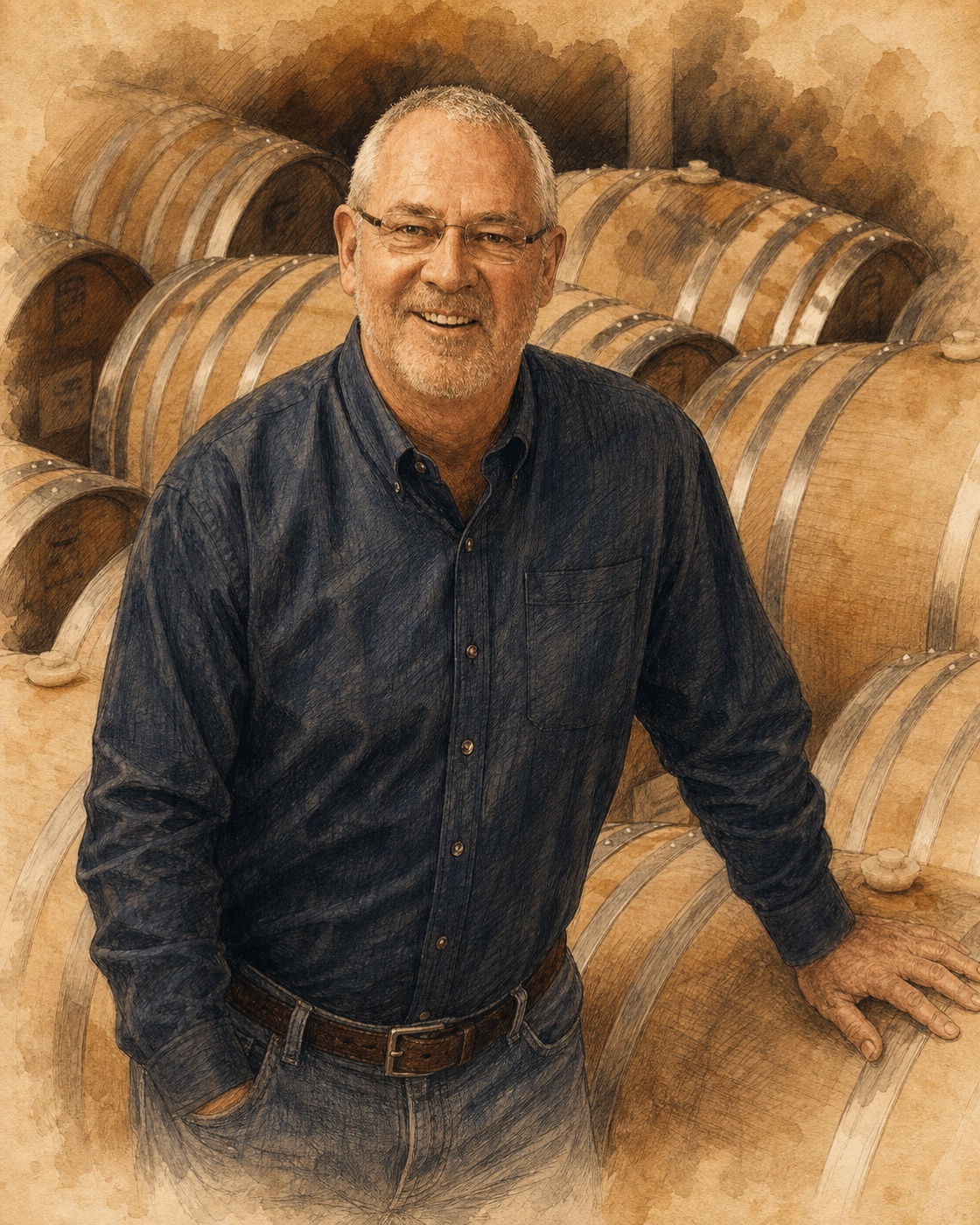
David Ramey
Before the reputation
How they found wine
Ramey came to wine after a liberal-arts education, then trained in enology at UC Davis. Rather than immediately taking a permanent California job, he wrote to Bordeaux producers seeking harvest work. Christian Moueix’s reply gave him the opportunity to learn in the Pétrus orbit, followed by experience in Australia.
Back in California, working with Zelma Long at Simi taught him how to run a winery as well as make wine. Successive roles at Matanzas Creek and Chalk Hill refined his approach to Chardonnay. The independent label began in 1996 while he worked at red-wine producer Dominus: he asked permission to make a little Chardonnay on the side, and a family business grew from it.
David Ramey combined UC Davis training with formative work in Bordeaux and Burgundy before leading cellars at Matanzas Creek, Chalk Hill, Dominus, and Rudd. He and his wife, Carla, founded Ramey Wine Cellars in 1996 and gradually built a family winery around Chardonnay, Cabernet, and Syrah.
Ramey helped normalize a suite of traditional European practices in modern California: whole-cluster pressing for whites, native fermentations, barrel fermentation, lees ageing, and malolactic fermentation for Chardonnay. His contribution was not invention so much as rigorous adaptation—showing how methods could serve California fruit without turning every wine into the same international style.
Beyond one bottle
Why the work mattered
Ramey helped bring experimental scrutiny to techniques associated with traditional white winemaking, including native fermentation and lees ageing. The influence came from testing and teaching across several wineries, not simply importing a Burgundian recipe. His own business also demonstrates how purchased grapes and shared cellar space can precede estate ownership.
What they changed
Old-world methods, California fruit
Classical cellar practices were adapted into a coherent modern California white-wine program.
Chardonnay through texture
Lees, barrels, malolactic fermentation, and oxygen management became tools for dimension rather than cosmetic flavour.
Technical explanation in public
Ramey made the reasoning behind cellar choices unusually accessible to trade and drinkers.
Follow the work
Wineries and working relationships
Career dates follow the published timeline. Consulting and shared-cellar relationships are distinguished from salaried winery jobs; this is not a complete current client list.
Établissements Jean-Pierre Moueix / Pétrus
1979 and 1989
Intern / returning cellar experienceBordeaux formation and later return.
Lindemans
1980
InternAustralian harvest experience.
Simi
1980–1984
Assistant winemakerWorked with Zelma Long.
Matanzas Creek · Chalk Hill
1984–1989; 1990–1996 respectively
WinemakerTwo distinct Sonoma appointments.
Dominus · Rudd Estate
1996–1998; 1998–2002 respectively
Winemaker / executiveNapa leadership roles overlapping the start of his own label.
Ramey Wine Cellars · Sidebar Cellars
1996; Sidebar launched 2014
Founder with Carla Ramey; later additional labelIndependent family business; Sidebar is a related label.
Luna Winery
First Ramey wines
Custom-crush host relationshipUsed a colleague’s cellar capacity, not an employment appointment.
Rodney Strong · Davis Bynum · Westwood · Lancaster · Hall · Snowden · Saracina
Historical engagements; dates vary
ConsultantNamed in the linked interviews and profiles.
History reviewed . Roles and ownership may have changed.
Representative bottles
Where to meet the idea
- Ramey Rochioli Vineyard Chardonnay
A Russian River single vineyard that concentrates his white-wine method.
- Ramey Hyde Vineyard Chardonnay
A Carneros counterpart for comparing site under related élevage.
- Ramey Pedregal Vineyard Cabernet Sauvignon
A rocky Napa site showing that his contribution extends well beyond Chardonnay.
Study the signature
Turn the biography into a tasting.
Begin with Ramey Rochioli Vineyard Chardonnay, then place it beside Ramey Hyde Vineyard Chardonnay when the opportunity allows. The point is not to crown a winner; it is to notice which choices remain legible across price, age, vineyard, and vintage.
Follow three linked ideas as you taste: old-world methods, california fruit, chardonnay through texture, technical explanation in public. Write down the evidence you can actually perceive, then return to the producer’s history and ask which part of the story the glass supports—and which part belongs to reputation.
Many practices associated with Ramey are centuries old. His significance is their influential California application and explanation, not sole invention.