
The Pinot pioneer
Merry Edwards
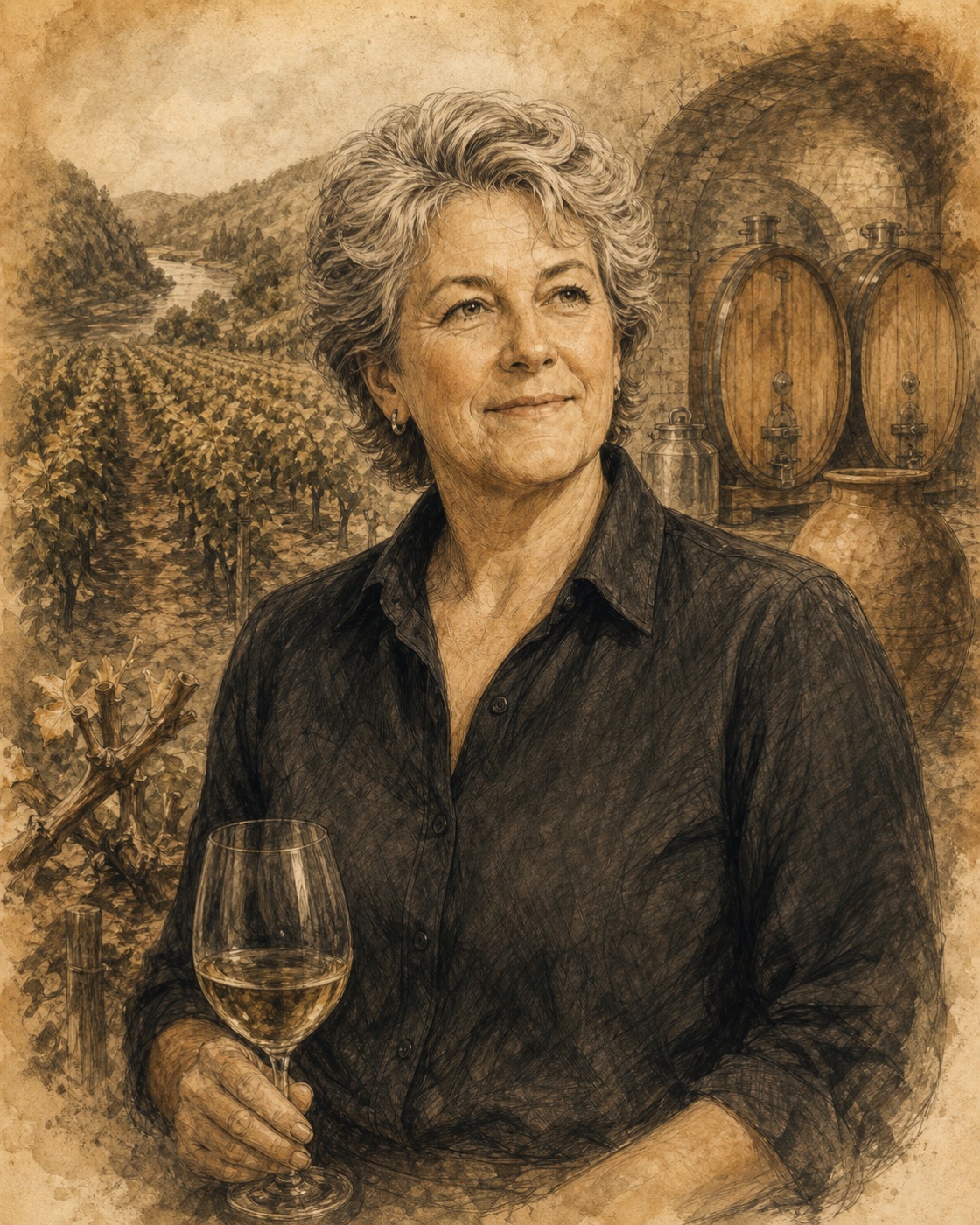
Before the reputation
How they found wine
Edwards began making wine as an amateur while studying physiology at Berkeley. Further study at UC Davis turned that interest into a profession, but technical qualifications did not remove the barriers women faced in winery hiring. Her first major appointment was at Mount Eden in 1974, followed by the founding winemaker role at Matanzas Creek.
Her route to an enduring independent business included setbacks. Merry Vintners ceased production during financial difficulties, and a later Laurier appointment was caught in its parent company’s collapse. She continued consulting and eventually built Merry Edwards Winery from 1997. The familiar name on the bottle represents a second sustained attempt, not uninterrupted success.
Merry Edwards entered California wine when women were routinely excluded from cellar authority. After graduate study at UC Davis, she became winemaker at Mount Eden in 1974, helped build Matanzas Creek, and developed a Pinot Noir selection later registered as UCD clone 37—the Merry Edwards selection.
She founded Merry Edwards Winery in 1997 and made the Russian River Valley her principal canvas. Vineyard-designated Pinot Noir, barrel-fermented Sauvignon Blanc, and meticulous clonal and site work joined technical depth to a public commitment to mentoring women in wine.
Beyond one bottle
Why the work mattered
Edwards helped growers pay closer attention to the plant material within a grape variety. Her Mount Eden selection became UCD 37 after treatment and testing, connecting practical vineyard observation to a wider propagation programme. Her career also widened professional possibilities for women and strengthened the identity of Russian River Pinot Noir.
What they changed
A woman in cellar leadership
Her early appointments and later ownership widened the visible path to technical authority.
The Merry Edwards Pinot selection
Clonal observation became a durable piece of California vineyard material and identity.
Serious barrel-fermented Sauvignon Blanc
Texture, lees, and oak elevated the variety within a region better known for Pinot and Chardonnay.
Follow the work
Wineries and working relationships
The university profile also records a broad consulting practice but does not provide its complete client list. The named timeline should not be read as exhaustive.
Mount Eden Vineyards
1974–1977
WinemakerEarly Pinot Noir work and selection of plant material.
Matanzas Creek
1977–1984
Founding winemakerHelped establish the winery before moving into full-time independent work.
Merry Vintners
1980s; production ended 1989
Family founder / winemakerEarlier Chardonnay business, distinct from the later winery.
Laurier Winery
1989–1990 transition
Vice president and winemakerAppointment disrupted by Vintech’s financial collapse.
Merry Edwards Winery and Vineyards
1997–2020 winemaking career
FounderBuilt with partners; retired in February 2020 after the later sale.
B.R. Cohn
Early winery years; exact period unspecified
Early winemakerNamed by the producer among its first winemakers.
History reviewed . Roles and ownership may have changed.
Representative bottles
Where to meet the idea
- Merry Edwards Meredith Estate Pinot Noir
An estate vineyard expression with the depth and perfume central to her Russian River style.
- Merry Edwards Klopp Ranch Pinot Noir
A vineyard-designated comparison for studying site within a consistent cellar language.
- Merry Edwards Russian River Valley Sauvignon Blanc
The richly textured white that became a signature in its own right.
Study the signature
Turn the biography into a tasting.
Begin with Merry Edwards Meredith Estate Pinot Noir, then place it beside Merry Edwards Klopp Ranch Pinot Noir when the opportunity allows. The point is not to crown a winner; it is to notice which choices remain legible across price, age, vineyard, and vintage.
Follow three linked ideas as you taste: a woman in cellar leadership, the merry edwards pinot selection, serious barrel-fermented sauvignon blanc. Write down the evidence you can actually perceive, then return to the producer’s history and ask which part of the story the glass supports—and which part belongs to reputation.
Edwards retired in 2020. Current releases continue under a team and ownership structure that should not be collapsed into her personal authorship.