
The Rhône Ranger provocateur
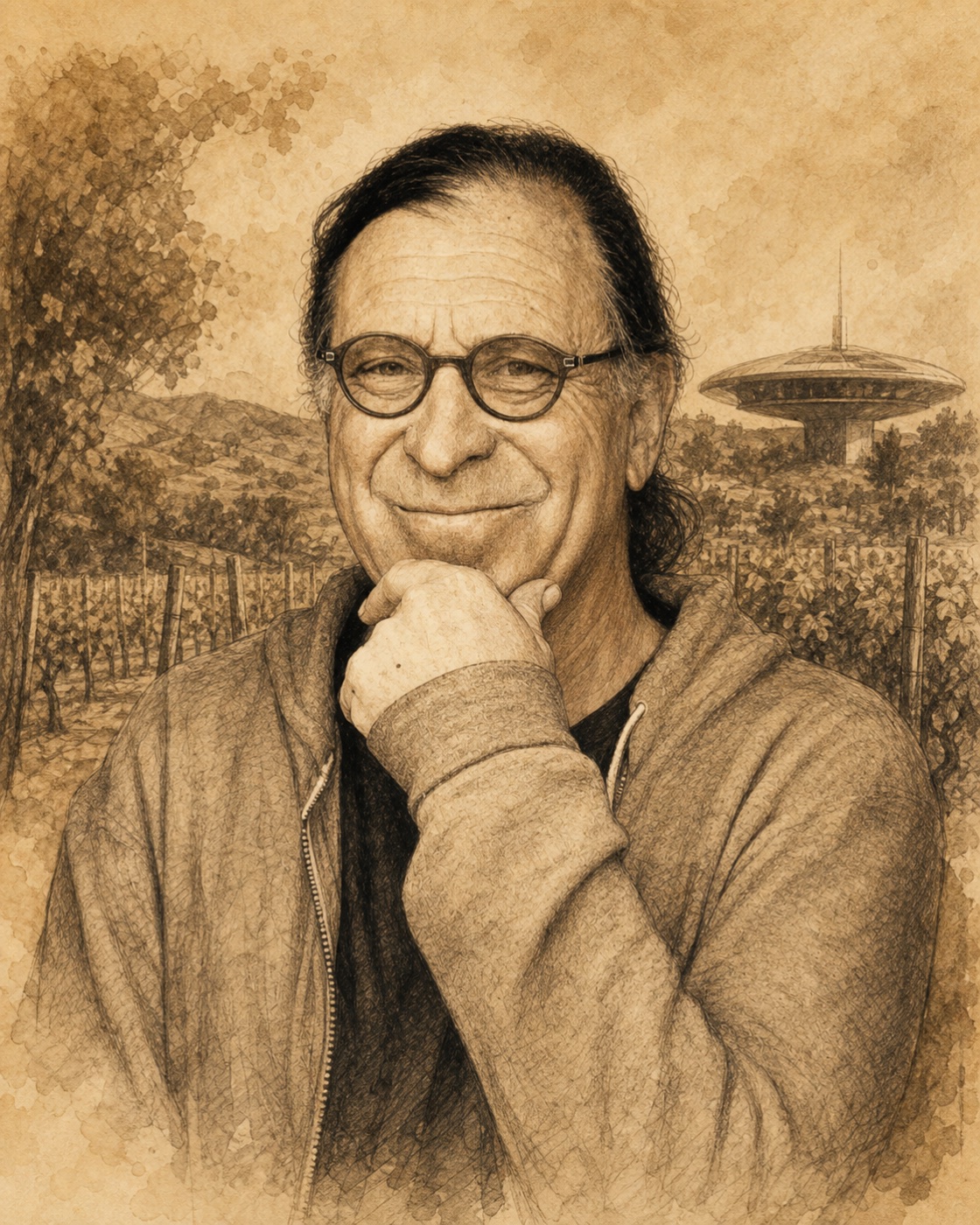
Randall Grahm
Before the reputation
How they found wine
Grahm’s first ambition was to make a great California Pinot Noir. Work in a wine shop and fascination with French bottles led him from liberal-arts study toward a UC Davis wine education and the founding of Bonny Doon. The original vineyard did not deliver the Burgundy-like result he wanted, so the important decision was to change direction.
Rhône varieties proved a more productive path. Le Cigare Volant became the emblem of that pivot, while success with larger brands eventually created another tension: business scale versus the desire to grow a wine inseparable from its place. Popelouchum and The Language of Yes became later expressions of that continuing search.
Randall Grahm founded Bonny Doon Vineyard in 1983 after an early ambition to make Pinot Noir. Rhône varieties proved the more persuasive path, and Le Cigare Volant became his irreverent flagship. Labels, essays, screwcaps, ingredient disclosure, and restless experimentation made communication part of the winemaking project.
Grahm helped turn the Rhône Ranger movement into a recognizable California category, then repeatedly challenged his own success. At Popelouchum near San Juan Bautista, his later work has focused on breeding new grape material and seeking a more intimate fit among plant, soil, and climate.
Beyond one bottle
Why the work mattered
Grahm made unfamiliar varieties and unconventional ideas approachable through wit, labels and unusually candid explanation. His work helped broaden California beyond Cabernet and Chardonnay, while later projects asked whether breeding and farming could produce a more local identity. Humour was a way into serious questions, not an alternative to making sound wine.
What they changed
Rhône grapes in California’s imagination
Grenache, Syrah, Mourvèdre, and their companions became an adventurous alternative to the dominant varieties.
The label as a classroom
Humour and design drew drinkers toward technical, cultural, and environmental questions.
A search for new varieties
Popelouchum reframes terroir as something that might be cultivated through genetic diversity and long attention.
Follow the work
Wineries and working relationships
The record separates labels from wineries and notes divestments. Current Bonny Doon production should not automatically be credited solely to its founder.
Bonny Doon Vineyard
From 1983; later sold
Founder / winemakerOriginal home of Le Cigare Volant and the Rhône-variety work.
Pacific Rim
1992; later divested
FounderRiesling-focused venture, historically connected to Bonny Doon.
Big House · Cardinal Zin
Before their 2006 sale
Brand creator within Bonny DoonBrands, not separate estate-winemaker appointments.
Popelouchum
Property acquired 2009
Founder / grower and experimental project leaderA separate effort to develop place-specific wine through farming and diverse plant material.
The Language of Yes
Later Central Coast project
Collaborating founder / winemakerPartnership exploring Rhône varieties and regional expression.
History reviewed . Roles and ownership may have changed.
Representative bottles
Where to meet the idea
- Bonny Doon Le Cigare Volant
The Rhône-inspired flagship and clearest entry into Grahm’s blend of seriousness and play.
- Bonny Doon Vin Gris de Cigare
A pale Rhône-variety rosé that helped make restraint and savoury refreshment part of the range.
- Popelouchum Estate wines
The evolving later project where breeding, farming, and site discovery replace a fixed commercial formula.
Study the signature
Turn the biography into a tasting.
Begin with Bonny Doon Le Cigare Volant, then place it beside Bonny Doon Vin Gris de Cigare when the opportunity allows. The point is not to crown a winner; it is to notice which choices remain legible across price, age, vineyard, and vintage.
Follow three linked ideas as you taste: rhône grapes in california’s imagination, the label as a classroom, a search for new varieties. Write down the evidence you can actually perceive, then return to the producer’s history and ask which part of the story the glass supports—and which part belongs to reputation.
Grahm’s projects, ownership, and methods changed repeatedly. Treat each bottle as a dated chapter, not proof of one permanent doctrine.