
The Cape site interpreter
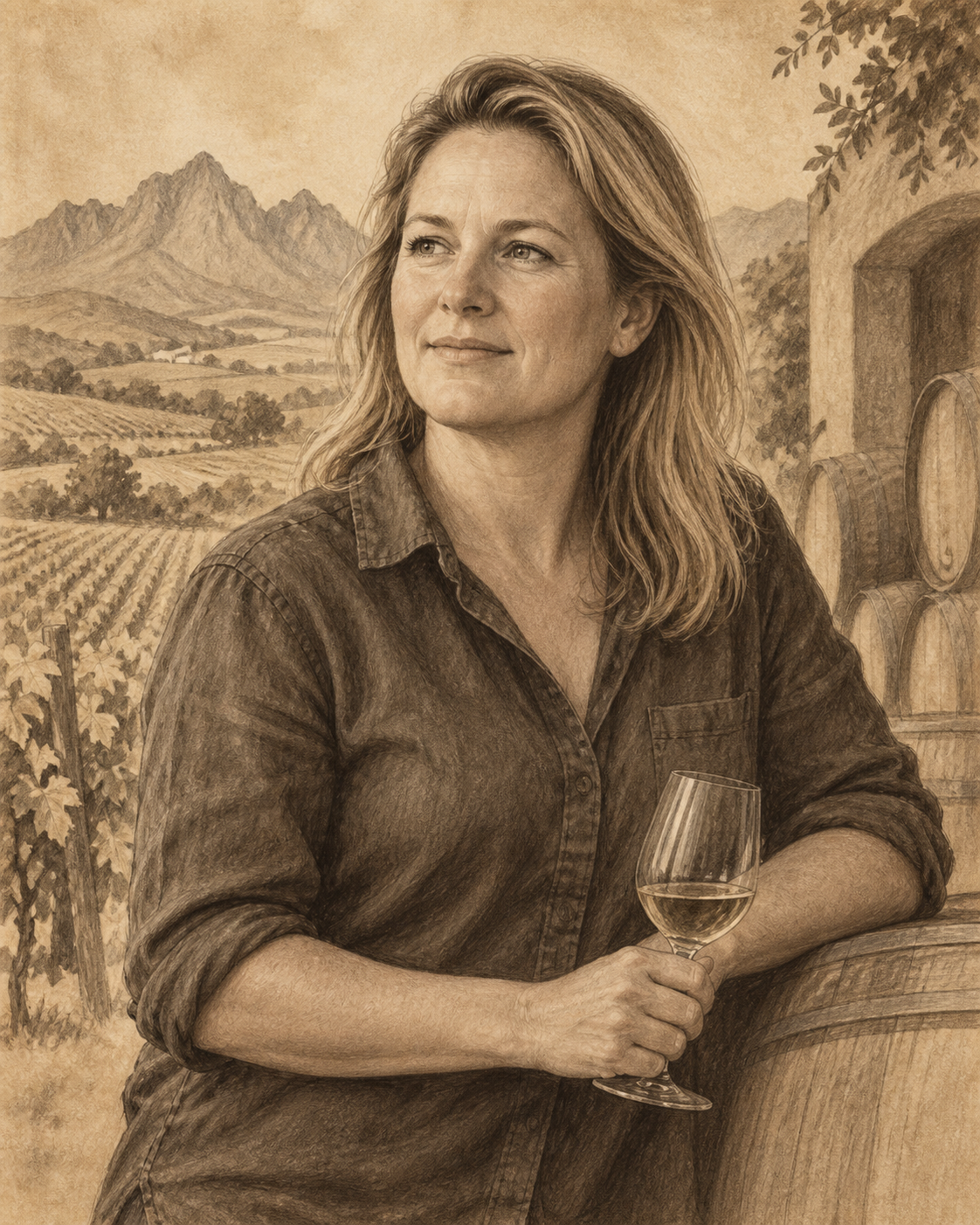
Andrea Mullineux
Before the reputation
How they found wine
Mullineux grew up near San Francisco and studied viticulture and oenology at UC Davis. Napa harvest work gave her an early cellar foundation; working in South Africa and France widened the possibilities. She met Chris during that international period and eventually made South Africa the centre of her professional life.
At Tulbagh Mountain Vineyards, work with fruit from the Swartland helped the couple recognise the region’s potential. They founded Mullineux in 2007. Her move was therefore more than a picturesque relocation: it joined training, practical harvest experience, a partnership and a specific interest in vineyards that could sustain their own business.
Andrea Mullineux helped make Swartland Chenin Blanc and Syrah internationally prominent through a partnership with her husband Chris. Their wines connect old vineyards, site comparisons and a deliberate division of vineyard and cellar work.
Leeu Passant explores a wider Cape history, while Fog Monster connects her career back to California. These are related projects with different aims, not three names for the same winery.
Beyond one bottle
Why the work mattered
Mullineux helped make the Swartland’s old vines and varied sites accessible through both blends and parcel wines. Leeu Passant broadened the investigation to Cape wine history and other regions. The influence is a more detailed vocabulary for South African wine, supported by farming and cellar work rather than the assumption that international grapes must copy international styles.
What they changed
Sites worth comparing
Separate Syrah and Chenin bottlings give learners a practical way to investigate vineyard differences.
Old vines with a future
Buying and using old-vine fruit can connect heritage with an ongoing market.
Cape history as material
Leeu Passant draws on regional traditions while making deliberately contemporary wines.
Follow the work
Wineries and working relationships
The map includes named training employers, the Tulbagh job and all three documented independent projects. Unnamed placements remain unnamed; a mentor’s previous employer is not assumed to be hers.
Cakebread · Viader · El Molino
After UC Davis; before settling in South Africa
Early cellar and harvest workThese Napa appointments are named in her professional biography.
Waterford Estate
2004
Harvest internshipAn early South African placement before later French and Cape work.
French and Hermanus placements
Early international career
Harvest workPublished accounts describe further training without consistently naming every host winery.
Tulbagh Mountain Vineyards
Before founding Mullineux in 2007
Winemaking work with ChrisSwartland fruit encountered here helped motivate the independent project.
Mullineux / Roundstone · Kloof Street
From 2007
Co-founder and winemakerRoundstone is the estate base; Kloof Street is a related range, not a separate employer.
Leeu Passant
Project developed from 2013
Co-founder and winemaker with Chris and Analjit SinghA separate Cape project under Mullineux & Leeu Family Wines.
Fog Monster
From 2012
California co-founder and winemaker with ChrisA small project using California fruit and local cellar support, maintained alongside the South African business.
History reviewed . Roles and ownership may have changed.
Representative bottles
Where to meet the idea
- Mullineux Old Vines White
A Chenin-led blend showing why a complete wine may draw on several varieties and parcels.
- Mullineux Syrah
A regional reference before trying more expensive parcel bottlings.
- Leeu Passant Dry Red
A Cape blend linking historical inspiration with the separate Leeu Passant project.
Study the signature
Turn the biography into a tasting.
Begin with Mullineux Old Vines White, then place it beside Mullineux Syrah when the opportunity allows. The point is not to crown a winner; it is to notice which choices remain legible across price, age, vineyard, and vintage.
Follow three linked ideas as you taste: sites worth comparing, old vines with a future, cape history as material. Write down the evidence you can actually perceive, then return to the producer’s history and ask which part of the story the glass supports—and which part belongs to reputation.
Site comparisons also involve vine age, farming, exposure and production choices. The work belongs to growers and cellar teams as well as two named founders.