
The geographer with a Pinot plan
Richard Sanford
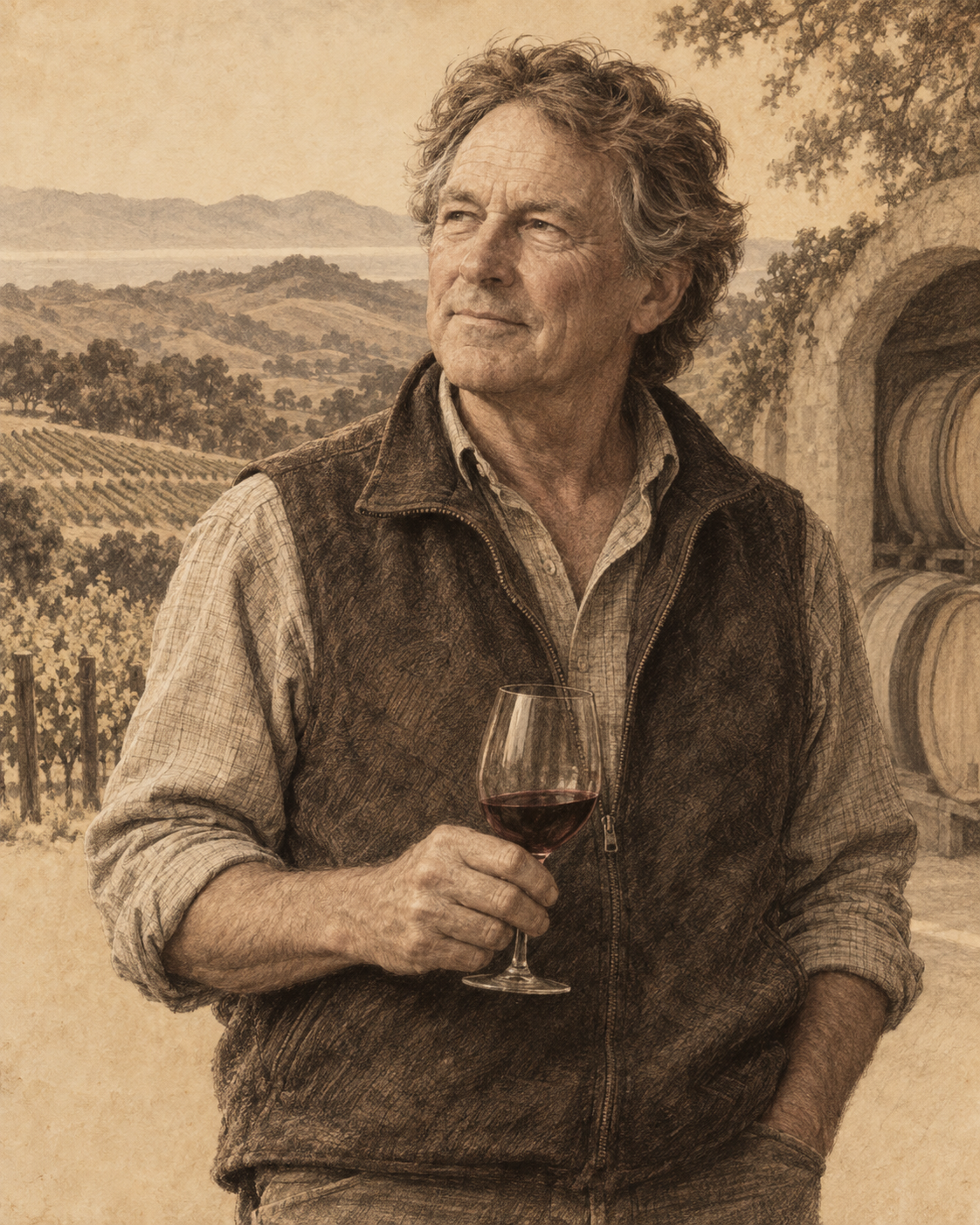
Before the reputation
How they found wine
Sanford studied geography at Berkeley and served as a naval officer during the Vietnam War. In his account, a fellow officer introduced him to a Volnay that changed his sense of what wine could be. The attraction was followed by a practical question: where in California might a similarly suitable climate exist for Pinot Noir?
He examined coastal conditions and worked with botanist Michael Benedict to find and plant a site in 1971. The route from military service to vineyard was neither inherited estate management nor simply a tasting epiphany. It required translating an experience in the glass into a geographical search and a farming commitment.
Richard Sanford helped establish the western Santa Ynez Valley as a serious place for Pinot Noir. His partnership with Michael Benedict put a vineyard in a location where coastal cooling mattered more than California’s broad reputation for warmth.
Sanford & Benedict, Sanford Winery and Alma Rosa are separate stages of the career. Keeping those names distinct makes the geography, business changes and continuing role of Thekla Sanford easier to understand.
Beyond one bottle
Why the work mattered
Sanford helped demonstrate the potential of a cool coastal pocket that became central to Sta. Rita Hills. His influence connected climatic observation, a landmark vineyard and several winery ventures. That provides a useful alternative to assuming that a grape’s success follows state or country borders: wind, fog, orientation and distance from the ocean can be more informative.
What they changed
Climate before reputation
The vineyard search focused on conditions suitable for Pinot Noir.
A regional reference vineyard
Sanford & Benedict gave the area a visible example that later growers and bottlers could build upon.
A continuing farming commitment
Later ventures extended the work with Thekla beyond the original partnership.
Follow the work
Wineries and working relationships
These three ventures form the documented winery sequence. Wines from other producers using Sanford & Benedict fruit do not automatically establish employment or consulting by Richard Sanford.
Sanford & Benedict
Planted in 1971
Co-founder and vineyard developer with Michael BenedictThe original partnership established the landmark site.
Sanford Winery
From 1981; later departure
Founder with Thekla SanfordA separate business stage after the original vineyard partnership.
Alma Rosa
Founded 2005; sold to Bob and Barb Zorich in 2014
Co-founder with Thekla; later ambassadorContinued the coastal wine project through another company and subsequent ownership change.
History reviewed . Roles and ownership may have changed.
Representative bottles
Where to meet the idea
- Sanford Sanford & Benedict Vineyard Pinot Noir
A clearly identified producer and vineyard combination; other wineries may bottle fruit from the vineyard too.
- Alma Rosa Sta. Rita Hills Pinot Noir
A later winery connection in the same broad coastal landscape.
- Alma Rosa Chardonnay
A white-wine comparison for considering the region beyond Pinot Noir.
Study the signature
Turn the biography into a tasting.
Begin with Sanford Sanford & Benedict Vineyard Pinot Noir, then place it beside Alma Rosa Sta. Rita Hills Pinot Noir when the opportunity allows. The point is not to crown a winner; it is to notice which choices remain legible across price, age, vineyard, and vintage.
Follow three linked ideas as you taste: climate before reputation, a regional reference vineyard, a continuing farming commitment. Write down the evidence you can actually perceive, then return to the producer’s history and ask which part of the story the glass supports—and which part belongs to reputation.
The first famous vineyard is not necessarily the first planting of a grape anywhere in the county. Current ownership and winemaking teams differ from the founding years.