
Defining the product
Governments and scientists debated whether sugar, water, dried grapes, colourants, or other additions could still produce something legally sold as wine.
c. 1890–1950 · Europe and the international market
Fraud, overproduction, grower unrest, and global trade turned ‘wine’ and geographical origin into subjects of negotiated law.
The period in context
Industrial production and expanding trade created opportunity as well as adulteration and misleading origin claims. International meetings sought common definitions; national and regional movements pressed governments to protect names and producers.
Appellations did not simply uncover boundaries set by nature. They formalised contested relationships among place, grape varieties, methods, reputation, yields, political authority, and market power. Rules can preserve collective knowledge and value while also excluding practices and people.
Historical geography
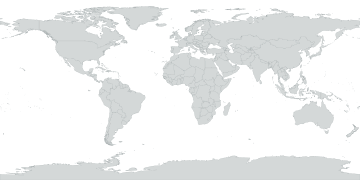
The markers locate the principal places discussed here. Modern country borders are orientation aids, not period boundaries.
 1234
1234The working system
Governments and scientists debated whether sugar, water, dried grapes, colourants, or other additions could still produce something legally sold as wine.
Origin protection linked reputation to a delimited territory and attempted to prevent producers elsewhere from borrowing valued names.
Grower groups, merchants, scientists, ministries, courts, and international bodies negotiated production rules and enforcement.
Appellations can sustain regional knowledge and price, but boundaries and permitted practices create winners, outsiders, and continuing disputes.
Dated sequence
The Madrid Agreement establishes an international framework against false or deceptive indications of source.
Mass grower protests in southern France expose the social crisis of fraud, falling prices, and overproduction.
International congresses in Geneva and Paris debate fraud, definitions, and origin.
Eight governments establish the International Wine Office, the predecessor of today’s OIV.
France creates the national appellation framework and recognises early controlled appellations.
Actors
Collective political force pressing for fraud control, fair prices, and protected regional identity.
Grower-lawyer associated with Châteauneuf-du-Pape rules and the formation of France’s national appellation body.
Intergovernmental organisation founded in 1924 to coordinate viticultural and wine questions.
Competing experts who helped define products, analysis, acceptable practice, and commercial claims.
Geography
A centre of mass production, adulteration debates, and the 1907 grower revolt.
A frequently cited laboratory for delimited origin and production rules before national AOC law.
Sites of international agreements and congresses on origin and wine definition.
Regions whose names became powerful legal and commercial assets through different local histories.
Reading the record honestly
What survives in the glass
A modern label is partly a legal instrument: category, alcohol, origin, producer, and protected terms depend on institutions built during and after this period.
Words to know
Keep digging
Sources are selected for primary evidence, institutional context, or scholarly synthesis. Historical interpretation remains open to revision.