
The estate steward
Bo Barrett
Before the reputation
How they found wine
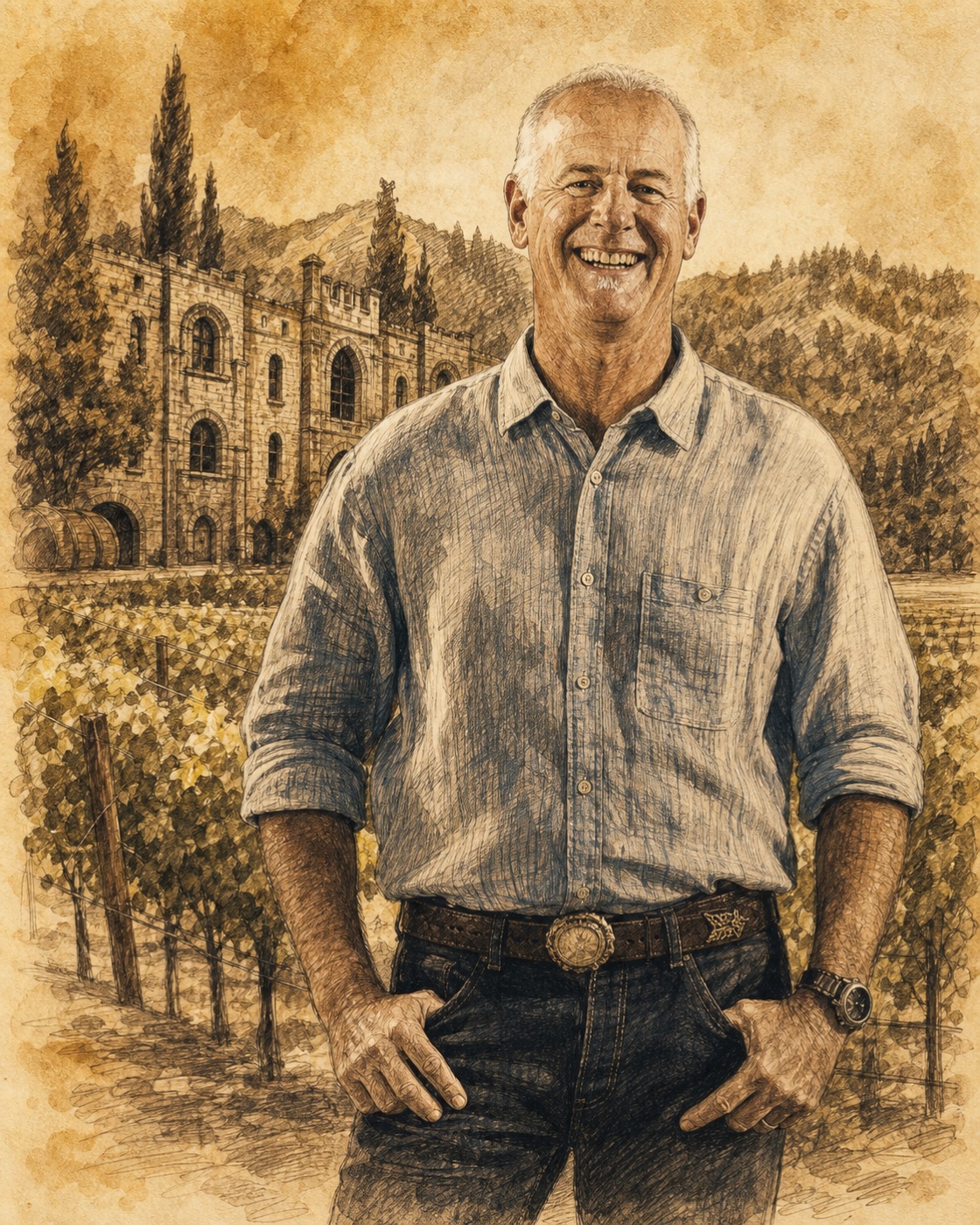
Bo Barrett was a teenager when his family took on Chateau Montelena in 1972. In his own recollection, the first summer’s vineyard work helped him discover that farming could become his life. While studying viticulture and enology at Fresno State, he returned for harvests, learning through the physical work of rebuilding a winery.
He became winemaker in 1982, years after the Chardonnay that won in Paris had been made under Mike Grgich. That sequence is essential to his story. Bo’s achievement was helping sustain the estate beyond its famous breakthrough, with long-term attention to Cabernet, vineyard decisions and a team able to carry the work forward.
Bo Barrett grew up at Chateau Montelena after his father, Jim, acquired the property in 1972. He worked through the vineyard and cellar, participated in every vintage from the revived estate’s beginning, and became winemaker in 1982 before eventually taking responsibility as chief executive.
The 1973 Chardonnay that won the white-wine flight at the 1976 Judgment of Paris was made by Mike Grgich, but Bo’s achievement is the decades that followed: sustaining Montelena’s identity through Cabernet, Chardonnay, estate farming, and technical adaptation while a single famous tasting threatened to eclipse the rest of the story.
Beyond one bottle
Why the work mattered
Barrett’s contribution is continuity after a spectacular public moment. Montelena became more than a single winning Chardonnay, building an estate Cabernet identity and a durable family business. His career also illustrates why the founder, early winemaker, later winemaker and current technical team must be credited separately.
What they changed
Legacy as a continuing job
He turned a breakthrough vintage into decades of consistent estate work rather than a frozen museum story.
Calistoga Cabernet continuity
The Montelena Estate bottling kept attention on northern Napa structure and longevity.
Practical vineyard adaptation
Long stewardship made farming, water, replanting, and resilience central winemaking concerns.
Follow the work
Wineries and working relationships
Montelena’s 1973 Chardonnay belongs to the Grgich-led winemaking period. Bo’s wife’s consulting clients are not automatically Bo’s affiliations.
Chateau Montelena
From 1972; winemaker 1982; CEO 2013
Harvest worker; winemaker; CEOProgression within the family estate, with later winemaking led by its own team.
Barrett & Barrett
Project launched with the 2008 vintage
Co-founder with Heidi BarrettSeparate collaboration combining their experience.
History reviewed . Roles and ownership may have changed.
Representative bottles
Where to meet the idea
- Chateau Montelena Estate Cabernet Sauvignon
The long-lived Calistoga flagship and the best lens on Barrett’s mature stewardship.
- Chateau Montelena Chardonnay
The continuing descendant of the style that put the estate into wine history.
- Barrett & Barrett Cabernet Sauvignon
A small family project made with Heidi Barrett outside the Montelena frame.
Study the signature
Turn the biography into a tasting.
Begin with Chateau Montelena Estate Cabernet Sauvignon, then place it beside Chateau Montelena Chardonnay when the opportunity allows. The point is not to crown a winner; it is to notice which choices remain legible across price, age, vineyard, and vintage.
Follow three linked ideas as you taste: legacy as a continuing job, calistoga cabernet continuity, practical vineyard adaptation. Write down the evidence you can actually perceive, then return to the producer’s history and ask which part of the story the glass supports—and which part belongs to reputation.
Do not credit Bo with making the 1973 Paris-winning Chardonnay; Mike Grgich was its winemaker. Bo’s legacy lies chiefly in what he sustained afterward.