
Administrative wine
Palaces and temples collected, stored, allocated, gifted, and taxed agricultural products. Wine could become an item in an accountable system.
c. 3000–500 BCE · Near East and Egypt
As states grew, wine became visible in tombs, accounts, offerings, specialised vessels, trade, medicine, and elite hospitality.
The period in context
Writing and state administration made wine more legible. Labels, accounts, images, and storage installations could record origin, ownership, vintage, officials, or destination. These sources illuminate taxation, palaces, temples, and elite display especially well.
They do not describe the whole drinking population. Perishable containers, household production, informal exchange, and people outside literate institutions leave a fainter trace. The period is therefore as much about the power to record wine as it is about wine itself.
Historical geography
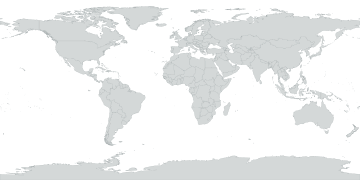
The markers locate the principal places discussed here. Modern country borders are orientation aids, not period boundaries.
 123
123The working system
Palaces and temples collected, stored, allocated, gifted, and taxed agricultural products. Wine could become an item in an accountable system.
Egyptian tomb scenes show harvesting, treading, pressing, sealing, and storage. They are crafted representations, not neutral photographs of everyday work.
Ceramic jars and shipwreck cargoes show wine moving between production zones, courts, ports, and consumers across the eastern Mediterranean.
Wine appeared in offerings, funerary provision, hospitality, and medicinal recipes. Meanings varied across centuries and societies.
Dated sequence
Grape wine and specialised jars appear in several Near Eastern and Egyptian archaeological contexts.
Wine jars placed in the tomb of King Scorpion I at Abydos preserve evidence of imported and treated wine.
Egyptian tomb art and jar inscriptions provide unusually detailed evidence of vineyard and cellar systems.
The Tomb of Ipy, from the reign of Ramesses II, includes a carefully copied scene of winemaking work.
Actors
Growers, harvesters, treaders, press operators, potters, sealers, and transport workers—usually unnamed in elite records.
Recorded deliveries, estates, years, officials, and destinations within palace and temple economies.
Owner of a Theban tomb whose decoration preserves a New Kingdom winemaking scene; not evidence that he invented the process.
Institutions able to command land, labour, storage, trade, and durable representation.
Geography
Important Egyptian cultivation zones supplying estates and institutions.
Royal tomb contexts contain imported wine jars and some of the earliest Egyptian evidence.
A broad eastern Mediterranean corridor of vineyards, ports, kingdoms, and exchange.
Grain beer was often more locally abundant; wine could arrive through trade from suitable uplands.
Reading the record honestly
What survives in the glass
Origin, year, ownership, quality, and status began travelling with containers and records—the distant ancestors of information now placed on a label.
Words to know
Keep digging
Sources are selected for primary evidence, institutional context, or scholarly synthesis. Historical interpretation remains open to revision.