
The mountain Cabernet purist
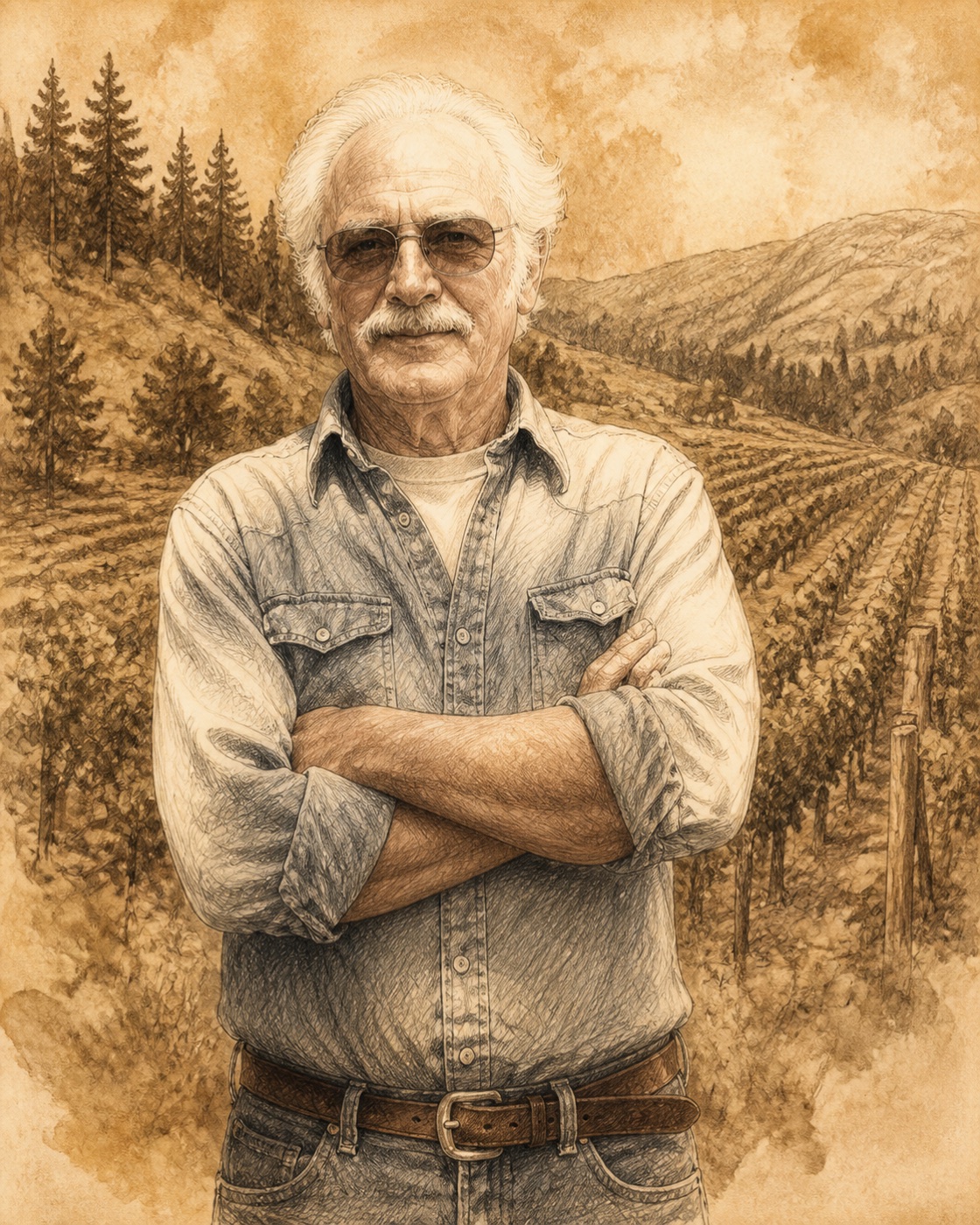
Randy Dunn
Before the reputation
How they found wine
Dunn was studying insects at UC Davis when making wine with a professor pulled him toward enology. He joined Caymus in 1975, while it was still a young winery, and spent a decade helping develop its wines. The apprenticeship was inside a growing business, well before his own name became a shorthand for mountain Cabernet.
He and Lori built their family venture on Howell Mountain, with a first vintage in 1979 while he still worked at Caymus. The choice of a mountain property gave his independent wines a different physical basis from valley-floor examples. It also tied the business to a farming community, where he advised neighbours and helped establish the appellation.
Randy Dunn arrived in Napa after studying at UC Davis and working at Caymus, then bought a small Howell Mountain property with his wife, Lori, in 1978. Their first wine, the 1979 Dunn Vineyards Howell Mountain Cabernet Sauvignon, began a family estate whose identity is inseparable from elevation, late-ripening fruit, and long cellar life.
Dunn became a force behind recognition of Howell Mountain as an American Viticultural Area and an outspoken critic of excessive alcohol. His two Cabernets distinguish mountain intensity from a broader Napa Valley blend, but both pursue structure, freshness, and development rather than instant softness.
Beyond one bottle
Why the work mattered
Dunn helped define Howell Mountain as a meaningful origin and kept a structured, ageworthy Cabernet style visible through changing fashions. His consultancies spread practical knowledge beyond his own label. The useful distinction is between his influence and the wines of later cellar teams; neither a famous name nor low alcohol alone guarantees balance.
What they changed
Howell Mountain as a fine-wine address
Estate Cabernet and regional advocacy helped define the mountain’s firm, ageworthy identity.
Restraint in ripe Napa
Dunn argued that concentration need not require high alcohol or sweet-fruited excess.
Release after patience
Long élevage and bottle age make time part of the house style rather than a task left entirely to buyers.
Follow the work
Wineries and working relationships
Consultancies overlap and are historical. The cited sources do not certify a complete list or establish every start and end date.
Caymus
1975–1985
WinemakerHelped establish Special Selection during the winery’s early growth.
Dunn Vineyards
First vintage 1979
Co-founder with Lori DunnIndependent Howell Mountain family estate.
Grace Family Vineyards
1978–1983
Early winemaking contribution through CaymusHelped make early wines before the family had its own winery.
Lamborn · W. H. Smith · Pahlmeyer · Livingston Moffett · Palmaz · La Jota
Historical appointments; dates not fully specified
Consultant / winemakerNamed career connections; early Palmaz vintages were made at Dunn.
Long Shadows — Feather
Washington collaboration
Partner / collaborating winemakerCabernet project with Allen Shoup’s Long Shadows programme.
History reviewed . Roles and ownership may have changed.
Representative bottles
Where to meet the idea
- Dunn Howell Mountain Cabernet Sauvignon
The estate benchmark: mountain tannin, dark fruit, freshness, and exceptional ageing capacity.
- Dunn Napa Valley Cabernet Sauvignon
A broader appellation blend that reveals the family resemblance in a more accessible frame.
- Retro Cellars Howell Mountain Petite Sirah
A next-generation Dunn family project that extends the mountain conversation beyond Cabernet.
Study the signature
Turn the biography into a tasting.
Begin with Dunn Howell Mountain Cabernet Sauvignon, then place it beside Dunn Napa Valley Cabernet Sauvignon when the opportunity allows. The point is not to crown a winner; it is to notice which choices remain legible across price, age, vineyard, and vintage.
Follow three linked ideas as you taste: howell mountain as a fine-wine address, restraint in ripe napa, release after patience. Write down the evidence you can actually perceive, then return to the producer’s history and ask which part of the story the glass supports—and which part belongs to reputation.
Dunn’s anti-high-alcohol argument is influential, but a label number cannot determine balance by itself. Taste the whole structure.