
Naoussa & Amyndeon’s working ensemble
Xinomavro appears here alongside . That does not mean every bottle is blended; it tells you which local grapes can provide useful contrasts in fruit, structure, and ripening.
Explore the regional context →Grape field guide · dark-skinned
Do not reduce Xinomavro to a list of smells. Yes, red cherry, violet, tomato may appear, but its real personality lives in the tension between ripeness, acidity, texture, and the grower’s choices. This is a grape to follow through the whole sip, not identify after one sniff.
The grape story
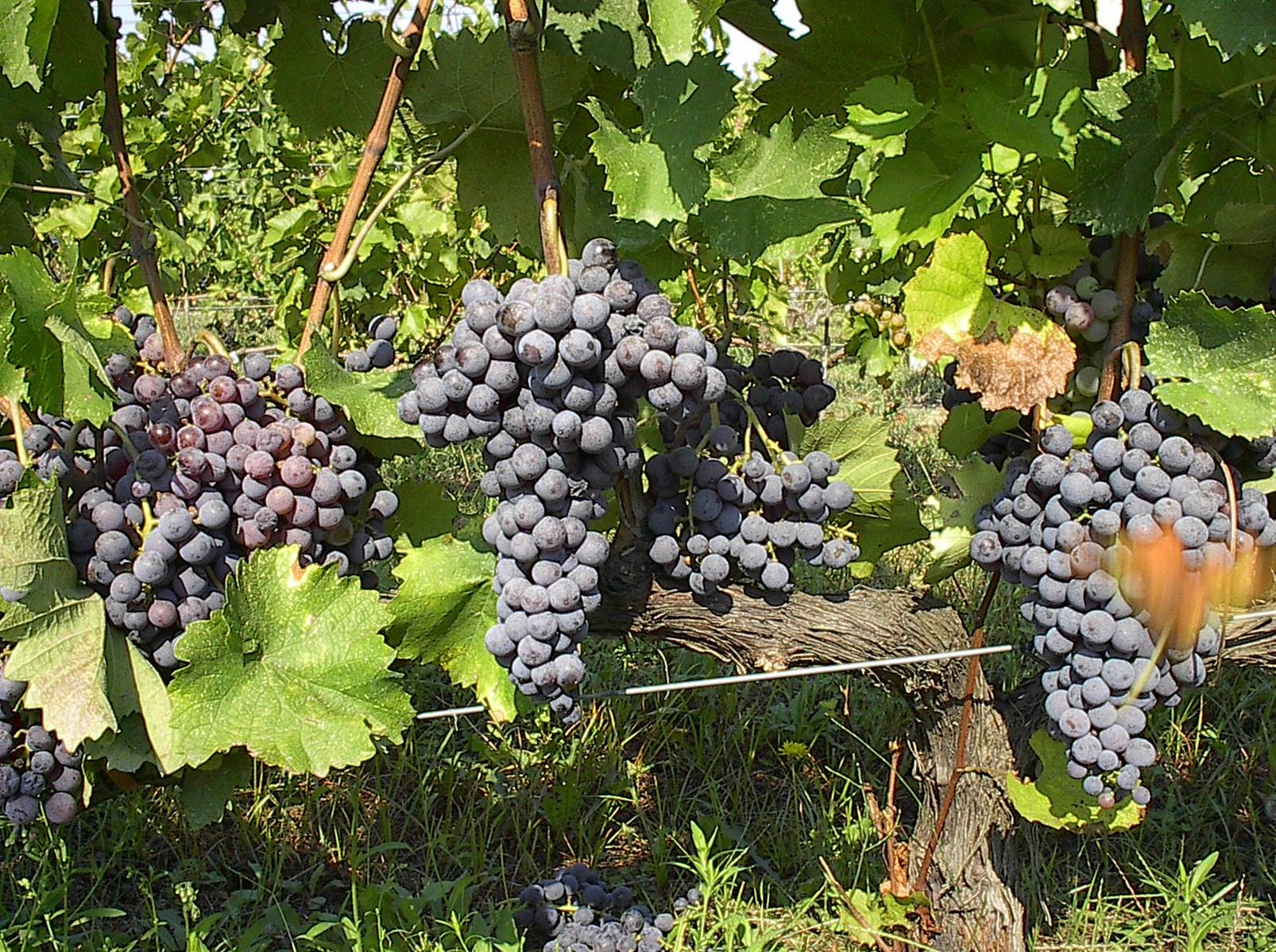
The leading dark-berried grape of northern Greece anchors Naoussa and Amyndeon and contributes to Goumenissa and Rapsani; its name combines Greek words for acid and black.
Its home territory: Northern Greece.
In the glass
These are useful recurring possibilities. Climate, yield, harvest date, fermentation, extraction, maturation, bottle age, and serving conditions can all move the result.
In the vineyard
Demanding of site and season, it can combine high acidity and firm tannin with relatively pale colour; crop and tannin maturity require close attention.
Common expressions
Variety does not dictate method. Skin contact, whole bunches, pressing, fermentation vessel, yeast, oxygen, oak, lees, sweetness, fortification, and bubbles can transform the same fruit.
Blending partners
A blend is not a hiding place for leftovers. Each grape can be asked to supply fruit, perfume, acidity, tannin, colour, body, or simply a better answer to an awkward vintage.
Xinomavro appears here alongside . That does not mean every bottle is blended; it tells you which local grapes can provide useful contrasts in fruit, structure, and ripening.
Explore the regional context →Where it matters
Markers combine dedicated World Explorer profiles with audited benchmark areas important to Xinomavro. This is a teaching map of major associations—not a census of every planting.
Try this at home
Taste two versions of Xinomavro: one young and unoaked, one with greater maturity or cellar influence. Keep the serving temperature and glassware the same, then ask which differences belong to fruit and which belong to process.
Keep digging
Historical names, vineyard collections, official records, and modern research do not always agree neatly. These are starting points for checking the parts of the story that matter for this grape.